What does Judges 17:4 mean?
“Yet he restored the money unto his mother; and his mother took two hundred shekels of silver, and gave them to the founder, who made thereof a graven image and a molten image: and they were in the house of Micah.” — Judges 17:4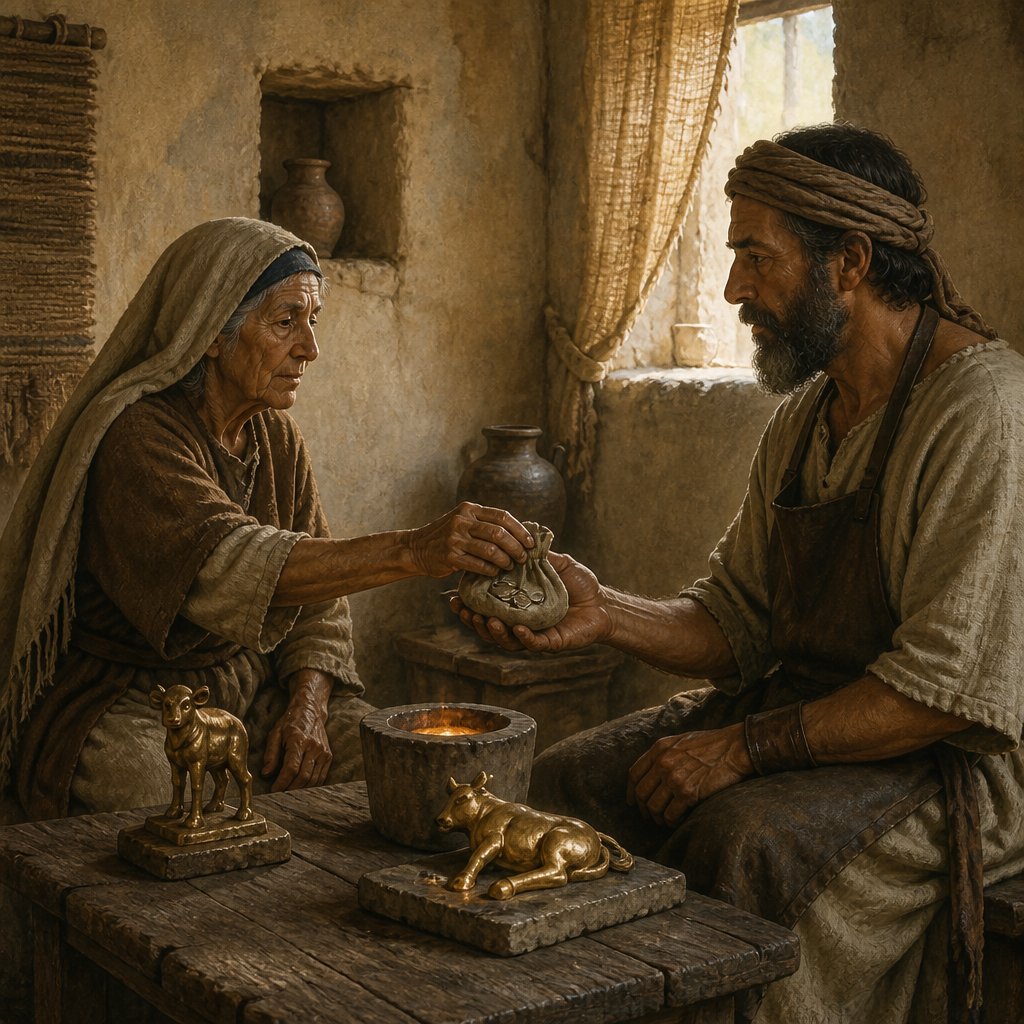
Judges 17:4 (KJV) reads: "Yet he restored the money unto his mother; and his mother took two hundred shekels of silver, and gave them to the founder, who made thereof a graven image and a molten image: and they were in the house of Micah."
This verse comes from the Book of Judges in the Old Testament and is part of a larger narrative about a man named Micah, who made idols and hired a Levite to be his personal priest. This story takes place during a tumultuous time in Israel's history when there was no king, and everyone did what was right in their own eyes.
The verse opens with Micah's son confessing to his mother that he took the 1,100 shekels of silver that she had dedicated to the Lord and cursed, and had taken them back. His mother then blesses her son and tells him to return the money to her, in which he does. She then takes 200 shekels of silver and gives it to a founder to create a graven and a molten image. These images are then placed in Micah's house as objects of worship.
This verse is significant as it highlights the pervasive idolatry and moral decay that characterized the period of the judges in ancient Israel. It reveals how easily people strayed from the commandments of God and succumbed to the temptations of idol worship. This was a recurring issue throughout the Old Testament, as Israel repeatedly turned to idols and false gods, despite God's clear prohibition against such practices.
The theme of idolatry and the consequences of straying from God's commandments is central to this verse. The people of Israel were commanded to worship and serve the one true God, yet they constantly fell into the trap of idol worship, seeking fulfillment and security in man-made objects rather than in the Creator. The consequences of this disobedience were severe, as it ultimately led to the nation's downfall and exile.
Another theme present in this verse is the corruption of religious authority. The hiring of a Levite as a personal priest by Micah further illustrates the deterioration of spiritual leadership during this time. The Levites were supposed to serve in the tabernacle and later the temple, ministering to the people and offering sacrifices on their behalf. By hiring a Levite to serve his personal needs, Micah undermined the sanctity and integrity of the priesthood, turning it into a mere commodity rather than a holy calling.
The context of this verse is essential for understanding its significance. The Book of Judges describes a tumultuous period in Israel's history, marked by a cycle of sin, oppression, repentance, and deliverance. The Israelites repeatedly turned away from God, engaging in idolatry and moral corruption, which led to their subjugation by foreign powers. In this particular narrative, we see how the moral decay of the people manifested in the actions of Micah and his family, as they not only embraced idol worship but also perverted religious practices for their own selfish gain.
The symbolism in this verse is powerful and multi-layered. The graven and molten images represent the false gods and idols that the Israelites turned to in place of the true God. These physical representations of deity were a direct violation of the first and second commandments, which prohibited the worship of idols and the creation of graven images. The use of silver to create these images also points to the materialistic and corrupt nature of idol worship, as it involved the exchange of valuable resources for false beliefs.
In conclusion, Judges 17:4 serves as a stark reminder of the dangers of idolatry and moral corruption. It highlights the consequences of turning away from God and the perversion of spiritual authority. This verse is a cautionary tale for believers, emphasizing the importance of remaining faithful to God and guarding against the allure of false gods and idols. The narrative in which this verse is situated serves as a sobering reflection on the cyclical nature of sin and the need for repentance and restoration.
Get our apps


Artwork for Judges 17:4

Judges 17:4 - "Yet he restored the money unto his mother; and his mother took two hundred shekels of silver, and gave them to the founder, who made thereof a graven image and a molten image: and they were in the house of Micah."
"Yet he restored the money unto his mother; and his mother took two hundred shekels of silver, and gave them to the founder, who made thereof a graven image and a molten image: and they were in the house of Micah." - Judges 17:4

Judges 4:17 - "Howbeit Sisera fled away on his feet to the tent of Jael the wife of Heber the Kenite: for there was peace between Jabin the king of Hazor and the house of Heber the Kenite."

Judges 4:4

Judges 4:4 - "¶ And Deborah, a prophetess, the wife of Lapidoth, she judged Israel at that time."

Judges 17:1 - "And there was a man of mount Ephraim, whose name was Micah."

Job 12:17 - "He leadeth counsellors away spoiled, and maketh the judges fools."

Judges 8:17 - "And he beat down the tower of Penuel, and slew the men of the city."

Judges 21:17 - "And they said, There must be an inheritance for them that be escaped of Benjamin, that a tribe be not destroyed out of Israel."

Judges 17:12 - "And Micah consecrated the Levite; and the young man became his priest, and was in the house of Micah."

Judges 3:17 - "And he brought the present unto Eglon king of Moab: and Eglon was a very fat man."

Judges 17:11 - "And the Levite was content to dwell with the man; and the young man was unto him as one of his sons."

Judges 2:17 - "And yet they would not hearken unto their judges, but they went a whoring after other gods, and bowed themselves unto them: they turned quickly out of the way which their fathers walked in, obeying the commandments of the LORD; but they did not so."

Judges 4:4 - "¶ And Deborah, a prophetess, the wife of Lapidoth, she judged Israel at that time."

Judges 17:7 - "¶ And there was a young man out of Beth-lehem-judah of the family of Judah, who was a Levite, and he sojourned there."

"¶ And Deborah, a prophetess, the wife of Lapidoth, she judged Israel at that time." - Judges 4:4

Judges 17:6 - "In those days there was no king in Israel, but every man did that which was right in his own eyes."

James 2:4 - "Are ye not then partial in yourselves, and are become judges of evil thoughts?"

Judges 9:17 - "(For my father fought for you, and adventured his life far, and delivered you out of the hand of Midian:"

Judges 10:17 - "Then the children of Ammon were gathered together, and encamped in Gilead. And the children of Israel assembled themselves together, and encamped in Mizpeh."

"And there was a man of mount Ephraim, whose name was Micah." - Judges 17:1
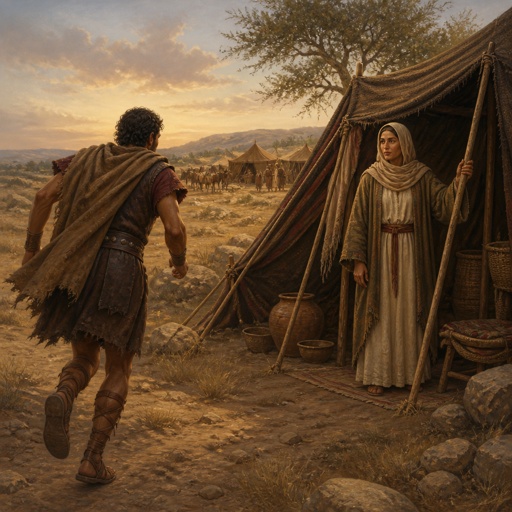
"Howbeit Sisera fled away on his feet to the tent of Jael the wife of Heber the Kenite: for there was peace between Jabin the king of Hazor and the house of Heber the Kenite." - Judges 4:17

Judges 4:15 – "The Lord routed Sisera and all his chariots and army by the sword."

Judges 1:17 - "And Judah went with Simeon his brother, and they slew the Canaanites that inhabited Zephath, and utterly destroyed it. And the name of the city was called Hormah."

Judges 17:13 - "Then said Micah, Now know I that the LORD will do me good, seeing I have a Levite to my priest."

Judges 4:12 - "And they shewed Sisera that Barak the son of Abinoam was gone up to mount Tabor."

Judges 17:5 - "And the man Micah had an house of gods, and made an ephod, and teraphim, and consecrated one of his sons, who became his priest."

Judges 5:17 - "Gilead abode beyond Jordan: and why did Dan remain in ships? Asher continued on the sea shore, and abode in his breaches."

Deuteronomy 19:17 - "Then both the men, between whom the controversy is, shall stand before the LORD, before the priests and the judges, which shall be in those days;"

Judges 20:17 - "And the men of Israel, beside Benjamin, were numbered four hundred thousand men that drew sword: all these were men of war."