The Call to Cleanliness: Understanding Holiness in Everyday Life
“And every thing whereupon any part of their carcase falleth shall be unclean; whether it be oven, or ranges for pots, they shall be broken down: for they are unclean, and shall be unclean unto you.” — Leviticus 11:35
In our pursuit of holiness, we often find ourselves wrestling with the concepts of cleanliness and contamination. Leviticus 11:35 gives us a piercing insight into God’s standards for holiness: "And every thing whereupon any part of their carcase falleth shall be unclean; whether it be oven, or ranges for pots, they shall be broken down: for they are unclean, and shall be unclean unto you."
This verse is nestled within the laws concerning clean and unclean animals, a significant aspect of the Mosaic Law. The Israelites were called to a higher standard of living; their righteousness was not limited to personal conduct but extended to their physical surroundings and possessions. God was teaching His people that contamination could spread, and what begins as one small impurity can render an entire household unclean.
The emphasis on where the carcass falls reminds us of a profound spiritual truth: our moral and spiritual integrity can affect more than just ourselves. It has the potential to impact our families, our communities, and even our congregations. Just as a small piece of decay can compromise an entire cooking instrument, so too can a small sin corrupt a person's entire life and testimony.
When we delve deeper into this concept, we can ask ourselves: what are the things in our lives that could be seen as spiritually unclean? What actions, thoughts, or influences are we allowing to touch the 'oven' of our hearts and minds? It is easy to think we are only responsible for ourselves; however, God’s Word calls us to consider the broader impacts of our decisions.
In our contemporary lives, we are not governed by Mosaic law, but the principle remains relevant. We are encouraged in the New Testament to recognize that our bodies are temples of the Holy Spirit (1 Corinthians 6:19-20), which calls for a life that is reflective of God’s holiness. Just as the Israelites had to destroy the stove or pots integral to their daily lives if they were contaminated, we may need to reassess what influences we allow into our lives. Are there habits, relationships, or entertainment choices that are leaving us spiritually unclean? Are we holding onto things that do not contribute to our spiritual growth and, worse, may hinder it?
In contrast, the act of purification found throughout the scriptures reminds us that there is always an avenue for restoration and renewal. Jesus came to fulfill the law and introduced a new covenant that invites us into a personal relationship with Him. Unlike the ritual laws of the Old Testament that required physical interaction with unclean objects to determine cleanliness, Christ made it possible for us to be cleansed spiritually through His sacrifice (Hebrews 10:10). When we sin and feel the weight of that shame, we are reminded in 1 John 1:9 that “If we confess our sins, he is faithful and just to forgive us our sins, and to cleanse us from all unrighteousness.”
Thus, the question remains: are we willing to evaluate and perhaps even dismantle aspects of our lives that keep us from pursuing holiness? Just as the Israelites had to break down those ovens and ranges, we may also need to 'break down' certain ideologies, habits, and even environments that straddle the line of contamination.
The beauty of scripture is its ability to speak across generations. While the specifics of the law have changed, the heart of God remains the same: He calls us to live lives set apart for Him. Let's view this scripture as a call to reflect on our daily choices. Are we living with intentionality, recognizing that even the smallest details of our lives can affect our overall state of being? May we prioritize holiness, understanding that our pursuit of cleanliness ultimately brings us closer to God Himself.
Get our apps


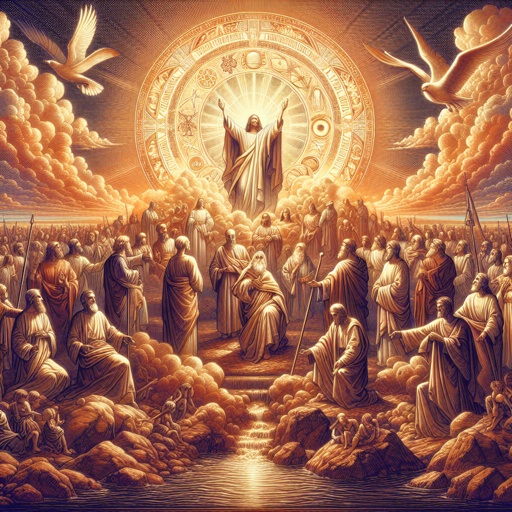
Artwork for Leviticus 11:35

Leviticus 11:35 - "And every thing whereupon any part of their carcase falleth shall be unclean; whether it be oven, or ranges for pots, they shall be broken down: for they are unclean, and shall be unclean unto you."
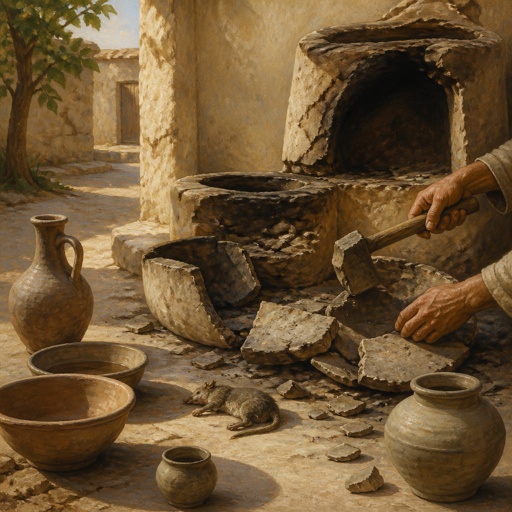
"And every thing whereupon any part of their carcase falleth shall be unclean; whether it be oven, or ranges for pots, they shall be broken down: for they are unclean, and shall be unclean unto you." - Leviticus 11:35

Leviticus 13:35 - "But if the scall spread much in the skin after his cleansing;"

Leviticus 19:35 - "¶ Ye shall do no unrighteousness in judgment, in meteyard, in weight, or in measure."

John (11:35) Jesus wept.

Leviticus 23:35 - "On the first day shall be an holy convocation: ye shall do no servile work therein."
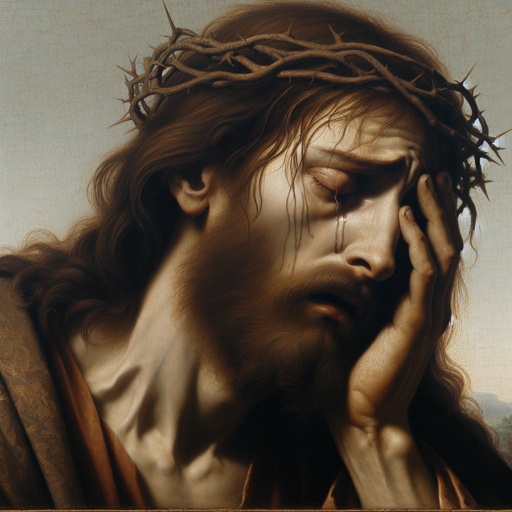
John (11:35) Jesus wept.

John (11:35) Jesus wept.

John 11:35

John 11:35

John (11:35) Jesus wept.

John (11:35) Jesus wept.

John (11:35) Jesus wept.

John (11:35) Jesus wept.
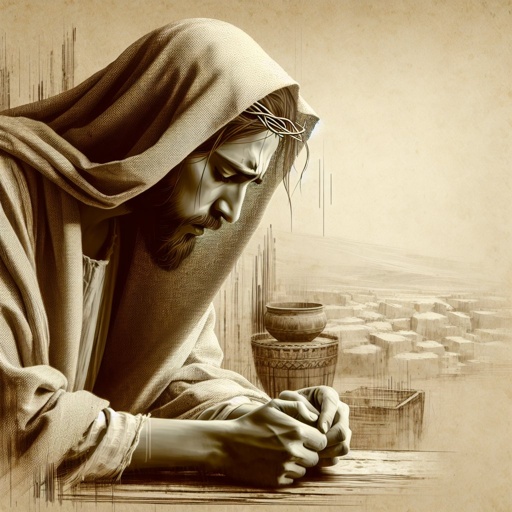
John 11:35 - "Jesus wept."

John (11:35) Jesus wept.

John (11:35) Jesus wept.

John (11:35) Jesus wept.

John (11:35) Jesus wept.

John (11:35) Jesus wept.

John (11:35) Jesus wept.
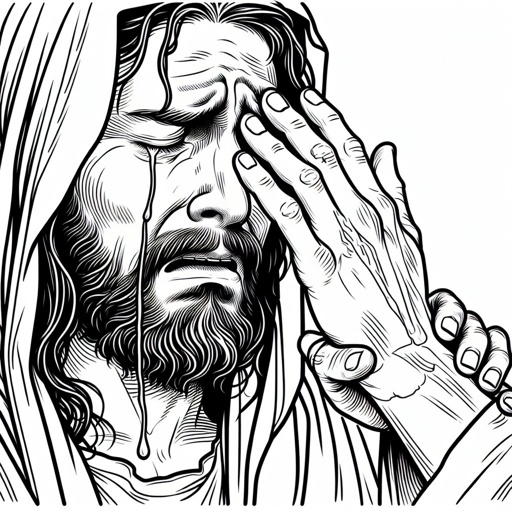
John (11:35) Jesus wept.

Leviticus 14:35 - "And he that owneth the house shall come and tell the priest, saying, It seemeth to me there is as it were a plague in the house:"

2 Chronicles 35:11

Leviticus 26:35 - "As long as it lieth desolate it shall rest; because it did not rest in your sabbaths, when ye dwelt upon it."

Nehemiah 11:35 - "Lod, and Ono, the valley of craftsmen."

"Jesus wept." - John 11:35

"But if the scall spread much in the skin after his cleansing;" - Leviticus 13:35
Leviticus 11:22

Luke 11:35 - "Take heed therefore that the light which is in thee be not darkness."