The Sacred Significance of Blood: A Call to Reverence
“And whatsoever man there be of the children of Israel, or of the strangers that sojourn among you, which hunteth and catcheth any beast or fowl that may be eaten; he shall even pour out the blood thereof, and cover it with dust.” — Leviticus 17:13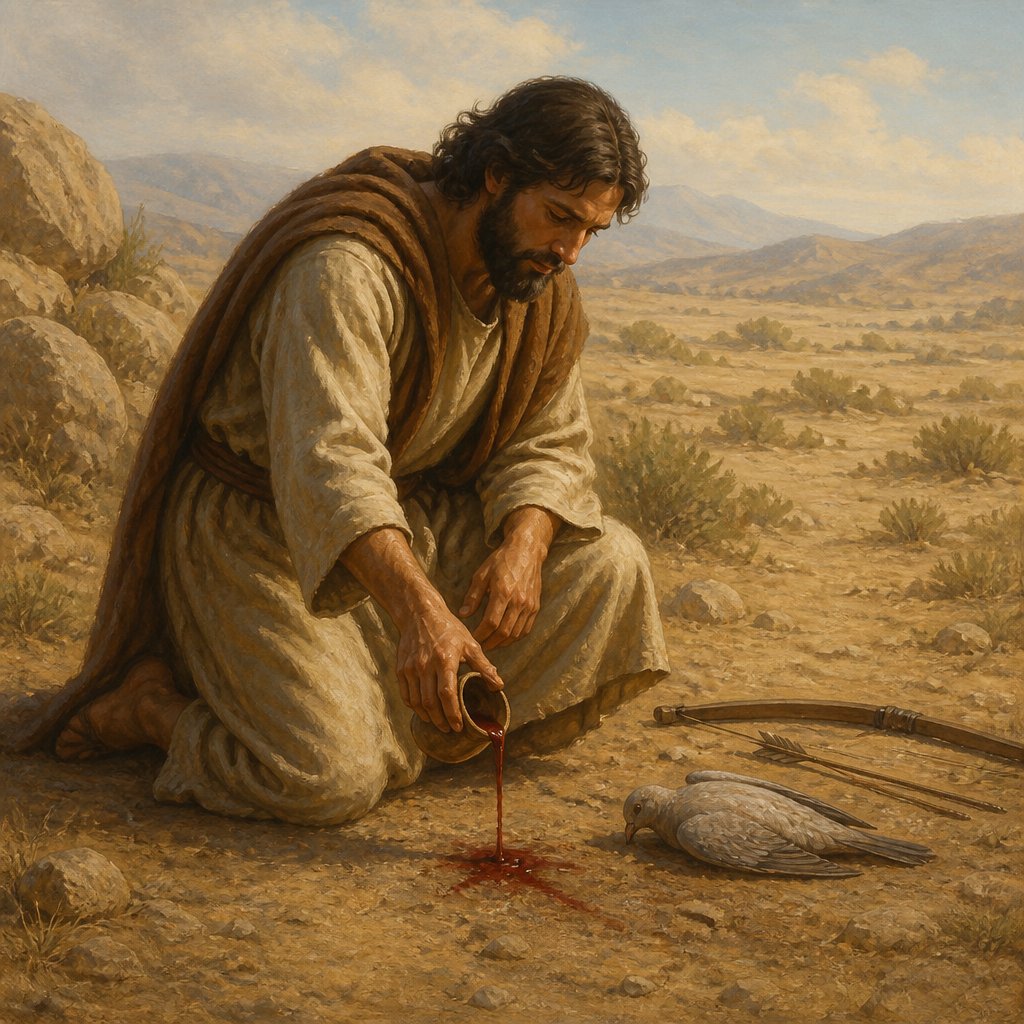
In Leviticus 17:13, we read: "And whatsoever man there be of the children of Israel, or of the strangers that sojourn among you, which hunteth and catcheth any beast or fowl that may be eaten; he shall even pour out the blood thereof, and cover it with dust." This verse, embedded within the broader context of the sacrificial system of ancient Israel, offers profound insights into the nature of life, worship, and our relationship with God.
At first glance, this verse may appear to be merely procedural—a guideline for the proper treatment of animals consumed for food. However, upon deeper examination, we discover that its implications extend into the realm of reverence towards life itself. Blood, in biblical terms, is symbolically rich; it represents life. In Leviticus 17:11, the Lord asserts, "For the life of the flesh is in the blood: and I have given it to you upon the altar to make an atonement for your souls: for it is the blood that maketh an atonement for the soul." This connection between blood and life underscores the sacredness of what was being done.
The act of pouring out the blood and covering it with dust symbolizes a recognition of the life that has been given. It is important for us to understand that blood carries the weight of a life sacrificed, and in the covenantal context of Israel, it signals both an act of reverence and an acknowledgment of the Lord’s sovereignty over all living beings. The children of Israel, as God's chosen people, were reminded that their actions—especially concerning life and death—had spiritual significance. By treating the blood of hunted animals with respect, they were reminded of the gravity of their decisions and the sacred nature of life that should never be taken lightly.
Moreover, this act served to demarcate the sacred from the common. In veterinary sciences today, the significance of blood is recognized in various ways, pointing to the fact that life is precious, created by God. In the same way, this directive serves as a spiritual and moral boundary for the Israelites. Every action they took in the process of taking life from an animal had to be filled with reverence, specifically directed towards God. Each hunt or catch became not just a provision for sustenance, but also a moment for worship. It involved echoes of gratitude, respect for creation, and acknowledgment of the Creator.
This principle of revering life should resonate with us today as faithful followers of Christ. How often do we consider the life behind the food on our table? When we share meals or partake in communion, do we reflect on the sacrifice behind that bread and wine? Just as the Israelites were required to thoughtfully pour out the blood and bury it, we too must be mindful of the life, both human and animal, that feeds us. It stirs our spirit to recognize that everything we possess comes from the generosity of God’s hand.
In Jesus Christ, the ultimate sacrificial Lamb, we see the fulfillment of blood as a means of atonement. His blood is poured out for the transgressions of many, underscoring the seriousness of sin and the profound depth of God’s love. As believers, we are called not to take lightly the salvation His sacrifice affords us. Just as the Israelites were to respect the blood of animals, we should hold in high regard the blood of Christ—appreciating its power to cleanse and renew.
In conclusion, as we meditate on Leviticus 17:13, let us ask ourselves how we honor the lives that God has placed in our care. Are there areas where we can show more reverence in our daily lives? Do we need to re-establish our priorities, focusing on God’s gift of life? May this verse challenge us to honor God through our stewardship and respect for all living things, recognizing always the sacredness that we are called to uphold.
Get our apps


Artwork for Leviticus 17:13
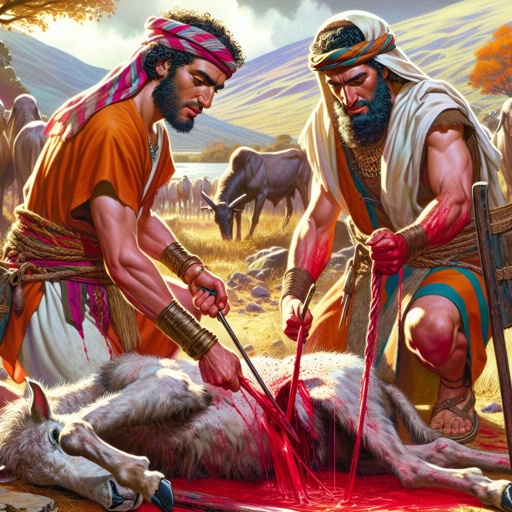
Leviticus 17:13 - "And whatsoever man there be of the children of Israel, or of the strangers that sojourn among you, which hunteth and catcheth any beast or fowl that may be eaten; he shall even pour out the blood thereof, and cover it with dust."
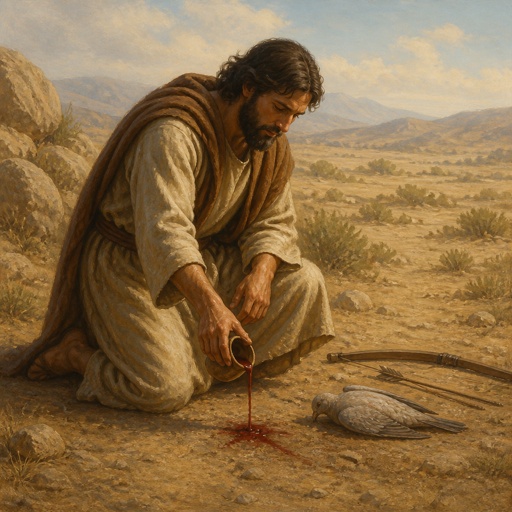
"And whatsoever man there be of the children of Israel, or of the strangers that sojourn among you, which hunteth and catcheth any beast or fowl that may be eaten; he shall even pour out the blood thereof, and cover it with dust." - Leviticus 17:13

Leviticus 13:17 - "And the priest shall see him: and, behold, if the plague be turned into white; then the priest shall pronounce him clean that hath the plague: he is clean."

Leviticus 17:7

Leviticus 23:17-22

Leviticus 11:17 - "And the little owl, and the cormorant, and the great owl,"

Leviticus 22:17 - "¶ And the LORD spake unto Moses, saying,"

Leviticus 17:1 - "And the LORD spake unto Moses, saying,"
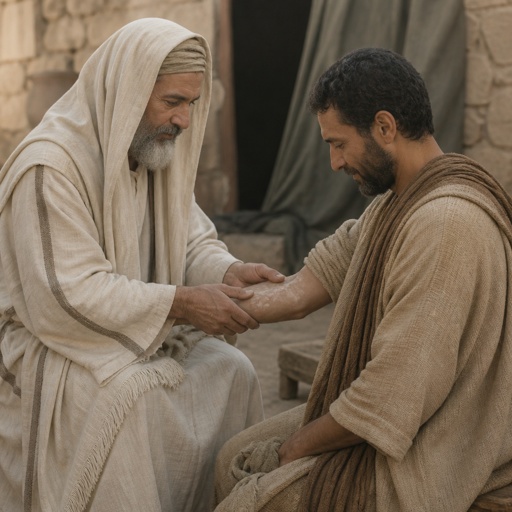
"And the priest shall see him: and, behold, if the plague be turned into white; then the priest shall pronounce him clean that hath the plague: he is clean." - Leviticus 13:17

Leviticus 7:17 - "But the remainder of the flesh of the sacrifice on the third day shall be burnt with fire."

Leviticus 24:13 - "And the LORD spake unto Moses, saying,"

Leviticus 21:13 - "And he shall take a wife in her virginity."

Leviticus 13:1 - "And the LORD spake unto Moses and Aaron, saying,"

Leviticus 24:17 - "¶ And he that killeth any man shall surely be put to death."

Leviticus 13:35 - "But if the scall spread much in the skin after his cleansing;"

Leviticus 13:29 - "¶ If a man or woman have a plague upon the head or the beard;"

Leviticus 13:18 - "¶ The flesh also, in which, even in the skin thereof, was a boil, and is healed,"

Leviticus 13:14 - "But when raw flesh appeareth in him, he shall be unclean."

Leviticus 13:47 - "¶ The garment also that the plague of leprosy is in, whether it be a woollen garment, or a linen garment;"

Leviticus 13:9 - "¶ When the plague of leprosy is in a man, then he shall be brought unto the priest;"

Leviticus 15:17 - "And every garment, and every skin, whereon is the seed of copulation, shall be washed with water, and be unclean until the even."

Leviticus 17:3 - "What man soever there be of the house of Israel, that killeth an ox, or lamb, or goat, in the camp, or that killeth it out of the camp,"

Leviticus 13:22 - "And if it spread much abroad in the skin, then the priest shall pronounce him unclean: it is a plague."

Leviticus 25:13 - "In the year of this jubile ye shall return every man unto his possession."

Leviticus 6:13 - "The fire shall ever be burning upon the altar; it shall never go out."

Leviticus 27:17 - "If he sanctify his field from the year of jubile, according to thy estimation it shall stand."

Leviticus 17:16 - "But if he wash them not, nor bathe his flesh; then he shall bear his iniquity."

"¶ And the LORD spake unto Moses, saying," - Leviticus 22:17

"And the LORD spake unto Moses, saying," - Leviticus 17:1

"And the little owl, and the cormorant, and the great owl," - Leviticus 11:17