Sanctification and Holiness: A Deeper Understanding of Leviticus 21:23
“Only he shall not go in unto the vail, nor come nigh unto the altar, because he hath a blemish; that he profane not my sanctuaries: for I the LORD do sanctify them.” — Leviticus 21:23
The Book of Leviticus often presents a challenge to modern readers, as its rituals, laws, and the intricacies of sacrificial systems appear distant from contemporary experiences. However, verse 21:23 offers us significant insights into the nature of holiness, the sacredness of God’s presence, and the profound implications of living a life consecrated to Him.
The specific verse states: "Only he shall not go in unto the vail, nor come nigh unto the altar, because he hath a blemish; that he profane not my sanctuaries: for I the LORD do sanctify them." This prohibits certain individuals with physical blemishes from approaching sacred spaces, particularly the altar where sacrifices are offered. At first glance, this might seem harsh or exclusionary. Yet, within the context of Israel’s covenant relationship with God, it serves as a powerful reminder of God’s holiness and the respect required in His presence.
**Understanding the Context**
In Levitical law, God outlined specific requirements for priests, charged with representing the people before Him. The integrity of the priesthood was paramount; the priest was to embody the commitment to holiness. Their physical condition symbolized the spiritual condition they were to maintain. A blemish indicated not just a physical defect, but also served as a metaphor for the spiritual imperfections that could tarnish the worship and devotion to God. The priests were meant to approach the altar, the very place of communion between God and His people, in a condition that reflected the purity and sanctity of God's nature.
**The Deeper Meaning of Holiness**
To "profane" God’s sanctuaries is to treat that which is sacred as common or unholy. The seriousness of this can hardly be overstated. The sanctuary was not merely a building; it was the dwelling place of God among His people. When we consider Leviticus 21:23, we are reminded that our approach to God should be characterized by reverence and awareness of His holiness. God does not require perfection from us in the sense of never making mistakes; rather, He desires our genuine hearts and a life committed to holiness.
In our modern spiritual lives, this principle still holds. Hebrews 12:14 urges us, "Follow peace with all men, and holiness, without which no man shall see the Lord." Holiness is no longer defined by physical characteristics but is now a matter of the heart and spirit, as echoed in the teachings of Jesus. When we bring our lives before God, we must acknowledge our need for His grace and the work of the Holy Spirit in transforming us.
**Consequences of Approaching God Casually**
The call to sanctification is also a call to discern how we approach God in our worship and daily lives. The concept of the priest not drawing near to the altar highlights the gravity of coming before the Lord—may it never become a casual or flippant act. Today, how do we approach our prayer life, worship services, Bible study, or even our communal gatherings? Do we prepare our hearts, recognizing the gravity of entering into God’s presence?
Let this verse serve as a call to examine the areas where we may treat our relationship with God lightly. Seeking forgiveness and cleansing, not just from external blemishes, but from the attitudes of our hearts, is crucial. Are we harboring bitterness, anger, or resentment? Do we allow distractions to pull us away from our focus on God? Each of these can render our worship profane if we do not align our hearts with His sanctity.
**Conclusion**
In closing, while Leviticus 21:23 pertains to a specific law for Israel’s priests, its implications resonate deeply with us. God desires hearts that are fully devoted to Him, reflecting His holiness in our words and actions. As we seek to draw near to God—like the priests of old who approached the vail—let us do so with reverence and a commitment to live a life that glorifies Him. Let us pray for the work of the Holy Spirit in our lives, that we may reflect His sanctifying grace in all that we do.
Get our apps


Artwork for Leviticus 21:23

Leviticus 21:23 - "Only he shall not go in unto the vail, nor come nigh unto the altar, because he hath a blemish; that he profane not my sanctuaries: for I the LORD do sanctify them."

"Only he shall not go in unto the vail, nor come nigh unto the altar, because he hath a blemish; that he profane not my sanctuaries: for I the LORD do sanctify them." - Leviticus 21:23

Leviticus 23:21

Leviticus 23:21

Leviticus 23:21

Leviticus 23:21

Leviticus 23:21

Leviticus 23:21

Leviticus 23:21 - "And ye shall proclaim on the selfsame day, that it may be an holy convocation unto you: ye shall do no servile work therein: it shall be a statute for ever in all your dwellings throughout your generations."

Leviticus 23:23 - "¶ And the LORD spake unto Moses, saying,"

Leviticus 23:20

Leviticus 23:15-22

Leviticus 23:17-22

Leviticus 24:20-23

Leviticus 21:19 - "Or a man that is brokenfooted, or brokenhanded,"

"¶ And the LORD spake unto Moses, saying," - Leviticus 23:23

Leviticus 23:26 - "¶ And the LORD spake unto Moses, saying,"

Leviticus 23:1 - "And the LORD spake unto Moses, saying,"

Leviticus 23:33 - "¶ And the LORD spake unto Moses, saying,"

Leviticus 23:9 - "¶ And the LORD spake unto Moses, saying,"

Leviticus 21:16 - "¶ And the LORD spake unto Moses, saying,"

Leviticus 23:5 - "In the fourteenth day of the first month at even is the LORD'S passover."

Leviticus 23:44 - "And Moses declared unto the children of Israel the feasts of the LORD."

Leviticus 21:13 - "And he shall take a wife in her virginity."

Leviticus 26:23 - "And if ye will not be reformed by me by these things, but will walk contrary unto me;"

the jewish holidays mentioned in leviticus 23:1 until 23:40 combined in one picture,

"Or a man that is brokenfooted, or brokenhanded," - Leviticus 21:19

Leviticus 6:23 - "For every meat offering for the priest shall be wholly burnt: it shall not be eaten."
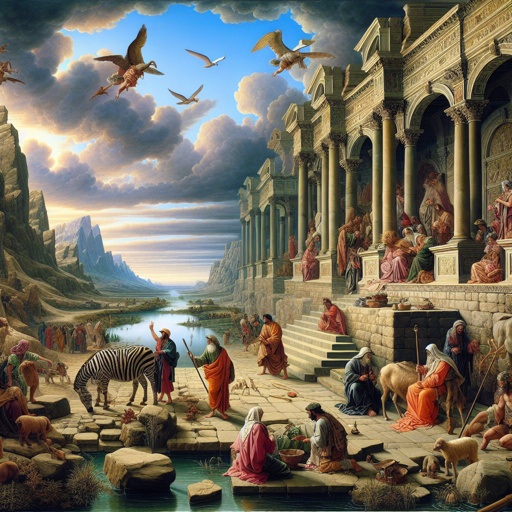
Genesis 21-23

Leviticus 25:23 - "¶ The land shall not be sold for ever: for the land is mine; for ye are strangers and sojourners with me."