A Sacred Lineage: Understanding Holiness and Belonging
“If the priest’s daughter also be married unto a stranger, she may not eat of an offering of the holy things.” — Leviticus 22:12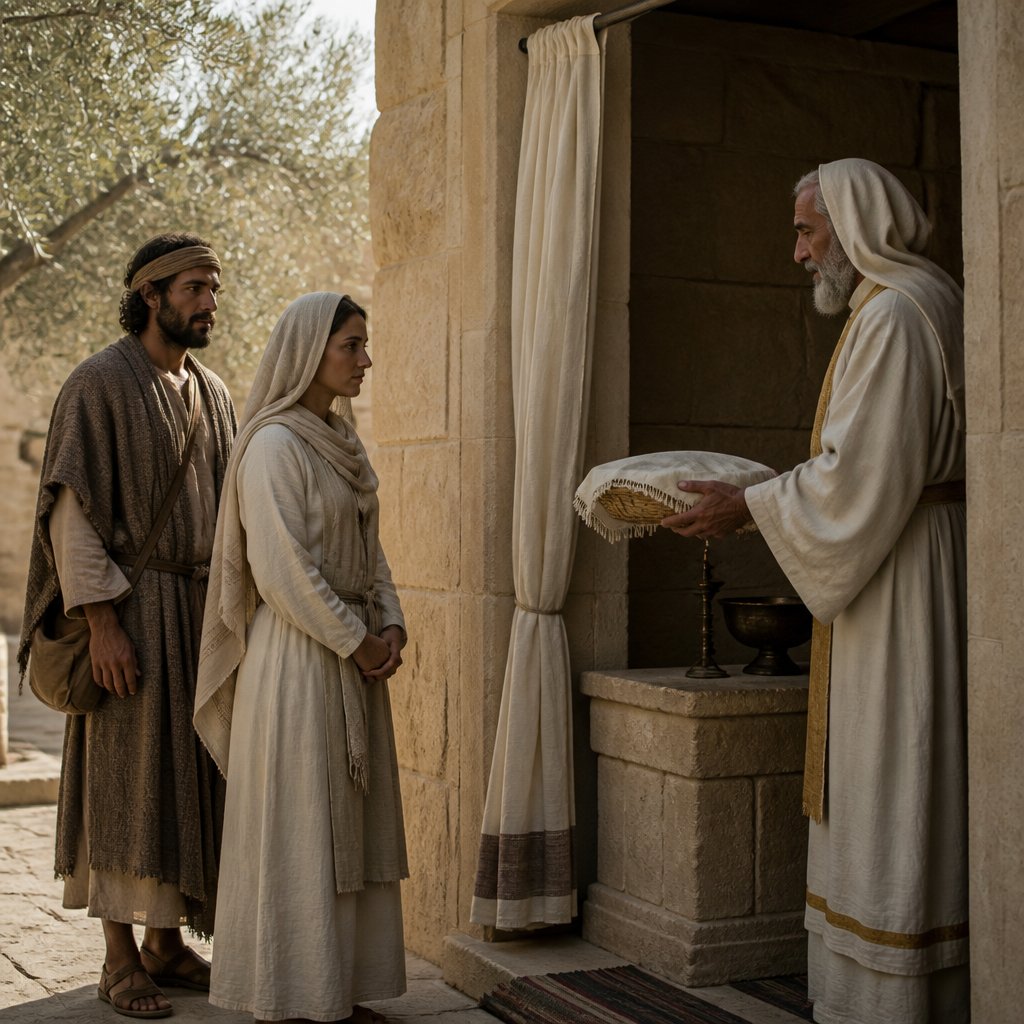
Leviticus 22:12 states, "If the priest's daughter also be married unto a stranger, she may not eat of an offering of the holy things." At first glance, this verse appears to address a specific scenario within the Levitical priesthood, but beneath its surface lays deep spiritual truths about holiness, identity, and our relationship with God.
In the context of ancient Israel, holiness was integral to the identity of the priesthood. The Levites were set apart to serve God in the sanctuary and mediate His presence. Holiness defined their roles, lifestyle, and familial obligations. This verse emphasizes that the priest’s daughter, now married to a 'stranger' (a non-Israelite), forfeits her right to partake of the sacred offerings. This practice underscored the seriousness of maintaining separation from pagan influences and the necessity of purity in both lineage and worship.
To understand this better, we must explore the nature of the covenant community that Israel constituted. God called Israel to be a holy nation, distinct from all others, and He established the priestly lineage as the means by which His holiness would be communicated and mediated. The children of priests were expected to reflect this sacred calling. Thus, when a priest’s daughter married a stranger, she removed herself from this covenantal community and its associated blessings.
This principle of being set apart is not only relevant in an ancient context but extends to modern believers. Just as the priest’s daughter was cautioned about the implications of her marriage choice, Christians today are reminded of the importance of their relationships and associations. In 2 Corinthians 6:14, Paul exhorts believers, "Be ye not unequally yoked together with unbelievers: for what fellowship hath righteousness with unrighteousness?" Here, we see a parallel in the call to maintain holy standards, suggesting that our relationships should echo our covenantal identity as children of God.
The notion of holiness is often misconstrued as mere legalism or restrictive behavior. However, it is crucial to recognize that holiness is about identity and intimacy with God. To be holy means to be distinct, set apart for God’s purposes. The requirement for the priest and his family was not merely to adhere to a stringent set of rules but to embrace their role in God’s divine plan and essence.
Furthermore, the priest's daughter being barred from holy offerings illuminates the relational aspect of God’s covenant. It demonstrates that our standing before God is linked to our choices and lifestyles. God desires His people to embody the values of His Kingdom. When a believer engages in relationships that compromise their values and witness, they risk distancing themselves from the blessings and provisions that come with their faith.
Yet, as we reflect upon this passage, let us also consider the grace of God that always beckons us back to Himself. Even when we stray or find ourselves in compromising situations, God’s heart is to reconcile us. Just like the priest’s daughter could be brought back into the fold through repentance and a renewed commitment to her identity, we too can return to the heart of God, regardless of past choices.
In conclusion, Leviticus 22:12 serves as a poignant reminder for us in our contemporary lives. It reiterates the significance of being set apart as a people belonging to God while warned against losing the holy connection He offers through our choices. Let us commit to living out our identity as children of the Most High, recognizing that our relationships reflect our allegiance to Him. May we actively seek to embody His holiness in every aspect of our lives, continuously reflecting on how we can remain rooted in our sacred lineage.
Get our apps


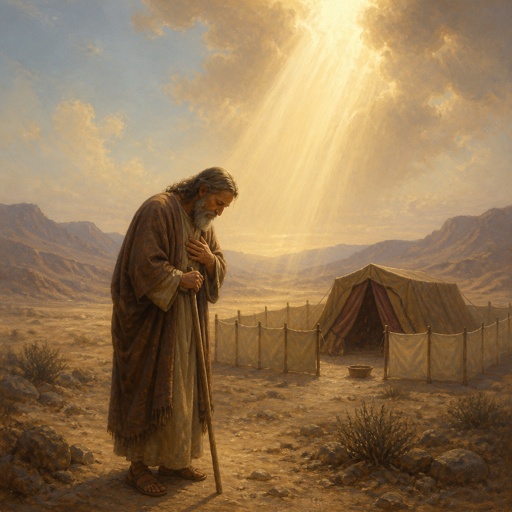
Artwork for Leviticus 22:12

Leviticus 22:12 - "If the priest's daughter also be married unto a stranger, she may not eat of an offering of the holy things."
"If the priest's daughter also be married unto a stranger, she may not eat of an offering of the holy things." - Leviticus 22:12
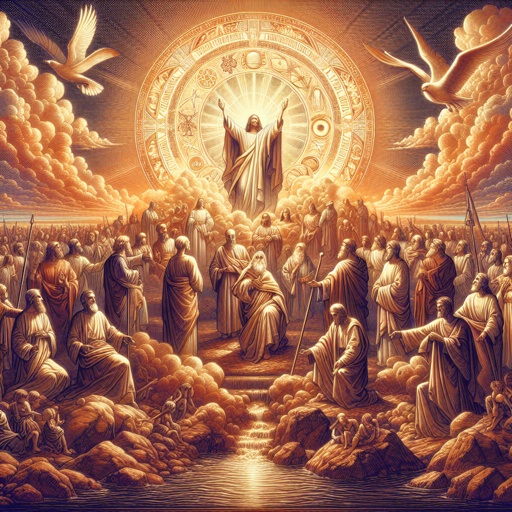
Leviticus 11:22

Leviticus 23:15-22

Leviticus 23:17-22

Leviticus 22:17 - "¶ And the LORD spake unto Moses, saying,"

Leviticus 7:22 - "¶ And the LORD spake unto Moses, saying,"

Leviticus 22:1 - "And the LORD spake unto Moses, saying,"

Leviticus 22:26 - "¶ And the LORD spake unto Moses, saying,"

Leviticus 18:22 - "Thou shalt not lie with mankind, as with womankind: it is abomination."
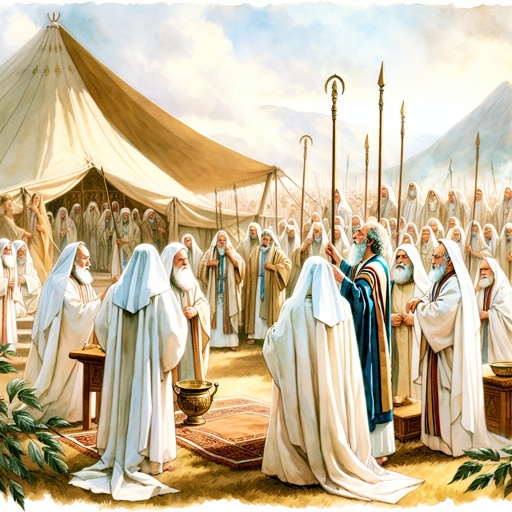
Leviticus 8:1-12

Leviticus 20:22-26 simple picture

Picture to summarize Leviticus 20:22-26

Leviticus 22:20 - "But whatsoever hath a blemish, that shall ye not offer: for it shall not be acceptable for you."

Leviticus 12:1 - "And the LORD spake unto Moses, saying,"

Leviticus 13:22 - "And if it spread much abroad in the skin, then the priest shall pronounce him unclean: it is a plague."

Leviticus 21:22 - "He shall eat the bread of his God, both of the most holy, and of the holy."

Leviticus 22:33 - "That brought you out of the land of Egypt, to be your God: I am the LORD."

Leviticus 22:29 - "And when ye will offer a sacrifice of thanksgiving unto the LORD, offer it at your own will."

Leviticus 22:15 - "And they shall not profane the holy things of the children of Israel, which they offer unto the LORD;"

1 Corinthians 12:12-22

Leviticus 22:22 - "Blind, or broken, or maimed, or having a wen, or scurvy, or scabbed, ye shall not offer these unto the LORD, nor make an offering by fire of them upon the altar unto the LORD."

Leviticus 22:19 - "Ye shall offer at your own will a male without blemish, of the beeves, of the sheep, or of the goats."

Leviticus 12:3 - "And in the eighth day the flesh of his foreskin shall be circumcised."

Leviticus 22:31 - "Therefore shall ye keep my commandments, and do them: I am the LORD."

Leviticus 22:28 - "And whether it be cow or ewe, ye shall not kill it and her young both in one day."

Leviticus 24:12 - "And they put him in ward, that the mind of the LORD might be shewed them."

"¶ And the LORD spake unto Moses, saying," - Leviticus 7:22

"¶ And the LORD spake unto Moses, saying," - Leviticus 22:17
"¶ And the LORD spake unto Moses, saying," - Leviticus 22:26