What does Leviticus 22:12 mean?
“If the priest’s daughter also be married unto a stranger, she may not eat of an offering of the holy things.” — Leviticus 22:12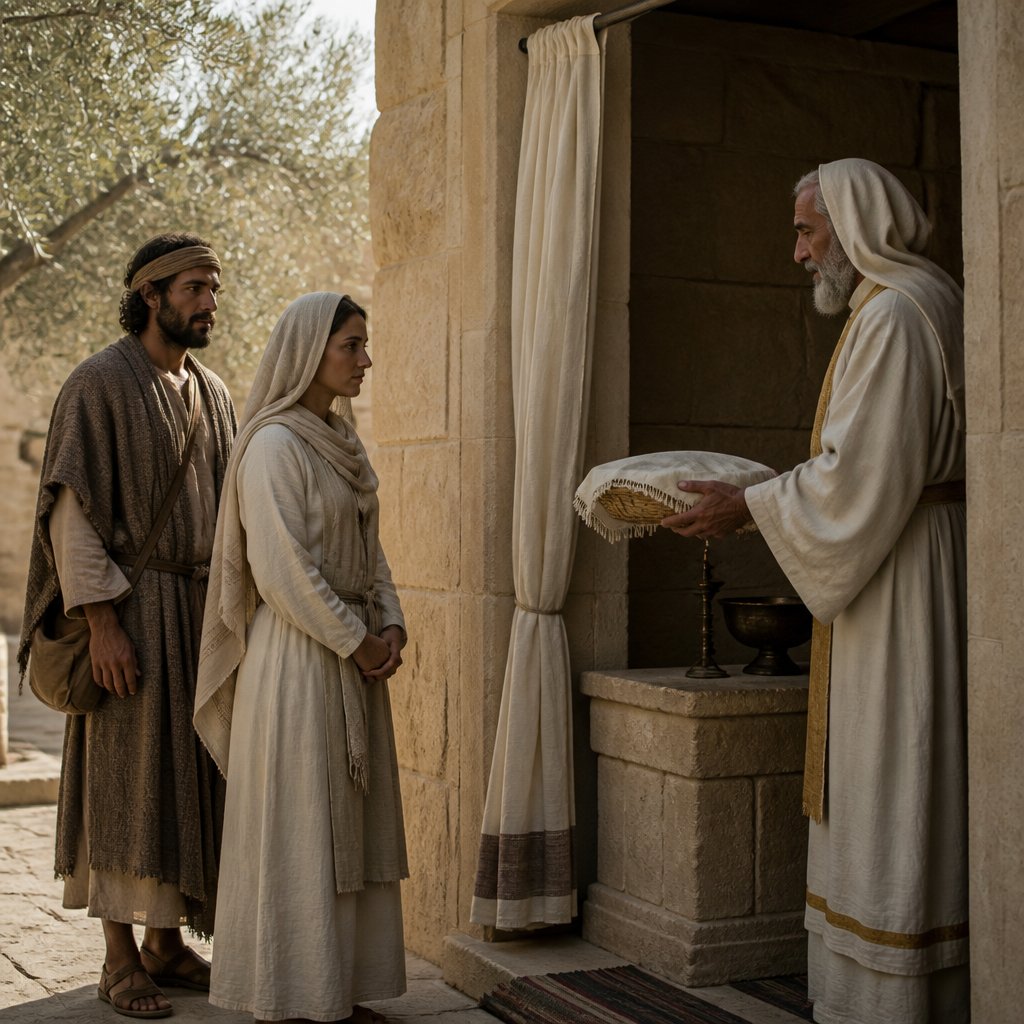
Leviticus 22:12 (KJV) states, "If the priest's daughter also be married unto a stranger, she may not eat of an offering of the holy things."
This verse comes from the book of Leviticus in the Old Testament, which is a part of the Torah, the sacred text of Judaism. In this book, God gives instructions to the Israelites through Moses on how to live their lives according to His laws. Leviticus contains many laws and regulations related to worship, rituals, and purity, and this verse specifically concerns the eligibility of a priest's daughter to partake in the eating of holy offerings.
The theme of this verse revolves around the concept of holiness and the strict guidelines that were to be followed by the Israelites, particularly the priests and their families. The verse emphasizes the importance of maintaining purity and sanctity in their worship practices and highlights the significance of familial and cultural identity within the community. It also serves as a reminder of the separation between the sacred and the profane.
The context of this verse is set within the larger framework of Leviticus, which contains various laws and regulations for the Israelites to follow in order to maintain their relationship with God. The specific law mentioned in this verse is intended to preserve the sanctity of the offerings and ensure that only those who are ritually pure and closely associated with the priestly lineage are allowed to partake in them.
The symbolism in this verse is multifaceted. Firstly, it symbolizes the exclusivity and selectiveness of the priesthood, as only the priest's daughter who is not married to a non-Israelite is deemed eligible to partake in the holy offerings. This represents the idea of spiritual lineage and the importance of maintaining purity within the priestly family. It also signifies the importance of maintaining cultural and religious boundaries, as intermarriage with foreigners was often discouraged in ancient Israel in order to preserve the distinctiveness of the community.
Furthermore, the verse symbolizes the concept of holiness and the need for purity in approaching God and participating in sacred rituals. It underscores the idea that only those who are ritually pure and in accordance with God's laws are allowed to partake in the holy offerings. This symbolizes the importance of adhering to God's commandments and living a life of righteousness in order to maintain a close relationship with Him.
In a broader sense, this verse also serves as a reminder of the spiritual principles that are essential for maintaining a connection with God. It emphasizes the need for personal and communal purity, the importance of familial and cultural identity, and the significance of respecting and upholding the divine laws that govern worship and ritual practices.
In conclusion, Leviticus 22:12 (KJV) carries significant meaning within the context of the book of Leviticus and the broader spectrum of the Old Testament. It underscores the themes of holiness, purity, familial identity, and cultural preservation. The verse symbolizes the importance of maintaining spiritual and moral integrity in approaching God and participating in sacred rituals. It serves as a poignant reminder of the spiritual principles and guidelines that were essential for the Israelites to uphold in order to maintain their covenant relationship with God.
Get our apps


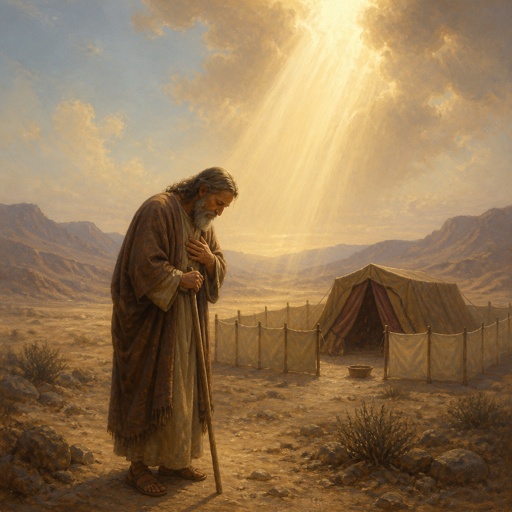
Artwork for Leviticus 22:12

Leviticus 22:12 - "If the priest's daughter also be married unto a stranger, she may not eat of an offering of the holy things."
"If the priest's daughter also be married unto a stranger, she may not eat of an offering of the holy things." - Leviticus 22:12
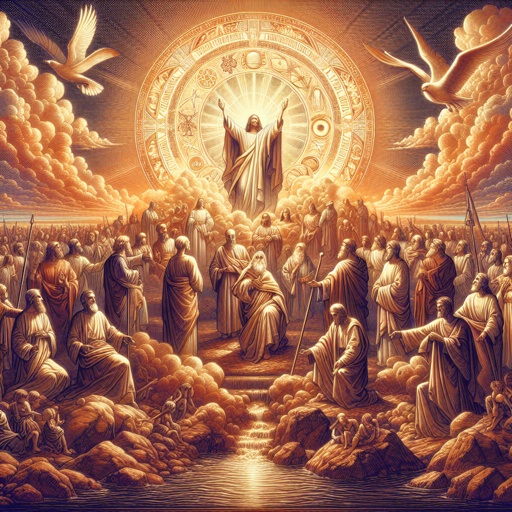
Leviticus 11:22

Leviticus 23:15-22

Leviticus 23:17-22

Leviticus 22:17 - "¶ And the LORD spake unto Moses, saying,"

Leviticus 7:22 - "¶ And the LORD spake unto Moses, saying,"

Leviticus 22:1 - "And the LORD spake unto Moses, saying,"

Leviticus 22:26 - "¶ And the LORD spake unto Moses, saying,"

Leviticus 18:22 - "Thou shalt not lie with mankind, as with womankind: it is abomination."
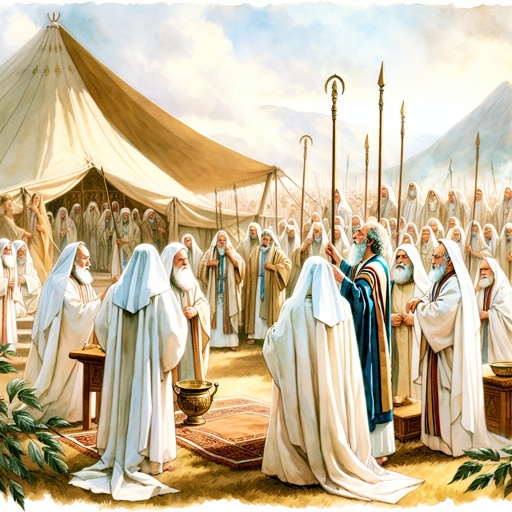
Leviticus 8:1-12

Leviticus 20:22-26 simple picture

Picture to summarize Leviticus 20:22-26

Leviticus 22:20 - "But whatsoever hath a blemish, that shall ye not offer: for it shall not be acceptable for you."

Leviticus 12:1 - "And the LORD spake unto Moses, saying,"

Leviticus 13:22 - "And if it spread much abroad in the skin, then the priest shall pronounce him unclean: it is a plague."

Leviticus 21:22 - "He shall eat the bread of his God, both of the most holy, and of the holy."

Leviticus 22:33 - "That brought you out of the land of Egypt, to be your God: I am the LORD."

Leviticus 22:29 - "And when ye will offer a sacrifice of thanksgiving unto the LORD, offer it at your own will."

Leviticus 22:15 - "And they shall not profane the holy things of the children of Israel, which they offer unto the LORD;"

1 Corinthians 12:12-22

Leviticus 22:22 - "Blind, or broken, or maimed, or having a wen, or scurvy, or scabbed, ye shall not offer these unto the LORD, nor make an offering by fire of them upon the altar unto the LORD."

Leviticus 22:19 - "Ye shall offer at your own will a male without blemish, of the beeves, of the sheep, or of the goats."

Leviticus 12:3 - "And in the eighth day the flesh of his foreskin shall be circumcised."

Leviticus 22:31 - "Therefore shall ye keep my commandments, and do them: I am the LORD."

Leviticus 22:28 - "And whether it be cow or ewe, ye shall not kill it and her young both in one day."

Leviticus 24:12 - "And they put him in ward, that the mind of the LORD might be shewed them."

"¶ And the LORD spake unto Moses, saying," - Leviticus 7:22

"¶ And the LORD spake unto Moses, saying," - Leviticus 22:17
"¶ And the LORD spake unto Moses, saying," - Leviticus 22:26