Listening to the Divine Instructions: A Call to Obedience
“And the LORD spake unto Moses, saying,” — Leviticus 6:8
In Leviticus 6:8, we find a crucial moment in the unfolding narrative of God's engagement with His people: "And the LORD spake unto Moses, saying." This direct communication from God to Moses establishes a foundational principle: the importance of divine instruction and obedience among the Israelites. As we delve deeper into this verse, we recognize that it is more than a historical account; it is a reminder of God's ongoing desire to guide and direct our lives, even today.
Moses, revered as the leader and prophet of Israel, stood as the intermediary between God and the people. In this verse, an intimate moment of communication underscores the unique relationship between God and His prophet. The phrase "the LORD spake unto Moses" highlights the notion that God speaks—He desires to communicate with us and share His will. This is a significant theme throughout the Bible; whether through visions, dreams, or direct dialogue, God actively seeks to establish a rapport with His followers. In a world busy with noise and distractions, the question arises: Are we listening?
Reflecting on this verse also invites us to consider the posture of our hearts when we approach God's Word. In Psalm 46:10, we are encouraged to "Be still, and know that I am God." However, stillness is often elusive for many of us. Busyness, stress, and the incessant demands of life can drown out the gentle whisper of God's voice. In the echo of Leviticus 6:8, we must ask ourselves: How can we cultivate an environment conducive to hearing God's voice? This could involve setting aside time for prayer, silence, and reflection, or actively engaging in Scripture study.
Moses was not simply an auditor of God's words; he was an obedient servant. The expectation was that he not only listened but also acted upon what he heard. The subsequent chapters in Leviticus detail the instructions God gave to Moses regarding offerings, sacrifices, and the conduct expected of His people. Each instruction served the purpose of refining the spiritual and communal life of Israel. From God's perspective, these laws were not arbitrary; they were essential for the establishment of a covenant community that reflected His holiness and grace.
Moreover, the narrative of the Israelites reveals a recurring challenge: the struggle to maintain obedience amidst trials. The freedom from Egypt was not merely a physical deliverance; it was a call to discipleship under God's authority. Likewise, we are invited out of our own bondage to walk in the light of God’s truth. However, the journey is often fraught with temptations to stray, just as Israel grappled with doubt among the wilderness. This is where Leviticus 6:8 serves as a beacon of hope and instruction.
Applying lessons from this verse encourages us to embrace God’s commandments with a sense of urgency and reverence. Jesus reiterates this connection in John 10:27 when He states, "My sheep hear my voice, and I know them, and they follow me." Our response to God’s voice—like that of Moses—can shape the trajectory of our faith journey.
As we move forward in our spiritual lives, may we commit to recognizing and heeding God’s voice. Let us cultivate hearts that yearn for understanding and empower ourselves through prayer and study to grasp the depth of His will. The call to obedience is not just about compliance; it is a transformative journey that leads to intimacy with God and community with one another. When we hear God’s voice, let us be quick to respond as faithful servants, ready to fulfill the good works He has prepared for us.
In essence, Leviticus 6:8 is not just an ancient command but a timeless invitation—a reminder that our God speaks, desires intimacy, and expects obedience. May we always be ready, like Moses, to say, "Speak, Lord, for your servant is listening." In our listening, may we discover the deep joy that accompanies following His ways, resulting in a life that glorifies Him and builds His kingdom.
Get our apps


Artwork for Leviticus 6:8

Leviticus 6:8 - "¶ And the LORD spake unto Moses, saying,"

"¶ And the LORD spake unto Moses, saying," - Leviticus 6:8

Leviticus 8:6 - "And Moses brought Aaron and his sons, and washed them with water."
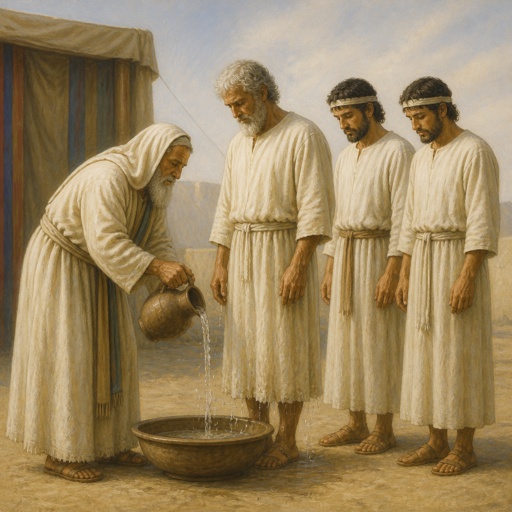
"And Moses brought Aaron and his sons, and washed them with water." - Leviticus 8:6

Leviticus 16:8

Leviticus 8:30
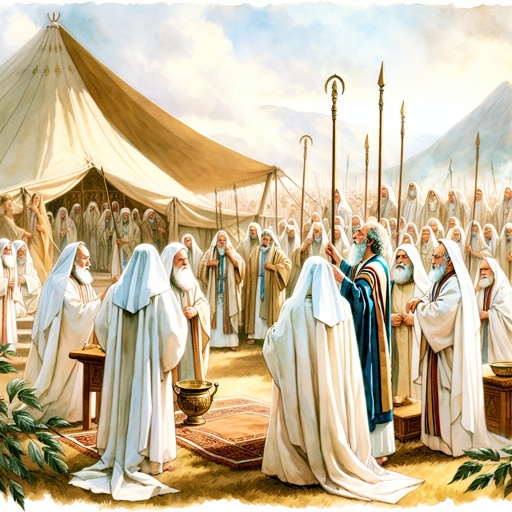
Leviticus 8:1-12

Leviticus 8:8 - "And he put the breastplate upon him: also he put in the breastplate the Urim and the Thummim."

Leviticus 26: 4-6

Leviticus 26: 4-6

Leviticus 26: 4-6

Leviticus 10:8 - "¶ And the LORD spake unto Aaron, saying,"

Leviticus 8:1 - "And the LORD spake unto Moses, saying,"

Leviticus 6:24 - "¶ And the LORD spake unto Moses, saying,"

Leviticus 6:19 - "¶ And the LORD spake unto Moses, saying,"

Leviticus 6:1 - "And the LORD spake unto Moses, saying,"

Leviticus 8:32 - "And that which remaineth of the flesh and of the bread shall ye burn with fire."

Leviticus 1:6 - "And he shall flay the burnt offering, and cut it into his pieces."

Leviticus 8:19 - "And he killed it; and Moses sprinkled the blood upon the altar round about."

Leviticus 8:3 - "And gather thou all the congregation together unto the door of the tabernacle of the congregation."

Leviticus 8:5 - "And Moses said unto the congregation, This is the thing which the LORD commanded to be done."

Leviticus 2:6 - "Thou shalt part it in pieces, and pour oil thereon: it is a meat offering."

Leviticus 8:20 - "And he cut the ram into pieces; and Moses burnt the head, and the pieces, and the fat."

Leviticus 18:8 - "The nakedness of thy father's wife shalt thou not uncover: it is thy father's nakedness."

6:6 8

Leviticus 6:29 - "All the males among the priests shall eat thereof: it is most holy."

Leviticus 6:23 - "For every meat offering for the priest shall be wholly burnt: it shall not be eaten."

Leviticus 6:13 - "The fire shall ever be burning upon the altar; it shall never go out."

Leviticus 8:10 - "And Moses took the anointing oil, and anointed the tabernacle and all that was therein, and sanctified them."

Leviticus 11:8 - "Of their flesh shall ye not eat, and their carcase shall ye not touch; they are unclean to you."