The Sacrifice of Surrender: A Deeper Look at Leviticus 9:13
“And they presented the burnt offering unto him, with the pieces thereof, and the head: and he burnt them upon the altar.” — Leviticus 9:13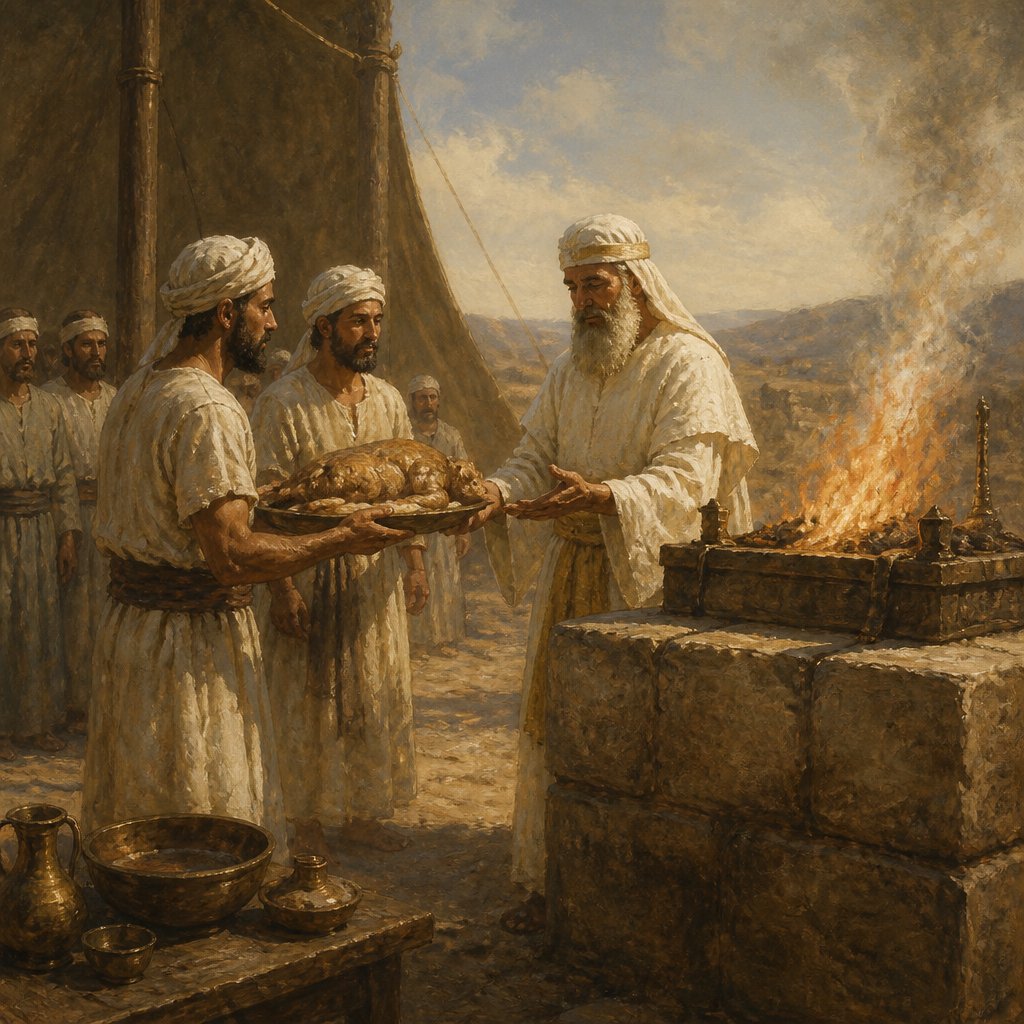
The act of sacrifice in the Old Testament serves as a pivotal practice that encompasses the entirety of worship and relationship with God. Within Leviticus 9:13, we see a profound illustration of this concept: "And they presented the burnt offering unto him, with the pieces thereof, and the head: and he burnt them upon the altar." This verse encapsulates the essence of total surrender and the heart of worship that God desires from His people.
To grasp the significance of this burnt offering, we must understand the role of the altar and the action of burning. The altar was a place of sacrifice, a dedicated space where offerings were made to God as a means of communion. The very act of placing an animal on the altar represented a profound exchange—the recognition that our lives are to be laid down before the Holy One. By presenting the burnt offering, the individuals were not merely fulfilling a ritual but engaging in a powerful act of devotion and commitment.
The burnt offering includes not just the entire animal but also the way it is prepared: “the pieces thereof, and the head.” Here, we find that every part of the offering is significant. The head often symbolizes the intellect and will—the thoughts and choices of a believer. Bringing the head to the altar emphasizes that our intellect must be submitted to the Lord. We are called to align our minds with His thoughts and ways. Romans 12:1-2 echoes this sentiment, encouraging us to present our bodies as living sacrifices and to renew our minds, aligning our thoughts with the will of God.
Moreover, the pieces of the offering represent the many facets of our lives. Just as the animal was cut into pieces, so must our lives be laid bare before God. Every portion of our existence—our relationships, careers, ambitions, and challenges—needs to be presented to Him. In this act, we acknowledge our limitations and declare our reliance on Him to transform those pieces into something beautiful. Each fragment in the hands of God has the potential to contribute to His divine purpose.
When we read that "he burnt them upon the altar," we witness the consummation of this symbolic act of surrender. Fire, in biblical terms, often signifies purification, transformation, and the presence of God as a consuming fire. The burnt offering was entirely consumed, symbolizing that the giver's entire life is to be surrendered to God. There is a call for believers today to reflect on what it means to be a living sacrifice. Are we willing to allow God to purify our intentions and motives in the same way?
Additionally, this passage foreshadows the ultimate act of sacrifice in Jesus Christ, who is often referred to as the Lamb of God. Just as the offerings were presented to God, so was Christ, who offered Himself wholly for our sins, consuming all that stands between us and God with His love and grace. This connection invites us to reflect on the enduring love of God—a love that calls us to sacrifice our own desires for His greater purpose.
As we ponder Leviticus 9:13, let us ask ourselves: What are we placing on the altar today? Are we willing to present every piece of our lives to God for His use? It is a challenge to trust God with our most cherished thoughts and plans. However, it is when we let go that we can truly embrace the fullness of what God has prepared for us.
In a world where individualism reigns and self-sufficiency is the norm, we are reminded that true strength is found in surrender. Each time we choose to present our burnt offerings, we echo the cry of our hearts, declaring to the Lord, "Here I am. Take me, use me, and let my life be a fragrant offering unto You."
Thus, as we reflect on the act of presenting our lives to God, may we offer Him a heart that seeks to align with His will—a heart that desires to be on the altar, consumed for His glory.
Get our apps


Artwork for Leviticus 9:13

Leviticus 9:13 - "And they presented the burnt offering unto him, with the pieces thereof, and the head: and he burnt them upon the altar."
"And they presented the burnt offering unto him, with the pieces thereof, and the head: and he burnt them upon the altar." - Leviticus 9:13

Leviticus 13:9 - "¶ When the plague of leprosy is in a man, then he shall be brought unto the priest;"
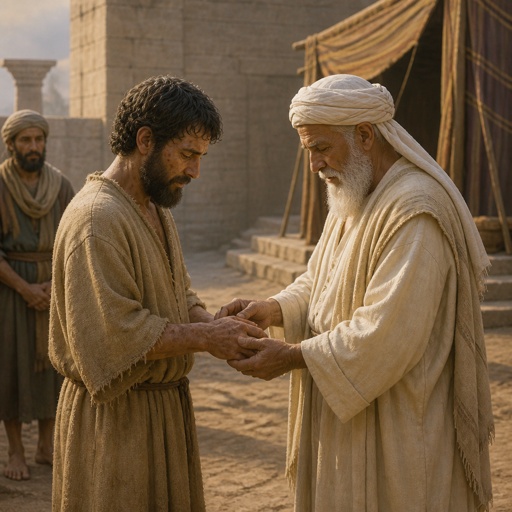
"¶ When the plague of leprosy is in a man, then he shall be brought unto the priest;" - Leviticus 13:9

Leviticus 24:13 - "And the LORD spake unto Moses, saying,"

Leviticus 21:13 - "And he shall take a wife in her virginity."

Leviticus 13:1 - "And the LORD spake unto Moses and Aaron, saying,"

Leviticus 23:9 - "¶ And the LORD spake unto Moses, saying,"

Leviticus 13:35 - "But if the scall spread much in the skin after his cleansing;"

Leviticus 13:29 - "¶ If a man or woman have a plague upon the head or the beard;"

Leviticus 9:16 - "And he brought the burnt offering, and offered it according to the manner."

Leviticus 13:18 - "¶ The flesh also, in which, even in the skin thereof, was a boil, and is healed,"

Leviticus 13:14 - "But when raw flesh appeareth in him, he shall be unclean."

Leviticus 9:11 - "And the flesh and the hide he burnt with fire without the camp."

Leviticus 13:47 - "¶ The garment also that the plague of leprosy is in, whether it be a woollen garment, or a linen garment;"

Leviticus 13:22 - "And if it spread much abroad in the skin, then the priest shall pronounce him unclean: it is a plague."

Leviticus 25:13 - "In the year of this jubile ye shall return every man unto his possession."

Leviticus 6:13 - "The fire shall ever be burning upon the altar; it shall never go out."

Leviticus 9:20 - "And they put the fat upon the breasts, and he burnt the fat upon the altar:"

Leviticus 13:19 - "And in the place of the boil there be a white rising, or a bright spot, white, and somewhat reddish, and it be shewed to the priest;"

Leviticus 9:9 - "And the sons of Aaron brought the blood unto him: and he dipped his finger in the blood, and put it upon the horns of the altar, and poured out the blood at the bottom of the altar:"

Leviticus 13:48 - "Whether it be in the warp, or woof; of linen, or of woollen; whether in a skin, or in any thing made of skin;"

Leviticus 13:50 - "And the priest shall look upon the plague, and shut up it that hath the plague seven days:"

Leviticus 15:9 - "And what saddle soever he rideth upon that hath the issue shall be unclean."

Leviticus 9:14 - "And he did wash the inwards and the legs, and burnt them upon the burnt offering on the altar."

Leviticus 9:8 - "¶ Aaron therefore went unto the altar, and slew the calf of the sin offering, which was for himself."

Leviticus 9:1 - "And it came to pass on the eighth day, that Moses called Aaron and his sons, and the elders of Israel;"

Leviticus 27:13 - "But if he will at all redeem it, then he shall add a fifth part thereof unto thy estimation."

Leviticus 13:38 - "¶ If a man also or a woman have in the skin of their flesh bright spots, even white bright spots;"

Leviticus 13:16 - "Or if the raw flesh turn again, and be changed unto white, he shall come unto the priest;"