What does Leviticus 9:13 mean?
“And they presented the burnt offering unto him, with the pieces thereof, and the head: and he burnt them upon the altar.” — Leviticus 9:13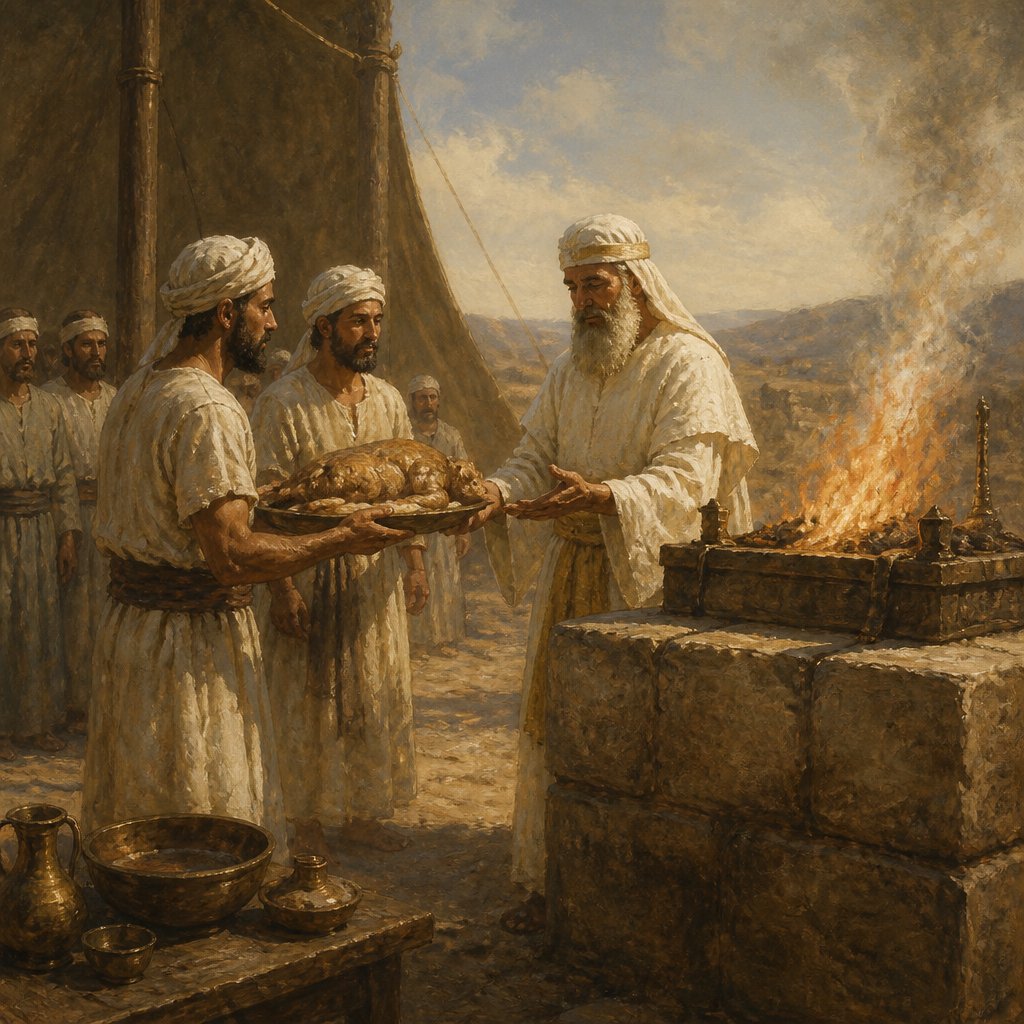
Leviticus 9:13 from the King James Version (KJV) states, "And they presented the burnt offering unto him, with the pieces thereof, and the head: and he burnt them upon the altar."
This verse is part of the detailed instructions given by God to the Israelites concerning the proper way to make offerings and sacrifices to Him. In this particular verse, it describes the presentation of the burnt offering and how it was to be prepared and presented to the Lord.
To fully understand the meaning and significance of this verse, it is important to consider the broader context of the book of Leviticus and the Old Testament as a whole. Leviticus is primarily concerned with the laws and regulations that governed the Israelite priests and their conduct in carrying out the rituals and sacrifices in the Tabernacle. The burnt offering was a significant part of the sacrificial system and was seen as a way for the Israelites to express their devotion and commitment to God.
In Leviticus 9, the newly anointed priests, Aaron and his sons, were instructed to make various offerings on behalf of the people in order to atone for their sins and seek God's favor. The burnt offering was one of the most common types of sacrifices and was completely consumed by fire on the altar, symbolizing the complete dedication and surrender to God.
In the verse, the act of presenting the burnt offering with its pieces and the head signifies the completeness and integrity of the offering. The Israelites were commanded to bring the best of their livestock, a male animal without blemish, and to offer it whole to the Lord. The burning of the offering upon the altar represented the pleasing aroma that ascended to God and signified the atonement for sin and the establishment of the covenant relationship between God and His people.
Symbolically, the burnt offering also points to the ultimate sacrifice of Jesus Christ on the cross. Just as the burnt offering was completely consumed by fire, Jesus offered Himself as a perfect and complete sacrifice for the sins of humanity, fulfilling the requirements of the Old Testament sacrificial system. Through His sacrifice, believers are reconciled to God and their sins are forgiven.
Furthermore, this verse highlights the importance of obedience and reverence in worship. The Israelites were instructed to follow God's specific guidelines for making offerings, demonstrating their reverence for His holiness and their willingness to submit to His authority. This act of obedience was meant to cultivate a sense of humility and dependence on God, acknowledging His sovereignty and the need for His grace and forgiveness.
The themes of devotion, sacrifice, atonement, and obedience are central to the meaning of Leviticus 9:13. The verse serves as a reminder of the Israelites' responsibility to honor and worship God according to His prescribed ways, as well as a foreshadowing of the ultimate sacrifice of Jesus Christ on the cross. It underscores the importance of approaching God with reverence and humility, recognizing His holiness and the need for atonement for sin.
In conclusion, Leviticus 9:13 from the King James Version of the Bible conveys profound spiritual truths about the nature of worship, sacrifice, and atonement. It provides insight into the Old Testament sacrificial system and its significance in pointing forward to the redemptive work of Jesus Christ. This verse continues to be a source of spiritual guidance and inspiration for believers today, reminding them of the need to approach God with reverence, humility, and obedience, and to ultimately rely on the perfect sacrifice of Christ for the forgiveness of sins.
Get our apps


Artwork for Leviticus 9:13

Leviticus 9:13 - "And they presented the burnt offering unto him, with the pieces thereof, and the head: and he burnt them upon the altar."
"And they presented the burnt offering unto him, with the pieces thereof, and the head: and he burnt them upon the altar." - Leviticus 9:13

Leviticus 13:9 - "¶ When the plague of leprosy is in a man, then he shall be brought unto the priest;"
"¶ When the plague of leprosy is in a man, then he shall be brought unto the priest;" - Leviticus 13:9

Leviticus 24:13 - "And the LORD spake unto Moses, saying,"

Leviticus 21:13 - "And he shall take a wife in her virginity."

Leviticus 13:1 - "And the LORD spake unto Moses and Aaron, saying,"

Leviticus 23:9 - "¶ And the LORD spake unto Moses, saying,"

Leviticus 13:35 - "But if the scall spread much in the skin after his cleansing;"

Leviticus 13:29 - "¶ If a man or woman have a plague upon the head or the beard;"

Leviticus 9:16 - "And he brought the burnt offering, and offered it according to the manner."

Leviticus 13:18 - "¶ The flesh also, in which, even in the skin thereof, was a boil, and is healed,"

Leviticus 13:14 - "But when raw flesh appeareth in him, he shall be unclean."

Leviticus 9:11 - "And the flesh and the hide he burnt with fire without the camp."

Leviticus 13:47 - "¶ The garment also that the plague of leprosy is in, whether it be a woollen garment, or a linen garment;"

Leviticus 13:22 - "And if it spread much abroad in the skin, then the priest shall pronounce him unclean: it is a plague."

Leviticus 25:13 - "In the year of this jubile ye shall return every man unto his possession."

Leviticus 6:13 - "The fire shall ever be burning upon the altar; it shall never go out."

Leviticus 9:20 - "And they put the fat upon the breasts, and he burnt the fat upon the altar:"

Leviticus 13:19 - "And in the place of the boil there be a white rising, or a bright spot, white, and somewhat reddish, and it be shewed to the priest;"

Leviticus 9:9 - "And the sons of Aaron brought the blood unto him: and he dipped his finger in the blood, and put it upon the horns of the altar, and poured out the blood at the bottom of the altar:"

Leviticus 13:48 - "Whether it be in the warp, or woof; of linen, or of woollen; whether in a skin, or in any thing made of skin;"

Leviticus 13:50 - "And the priest shall look upon the plague, and shut up it that hath the plague seven days:"

Leviticus 15:9 - "And what saddle soever he rideth upon that hath the issue shall be unclean."

Leviticus 9:14 - "And he did wash the inwards and the legs, and burnt them upon the burnt offering on the altar."

Leviticus 9:8 - "¶ Aaron therefore went unto the altar, and slew the calf of the sin offering, which was for himself."

Leviticus 9:1 - "And it came to pass on the eighth day, that Moses called Aaron and his sons, and the elders of Israel;"

Leviticus 27:13 - "But if he will at all redeem it, then he shall add a fifth part thereof unto thy estimation."

Leviticus 13:38 - "¶ If a man also or a woman have in the skin of their flesh bright spots, even white bright spots;"

Leviticus 13:16 - "Or if the raw flesh turn again, and be changed unto white, he shall come unto the priest;"