The Inheritance of the Heart
“And one of the company said unto him, Master, speak to my brother, that he divide the inheritance with me.” — Luke 12:13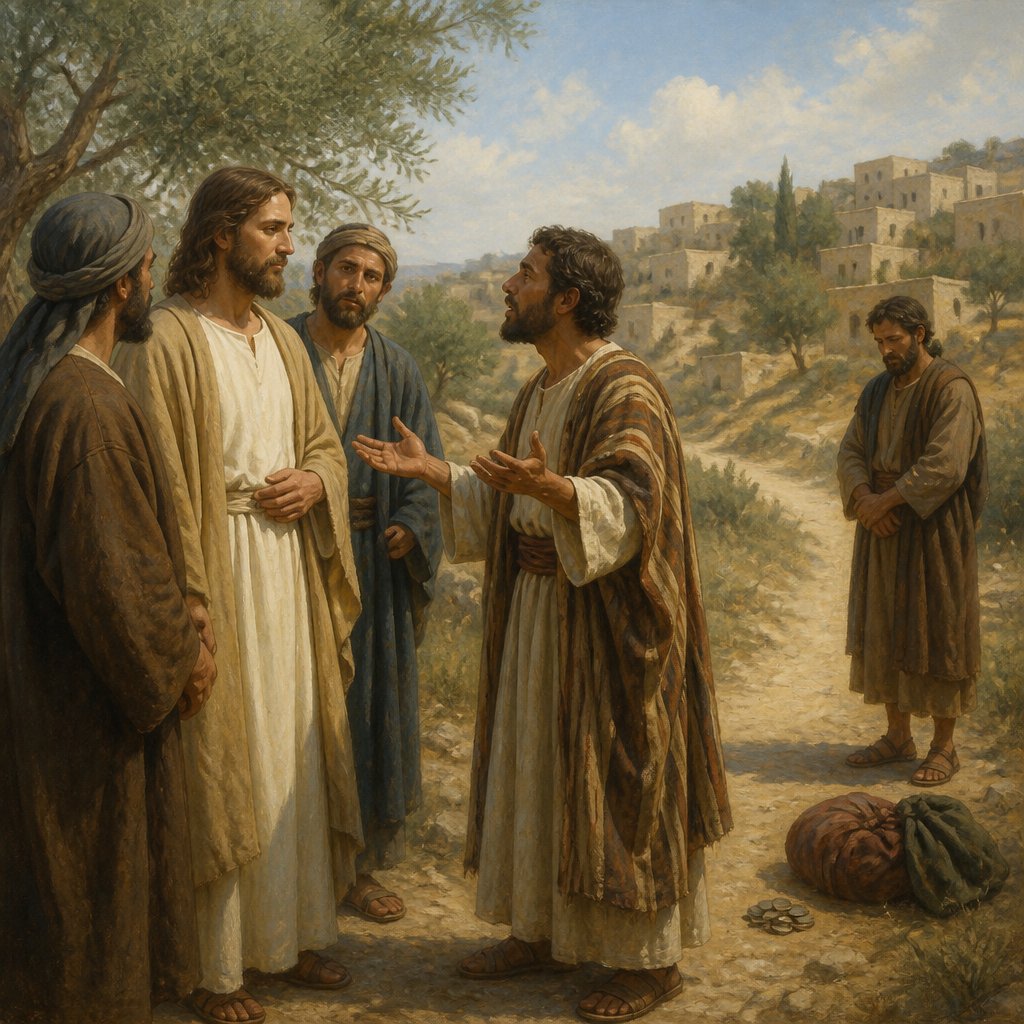
When we turn to Luke 12:13, we find a fascinating encounter marked by human desires and the profound wisdom of Jesus. The verse states: "And one of the company said unto him, Master, speak to my brother, that he divide the inheritance with me." At first glance, this request seems innocuous enough, a plea that reflects a common human concern over fairness and equity. Yet, within this simple exchange lies a deeper, transformative message about the nature of wealth, relationships, and the treasures we pursue.
In this moment, we can envision the tension that arises between siblings when it comes to inheritance. It is an age-old scenario that reveals the raw nerves of human relationships, often strained under the burdens of financial expectations and earthly possessions. The man speaking to Jesus is seeking intervention in a familial dispute, a conflict born of a desire for material wealth. His cry is one that resonates throughout the ages—how often do we find ourselves entangled in similar desires for equity that can overshadow the bonds of love and kinship?
Yet, Jesus, in His characteristic way of addressing the heart of the matter, responds not just to the request but also to the deeper undercurrents of what is truly at stake. He uses this moment to redirect the focus away from materialism towards a more profound understanding of riches. In Luke 12:15, He says, "Take heed, and beware of covetousness: for a man's life consisteth not in the abundance of the things which he possesseth." Indeed, here lies the crux of our devotional today: the inheritance of the heart is far more valuable than the inheritance of wealth.
As we meditate upon this scripture, we must consider what truly constitutes our inheritance as followers of Christ. While the world clamors for material possessions and status, the Kingdom of God offers us a vastly different kind of inheritance—one rooted in love, grace, and eternal life. Paul reminds us in Romans 8:17 that we are "heirs of God, and joint-heirs with Christ; if so be that we suffer with him, that we may be also glorified together." This inheritance far surpasses any earthly gain, as it is not merely about what we acquire on this planet, but about who we become through our relationship with the King.
Moreover, Jesus’s response is a powerful cue to examine our own motivations. In asking for an inheritance, this man reveals a heart torn between worldly longing and the gospel of grace. Are we, too, liable to let our desires for worldly possessions cloud our spiritual vision? Do we elevate temporal wealth over the richness of community, service, and love? This scripture invites us to consider how our pursuits align with the values of the Kingdom.
As we pull back from the allure of materialism, the invitation from Christ becomes clearer: to initiate the heavenly transaction that enriches our soul. What we acquire in the eyes of the world is fleeting, but the kindness we extend, the forgiveness we offer, and the love we cultivate within our families and communities last far longer than any earthly inheritance.
This is a call to cultivate a heart of generosity instead of one of covetousness. When we feel the urge to focus on what is ours by right or claim our share of the spoils, let us instead foster a spirit of sharing, kindness, and grace. By doing so, we reflect the very heart of our Savior, who modeled for us the richest inheritance of all—selfless love.
In conclusion, let us pray to shift our focus from what we can claim in this world to what we can contribute to the Kingdom. May our hearts be filled with the eternal treasures that come from a genuine relationship with Christ and our fellow believers. Lord, help us to be content with Your provision, to pursue an inheritance that cannot be diminished by moth or rust, and to cherish that which truly enriches our lives. Amen.
Get our apps


Artwork for Luke 12:13

Luke 12:13 - "¶ And one of the company said unto him, Master, speak to my brother, that he divide the inheritance with me."
"¶ And one of the company said unto him, Master, speak to my brother, that he divide the inheritance with me." - Luke 12:13

Luke 13:12 - "And when Jesus saw her, he called her to him, and said unto her, Woman, thou art loosed from thine infirmity."

Luke 13:18-19

Luke 13:20-21

Luke 13:20-21

Luke 13:18-19
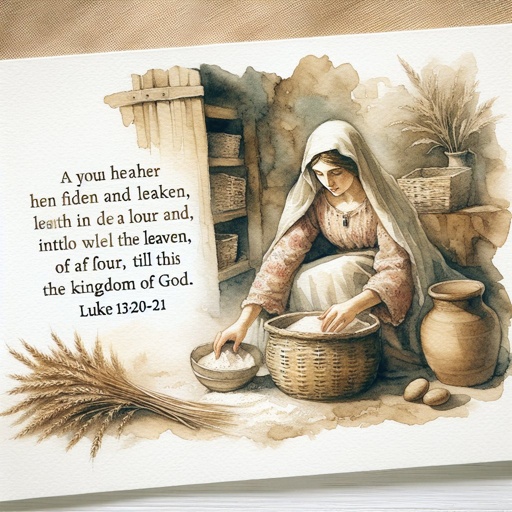
Luke 13:20-21

Luke 13:20-21

Luke 13:20-21

Luke 1:13

Luke 1:13

Luke 8:13

Luke 13:24

Luke 8:13

Luke 1:13

Luke 1:13

Luke 8:13

Luke 1:13

Luke 2:13

Luke 1:13

Luke 12:25

Luke 12:25

Luke 12: 49

Luke 12:34

Luke 12:10

Luke 12:50

Luke 13:13 - "And he laid his hands on her: and immediately she was made straight, and glorified God."

Luke 2:13-14

Luke 13:6-9