Choosing Your Master: The Call to Undivided Allegiance
“No servant can serve two masters: for either he will hate the one, and love the other; or else he will hold to the one, and despise the other. Ye cannot serve God and mammon.” — Luke 16:13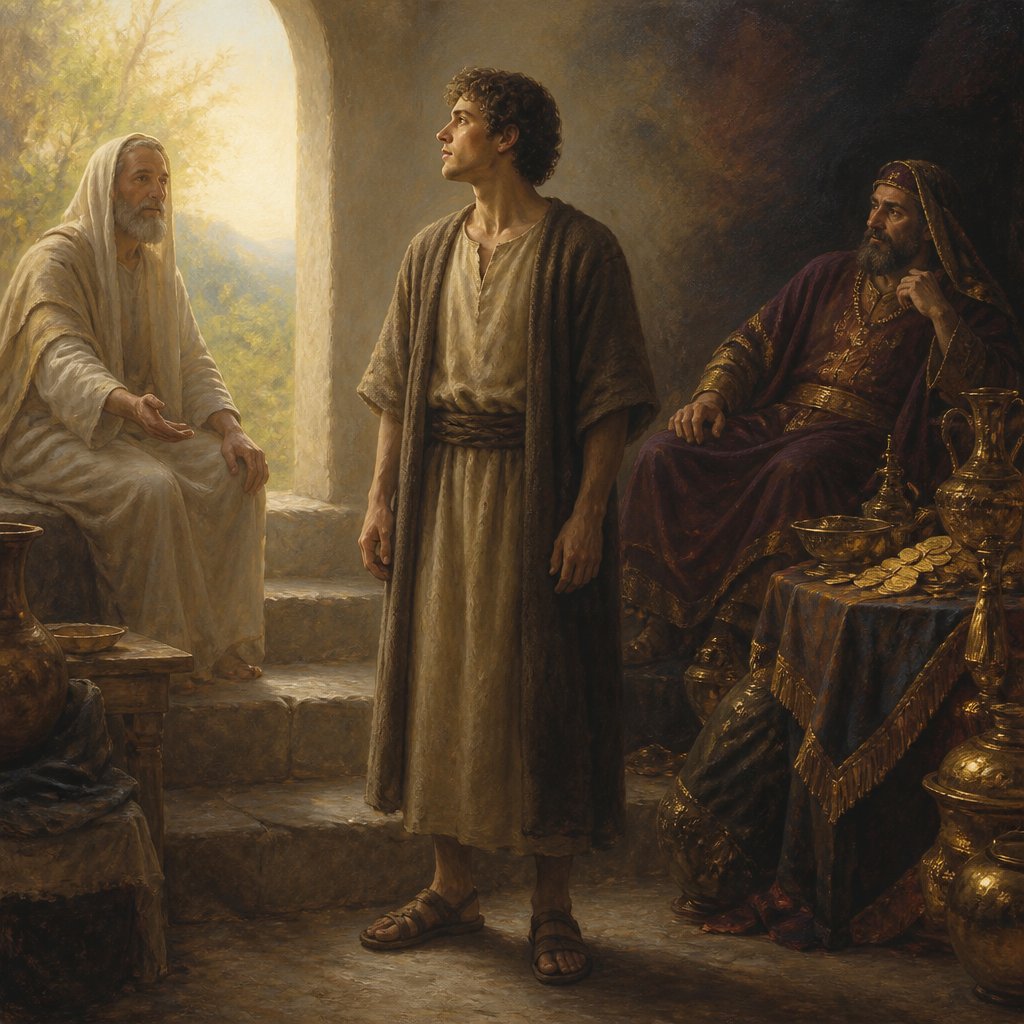
In the passage of Luke 16:13, we encounter a profound truth that convicts and confronts our modern lifestyle: "No servant can serve two masters: for either he will hate the one, and love the other; or else he will hold to the one, and despise the other. Ye cannot serve God and mammon." This verse lays bare the impossibility of divided loyalty and challenges us to evaluate the allegiances we cultivate in our lives.
To understand the depth of Jesus’ teaching, we must explore the cultural and spiritual implications of the term "mammon." In the biblical context, mammon represents wealth and material possessions—essentially, anything that can become an idol in our lives. Jesus presents mammon as a rival to our devotion to God, highlighting that materialism can easily lead us away from His path. In a world driven by consumerism and status, the temptation to prioritize money and possessions over our relationship with God is ever-present.
Jesus, in His wisdom, points out the challenge that arises when our focus strays. It’s a call to loyalty—a reminder that our hearts can only fully commit to one master. We are reminded that the nature of servitude is such that we cannot compartmentalize our devotion. Our love and devotion are ultimately pointed toward that which we prioritize most.
Reflect on the imagery Jesus uses: the dichotomy of love and hate. It is striking to consider that our attachment to material wealth, when it interferes with our service to God, can foster a kind of hatred towards God’s commandments. This contributes to a spirit of discontentment and disconnects us from the source of true joy and fulfillment. During times of financial strain or when chasing after worldly ambitions, have you felt a whisper of conflict within—a struggle to align your heart's priorities? This is the tension Jesus speaks of, an automatic shift in our affections driven by our choices.
What might it look like to serve mammon? It could manifest in the relentless pursuit of job titles, the acquisition of possessions, or financial independence at the expense of spiritual growth and commitment. It is crucial to ask ourselves: Are we placing our ultimate hope in our financial security, or are we resting in the promises and provision of God?
Conversely, serving God requires a different kind of surrender. It calls for us to trust His provision, to love our neighbors, to give generously, and to prioritize spiritual health over worldly gain. Serving God means embracing His will and accepting His guidance even when it may lead us down paths that don’t align with conventional wisdom or the expectations of society. Jesus calls us to embrace a radical trust in His goodness, to redefine our definition of success, and to cheerfully give the first fruits of our labor back to Him.
As we navigate our lives, we should frequently engage in self-examination. What voices are we listening to? What compass are we using to guide our decisions? It may be beneficial to question how our financial choices align with our faith. Are we investing in endeavors that build God’s Kingdom, or are we merely accumulating wealth for selfish gain? Over time, these choices shape our hearts and determine our ultimate loyalty.
In practical terms, serving God means integrating our faith into our everyday actions. It involves choosing to be generous even in scarcity, praying first before making financial decisions, and sharing our resources intentionally. This is not an easy path, but it is a rewarding one rich with the fulfillment that comes from serving the true Master.
So, let us resolve to serve God wholeheartedly, casting aside distractions and realigning our priorities. Remember, we were created for relationship, not reliance on material wealth. As we absorb and apply this vital teaching, may our lives reflect our allegiance to the One who provides, sustains, and blesses us beyond measure.
Get our apps


Artwork for Luke 16:13

Luke 16:13 - "¶ No servant can serve two masters: for either he will hate the one, and love the other; or else he will hold to the one, and despise the other. Ye cannot serve God and mammon."

Luke 16:13 “No servant can serve two masters; for either he will hate the one and love the other, or else he will be loyal to the one and despise the other. You cannot serve God and mammon.”
"¶ No servant can serve two masters: for either he will hate the one, and love the other; or else he will hold to the one, and despise the other. Ye cannot serve God and mammon." - Luke 16:13

Luke 16:1-13

Luke 16:1-13

Luke 16:1-13

Luke 13:16 - "And ought not this woman, being a daughter of Abraham, whom Satan hath bound, lo, these eighteen years, be loosed from this bond on the sabbath day?"

Luke 16:1-1313

Luke 13:18-19

Luke 13:20-21

Luke 13:18-19

Luke 13:20-21
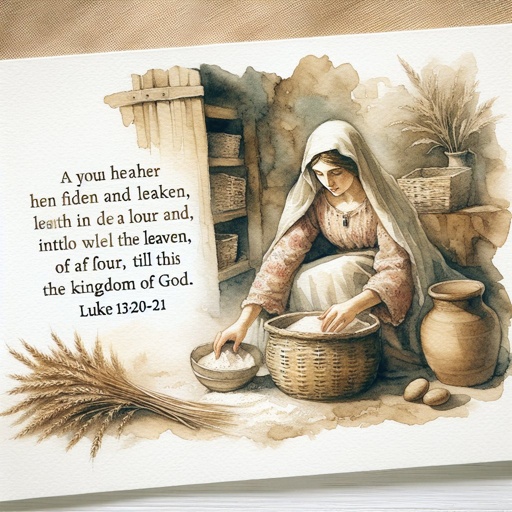
Luke 13:20-21

Luke 13:20-21

Luke 13:20-21

Luke 8:16

luke 4:16

Luke 8:13

Luke 1:13

Luke 1:13

Luke 8:13

Luke 13:24

Luke 1:13

Luke 8:13

Luke 1:13

Luke 1:13

Luke 2:13

Luke 1:13

Luke 16:22-26

Luke 2:16 - 21