The Cry of the Crowd: Understanding the Call to Crucify
“But they cried, saying, Crucify him, crucify him.” — Luke 23:21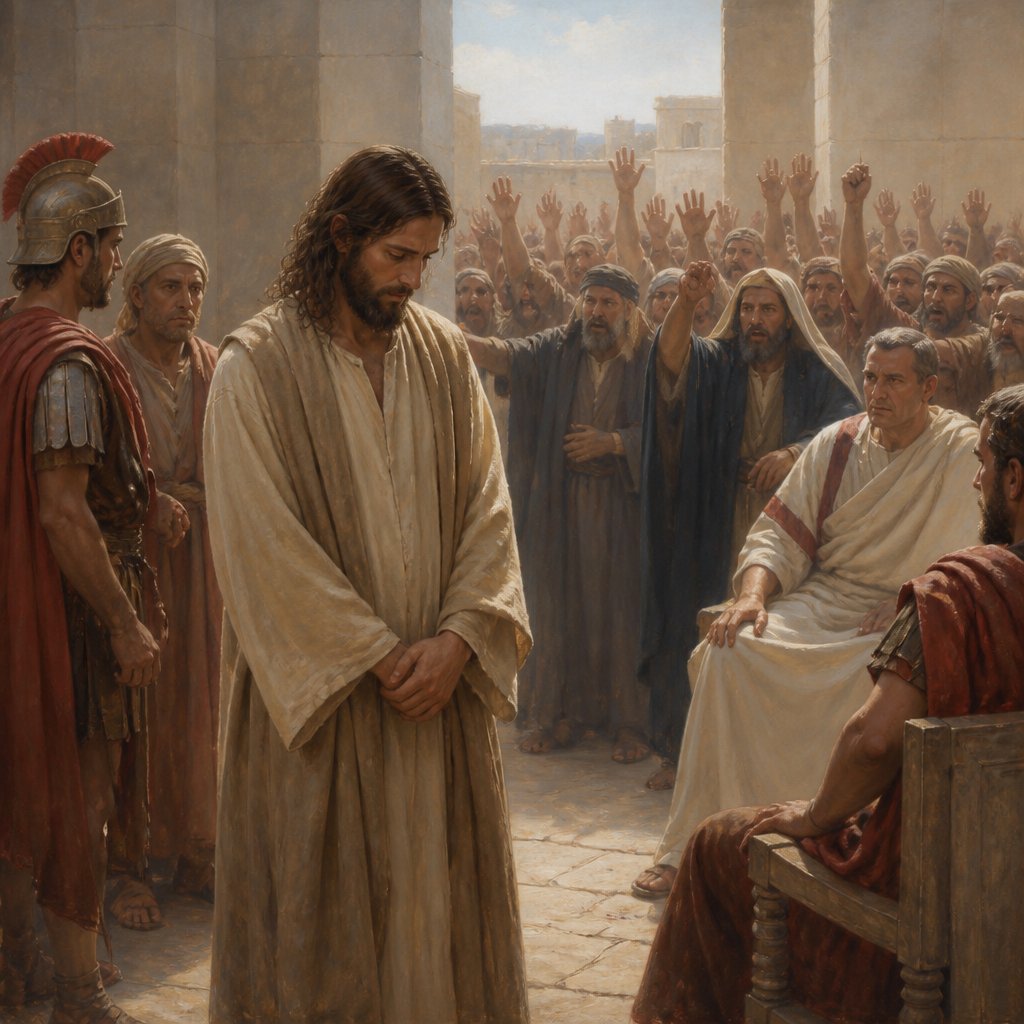
In Luke 23:21, we read the somber and chilling words: "But they cried, saying, Crucify him, crucify him." This moment in Scripture presents a profound reflection on the nature of humanity, the power of influence, and the gravity of our choices. It is a pivotal moment not just in the life of Christ, but in the narrative of our salvation and the story of humanity's fallen state.
The context surrounding this verse is crucial. Jesus stands before Pilate, innocent, yet accused. The chief priests and rulers have incited a tumultuous crowd against Him. Here, we see a significant contrast—the embodiment of pure love and truth (Jesus) pitted against the fiery zeal of a hostile crowd. How did it come to this? How could a people who had witnessed Christ's miracles, heard His teachings, and seen His compassion turn so swiftly to hatred?
To understand this, we must first examine the nature of the crowd. The crowd, historically and biblically, is often depicted as a powerful force. It can be swayed and stirred to commitment, but also to destruction. In this scene, we witness mob mentality in its rawest form. The religious leaders manipulate the emotions and thoughts of the crowd, transforming their adoration into rage.
This reflects a deeply human struggle—the susceptibility to external influence. We must ask ourselves, how easily are we swayed by popular opinion? Are there times in our lives when we find ourselves shouting alongside the crowd—embracing decisions and attitudes that may not align with Christ’s teachings, all because it feels easier or more popular? In John 7:13, we read, "Howbeit no man spake openly of him for fear of the Jews," highlighting the fear of societal repercussions that led many to silence their own beliefs. Fear plays a massive role in our choices, just as it did for this crowd.
Moreover, the cry for crucifixion symbolizes a rejection—not only of Jesus but of what He stands for. Each "Crucify him" represents a denial of God's love, mercy, and the promise of redemption. In doing so, these voices make a choice that tragically echoes through the annals of history and within our hearts. It poses a critical question: Are we rejecting Christ today in our lives? We might not literally cry out for His crucifixion, but do our actions sometimes symbolize rejection? Do we crucify Him anew with our indifference, our sin, our failure to act justly?
In the journey of Christian faith, we must continually confront the desires and influences that lead us away from the truth of Christ. The call to crucify Christ can also be seen in our refusal to stand for what is right, to love sacrificially, and to speak truth in a world craving falsehood. The weight of this verse prompts a personal deep dive into our own lives. Are we embracing the call of Christ, or do we allow cultural currents to dictate our beliefs and actions?
As we meditate on Luke 23:21, let it serve as both a cautionary tale and a call to deeper discipleship. Let us examine our hearts and ensure that our cries echo His love, grace, and truth instead of the crowd’s cries of destruction. In every area of life, let us choose to affirm Christ—through our worship, our actions, and our interactions.
Finally, while the moment of crucifixion is palpable loss, it also heralds hope. For through this act of rejection came the very foundation of our faith, the very essence of grace. The blood shed on the cross sealed a new covenant, a promise that wherever we are in our array of choices, Jesus remains steadfast, ready to forgive and embrace those who turn back to Him. Let us choose to follow Him, not as part of the crowd, but as committed disciples who declare, "Jesus is Lord" in all we do.
Get our apps


Artwork for Luke 23:21

Luke 23:21 - "But they cried, saying, Crucify him, crucify him."

Luke 23:21 - "But they cried, saying, Crucify him, crucify him."
"But they cried, saying, Crucify him, crucify him." - Luke 23:21

Luke 21:23 - "But woe unto them that are with child, and to them that give suck, in those days! for there shall be great distress in the land, and wrath upon this people."

Luke 23:53

Luke 19:23

luke 11:23

Luke 19:23

Luke 13:20-21

Luke 13:20-21
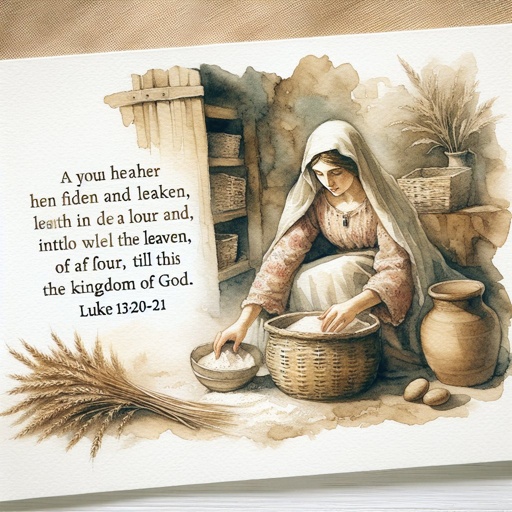
Luke 13:20-21

Luke 13:20-21

Luke 13:20-21

luke 11:23
Luke 15:23

luke 11:23

luke 11:23

Leviticus 23:21

Leviticus 23:21
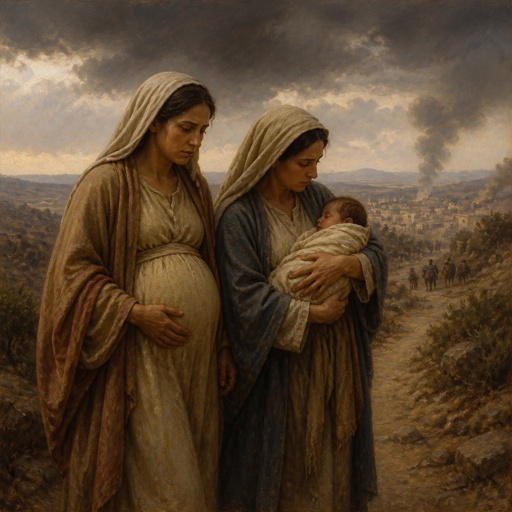
"But woe unto them that are with child, and to them that give suck, in those days! for there shall be great distress in the land, and wrath upon this people." - Luke 21:23

Luke 15:21

Luke 21:24

Luke 15:21

Leviticus 23:21

Leviticus 23:21

Genesis 21-23

Leviticus 23:21

Leviticus 23:21

Luke 23:54 - "And that day was the preparation, and the sabbath drew on."

Luke 23:23 - "And they were instant with loud voices, requiring that he might be crucified. And the voices of them and of the chief priests prevailed."