Faith Without Boundaries: A Lesson from the Roof
“And when they could not find by what way they might bring him in because of the multitude, they went upon the housetop, and let him down through the tiling with his couch into the midst before Jesus.” — Luke 5:19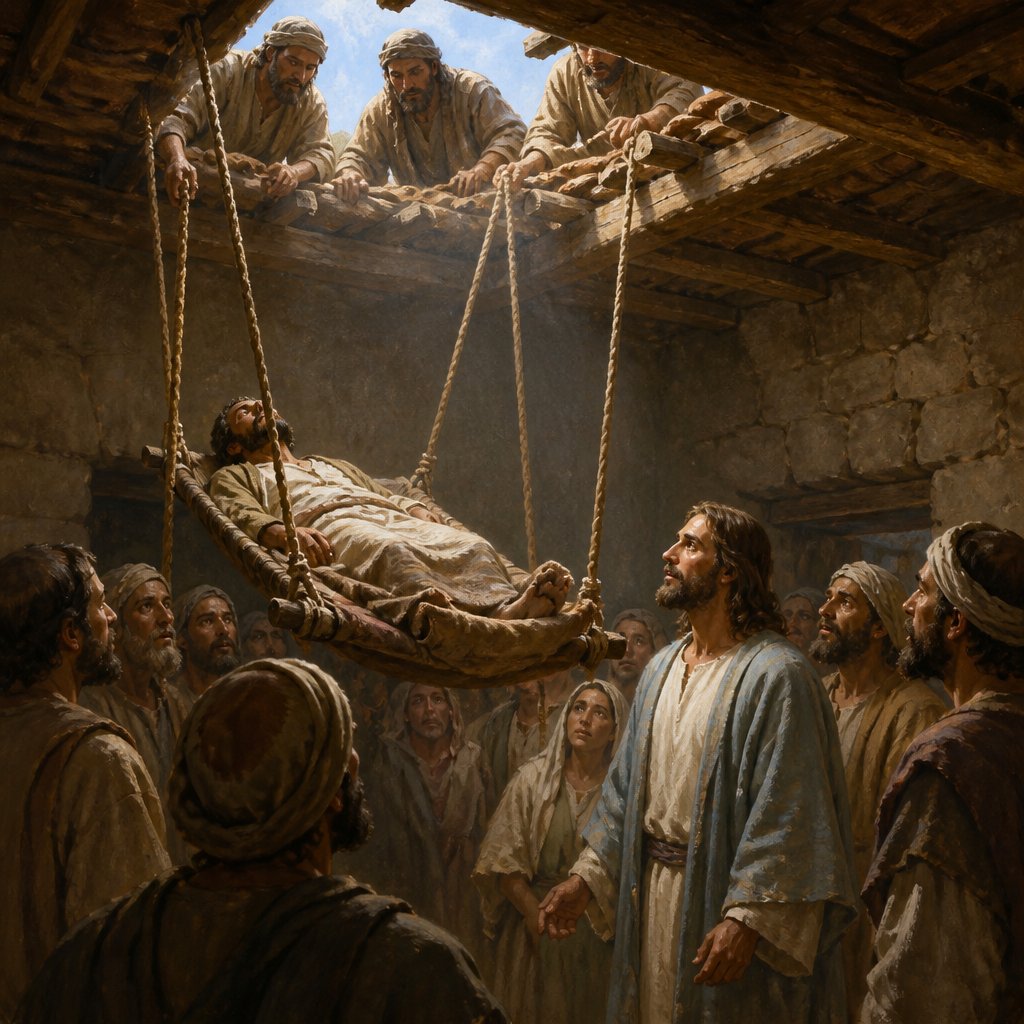
In Luke 5:19, the King James Version reads, "And when they could not find by what way they might bring him in because of the multitude, they went upon the housetop, and let him down through the tiling with his couch into the midst before Jesus." This verse encapsulates an incredible story of determination, faith, and the power of community in seeking healing and restoration.
This narrative unfolds not just as a miraculous healing story, but as a profound lesson in faith—both for the paralyzed man and for his friends. The setting is pivotal; Jesus is teaching in a crowded house, and the throng of people is so large that it blocks access to Him. Here lies a significant barrier, both physical and metaphorical, representing the obstacles we often face in our spiritual journeys. These obstacles may come in the form of doubt, fear, or even societal expectations, which can impede our access to Jesus.
Yet, the determination of this group of friends illustrates a crucial point—when conventional methods fail, faith must prevail. Instead of turning back in despair, they assess the situation creatively. The friends quite literally elevate the search for healing, choosing the rooftop as their pathway to Christ. This decision reveals their deep commitment to their paralytic friend and the earnest desperation for healing. Their actions forcefully remind us that faith often requires us to venture beyond the ordinary and into the extraordinary.
By climbing onto the roof, they exhibited not just the urgency of their mission, but also an innovative approach to breaking down barriers that can restrict access to healing—both physical and spiritual. In our lives, we are often confronted with situations where we feel overwhelmed by obstacles that inhibit us from reaching our goals or obtaining the help we need. Whether these challenges are health-related, emotional, or relational, we can take a lesson from these friends: we are called to think outside the box and to be persistent in our faith.
When we consider the audacity of letting someone down through the roof, we are reminded that genuine faith and love will take risks. This act of lowering their friend in front of Jesus was not only a testament to their belief in Jesus' miraculous powers but also a display of trust that pushed the limits of societal norms. They were willing to make a mess, disrupt order, and attract attention solely for the chance to encounter Jesus. Are we willing to risk our comfort and societal approval in the pursuit of Christ?
Furthermore, this story implores us to reflect on our roles as friends, family, and community members. Similarly, we are called to be ‘roof-raisers’—those who help carry the burdens of others to Jesus. In an age where individualism often prevails, we must remember the importance of community and intercession. Just as the paralytic's friends displayed unyielding support and faith, we are reminded to help others through their struggles, lifting them before Jesus in prayer, support, and love.
Finally, the outcome of this poignant narrative is magnificent. When Jesus saw their faith, He did not merely heal the man's body; He forgave his sins, showing that the healing He offers is holistic—addressing both our physical and spiritual needs. This demonstrates powerfully that the essence of coming to Christ is not solely about solving our problems; it includes the miraculous work of salvation that transcends our worldly challenges.
In closing, let us approach our own obstacles with the confidence that faith can provide pathways where none seem to exist. Let us also be reminded to support those around us in their struggles and boldly lead them to Christ, becoming agents of healing and grace in the world around us. For in authentic faith, we find the true access to Jesus, who is always waiting to perform miracles in our lives.
Get our apps


Artwork for Luke 5:19

Luke 5:19 - "And when they could not find by what way they might bring him in because of the multitude, they went upon the housetop, and let him down through the tiling with his couch into the midst before Jesus."
"And when they could not find by what way they might bring him in because of the multitude, they went upon the housetop, and let him down through the tiling with his couch into the midst before Jesus." - Luke 5:19

luke 21:5-19

luke 21:5-19 with all people of color

luke 21:5-19 with all people of color

luke 21:5-19 with all people of color

luke 21:5-19 with all people of color

Luke 19:5 - "And when Jesus came to the place, he looked up, and saw him, and said unto him, Zacchaeus, make haste, and come down; for to day I must abide at thy house."

Luke 10:18-19

Luke 13:18-19

Luke 10:18-19

Luke 10:18-19

Luke 13:18-19

Luke 10:17-19

Luke 10:18-19

Luke 10:18-19

Luke 10:18-19

Luke 10:17-19

luke 5:5

Luke 19:23

Luke 1:19

Luke 19:23

Luke 19:19 - "And he said likewise to him, Be thou also over five cities."

Luke 19:10

Luke 1:19

Luke 19:28

Luke 1:19

Luke 19:1-10

Luke 10:5

Luke 10:5