What does Luke 5:19 mean?
“And when they could not find by what way they might bring him in because of the multitude, they went upon the housetop, and let him down through the tiling with his couch into the midst before Jesus.” — Luke 5:19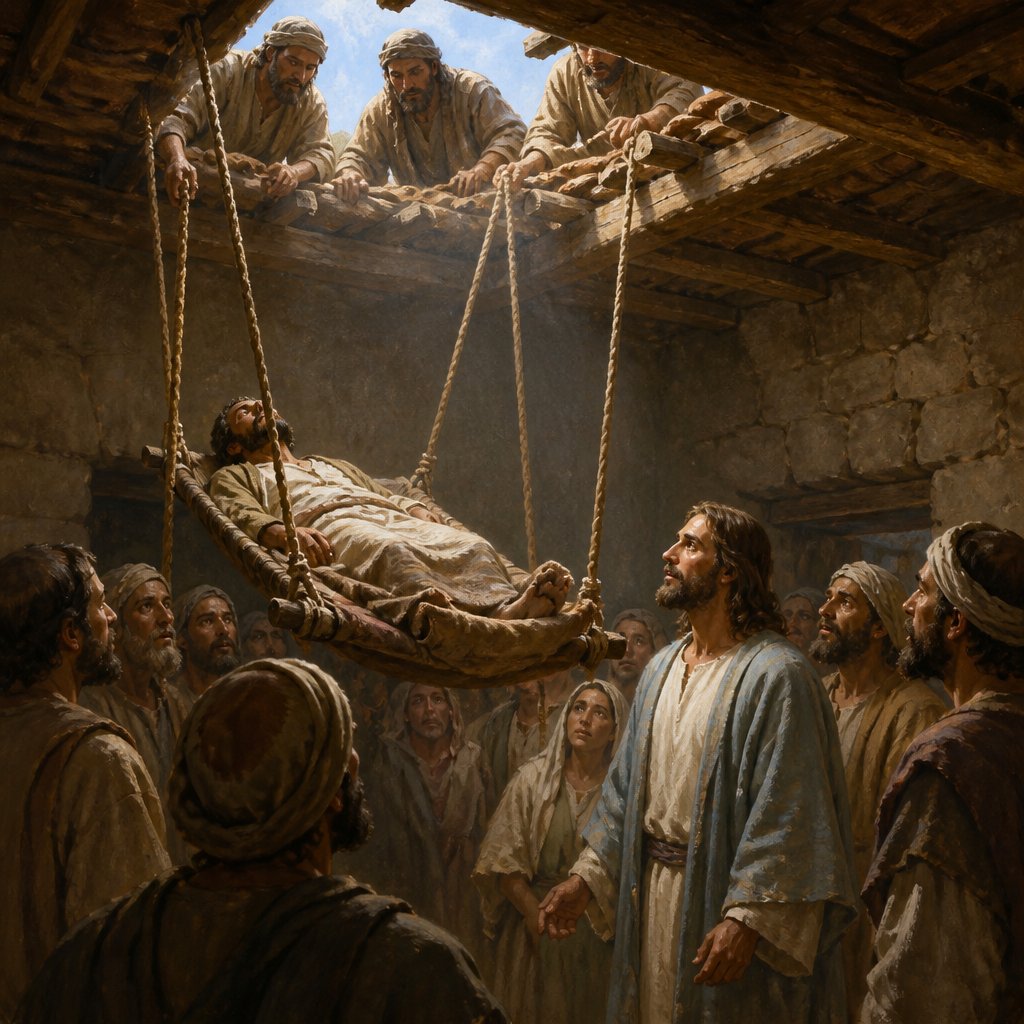
Luke 5:19 in the King James Version of the Bible reads: "And when they could not find by what way they might bring him in because of the multitude, they went upon the housetop, and let him down through the tiling with his couch into the midst before Jesus."
This verse is part of the larger story of Jesus healing a paralyzed man. The passage begins with Jesus teaching in a crowded house, with Pharisees and teachers of the law sitting nearby. As Jesus is speaking, four men arrive carrying a paralyzed man on a mat. When they are unable to get into the house because of the crowd, they go onto the roof and lower the paralyzed man down to Jesus through the roof tiles. When Jesus sees the faith of the men who brought the paralyzed man to him, he tells the man that his sins are forgiven and then commands him to rise, take up his mat, and walk home.
This passage is rich in themes and symbolism. One important theme is the power of faith. The friends of the paralyzed man believed so strongly in Jesus' ability to heal that they were willing to go to great lengths and take risks to get their friend to him. Their actions demonstrate the power of faith to overcome obstacles and bring about miraculous results. In this way, the story serves as a reminder of the importance of faith in the Christian life and the potential for great things to happen when we place our trust in God.
The passage also highlights themes of compassion and healing. Jesus' response to the paralyzed man goes beyond physical healing; he also forgives the man's sins, demonstrating the comprehensive and transformative power of God's love and grace. This reflects a broader theme throughout the New Testament of Jesus' ministry of healing and restoration, both physically and spiritually.
The story also contains symbolic elements that carry deeper meaning. The use of the house as a setting for Jesus' teaching and healing points to the importance of the church as a place of encounter with God and a community of support for those in need. The image of the men lowering the paralyzed man through the roof can be seen as a metaphor for the barriers that often stand in the way of our relationship with God and others, and the creative and persistent action that is sometimes required to overcome these barriers.
The passage also invites reflection on the nature of divine authority and Jesus' identity as the Son of God. The Pharisees and teachers of the law question Jesus' authority to forgive sins, to which he responds by demonstrating his power to heal the paralyzed man, revealing his divinity and challenging the religious leaders' understanding of God's work in the world.
In its historical context, this passage would have been particularly meaningful to the early Christian community. It would have served as a powerful testimony to the reality of Jesus' healing ministry and his identity as the Son of God. It would have been a source of encouragement and hope for those facing physical or spiritual challenges, reminding them of the transformative power of faith and the boundless compassion of God.
In summary, Luke 5:19 is a rich and multifaceted passage that speaks to themes of faith, healing, compassion, and the nature of divine authority. Through its vivid imagery and powerful symbolism, it invites readers to consider the depth of God's love and the transformative possibilities that come with placing our trust in him.
Get our apps


Artwork for Luke 5:19

Luke 5:19 - "And when they could not find by what way they might bring him in because of the multitude, they went upon the housetop, and let him down through the tiling with his couch into the midst before Jesus."
"And when they could not find by what way they might bring him in because of the multitude, they went upon the housetop, and let him down through the tiling with his couch into the midst before Jesus." - Luke 5:19

luke 21:5-19

luke 21:5-19 with all people of color

luke 21:5-19 with all people of color

luke 21:5-19 with all people of color

luke 21:5-19 with all people of color

Luke 19:5 - "And when Jesus came to the place, he looked up, and saw him, and said unto him, Zacchaeus, make haste, and come down; for to day I must abide at thy house."

Luke 10:18-19

Luke 13:18-19

Luke 10:18-19

Luke 10:18-19

Luke 13:18-19

Luke 10:17-19

Luke 10:18-19

Luke 10:18-19

Luke 10:18-19

Luke 10:17-19

luke 5:5

Luke 19:23

Luke 1:19

Luke 19:23

Luke 19:19 - "And he said likewise to him, Be thou also over five cities."

Luke 19:10

Luke 1:19

Luke 19:28

Luke 1:19

Luke 19:1-10

Luke 10:5

Luke 10:5