Identity Beyond Affliction: Understanding Our True Names
“And Jesus asked him, saying, What is thy name? And he said, Legion: because many devils were entered into him.” — Luke 8:30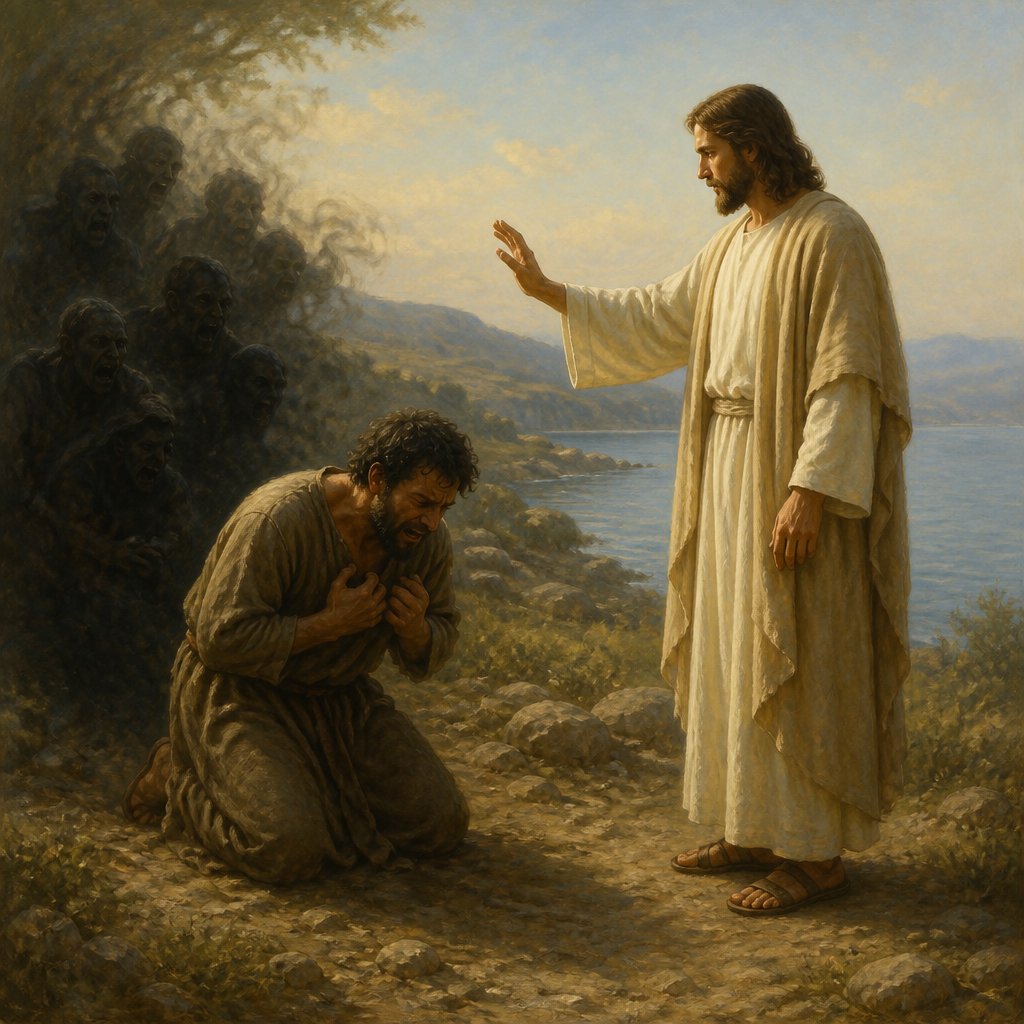
In the Gospel of Luke, chapter 8 verse 30, we encounter a poignant moment in the ministry of Jesus that reveals deep spiritual truths about identity, affliction, and the redemptive power of God. The verse reads: "And Jesus asked him, saying, What is thy name? And he said, Legion: because many devils were entered into him."
This confrontation occurs on the eastern shore of the Sea of Galilee, where Jesus meets a man from the city of Gadara who is possessed by a multitude of devils. The name "Legion" refers to the Roman military unit comprising thousands of soldiers, suggesting not only the vast number of demons tormenting the man but also the overwhelming nature of his suffering. Here lies a man so bound by his afflictions that he has personal identity only in relation to his tormentors. This verse invites us to explore the deeper implications of names, afflictions, and the means by which Jesus restores true identity.
**What does your name signify?**
Names hold significant power. They can convey heritage, identity, and sometimes, our experiences or struggles. The demoniac's name, "Legion," signifies his multiplicity of torment. Likewise, many of us find ourselves identified by our struggles—sickness, addiction, failure, or trauma become our labels. We might define ourselves as "sick" or "broken," losing sight of our original purpose and value as creations made in the image of God. It can be startling to realize how easily we accept these false identities.
In ancient Hebrew culture, a name was often symbolic, representing one’s character and destiny. When Jesus inquires, "What is thy name?" He is not merely asking for identification; He is probing into the very essence of this man's being. The man’s response, stating he is Legion, speaks volumes about his current state. It reveals that his identity has been consumed by the presence of evil rather than the inherent goodness created by God.
**The Power of Jesus’ Inquiry**
When Jesus asks this question, He initiates a profound moment of healing. By addressing the malevolent spirit and stripping away the false identity that had imprisoned the man, He prepares the way for restoration. The question posed by Jesus also acts as a catalyst for self-reflection. It forces the man—and us—to confront the truth of who we believe we are amidst our struggles. Each question from Christ serves as an invitation to acknowledge our true selves and to let go of the narratives formed by sin and suffering.
Jesus recognizes the multitude of demons but offers no condemnation. Instead, He aims to restore. It’s this very interaction that lays the foundation for true transformation. Like the demoniac, we must be willing to confront our own personal “legions”—the trials, names, and identities we have accepted that are rooted in negativity or despair.
**True Restoration and Identity**
Following this encounter, the man is not only freed from his torment but also restored to his right mind. In later verses, we see him clothed and sitting at Jesus’ feet, a powerful image of someone who has encountered grace. His narrative shifts from one of torment and identity crisis to one of restoration and purpose. The story teaches us that Jesus’ inquiry leads us to a moment where we can redefine ourselves not as victims of affliction but as vessels of God’s grace.
As we reflect on this passage, we too are offered the invitation to reconsider our identities. What might we be allowing to define us that is contrary to the truth God sees in us? Jesus desires to move us from chaos to peace, from death to life, from bereavement to abundant blessing. In this light, the question “What is thy name?” can resonate deeply within us.
**Conclusion**
Today, we are prompted to renounce our false identities and embrace the new name we receive through faith in Christ—beloved, redeemed, whole. Let us step away from the legions of our burdens and proclaim with confidence who we are in Christ. For, in Him, our true names are found, and our lives transformed into testimonies of His glory.
Get our apps


Artwork for Luke 8:30

Luke 8:30 - "And Jesus asked him, saying, What is thy name? And he said, Legion: because many devils were entered into him."
"And Jesus asked him, saying, What is thy name? And he said, Legion: because many devils were entered into him." - Luke 8:30

Luke 1:30

luke 9:30

luke 6:30

luke 9:29- 30

african american luke 10:30

Luke 2:30 - "For mine eyes have seen thy salvation,"

Luke 14:30 - "Saying, This man began to build, and was not able to finish."

Leviticus 8:30

Luke 20:30 - "And the second took her to wife, and he died childless."

Luke 1:30 Gabriel visits Mary

Luke 17:30 - "Even thus shall it be in the day when the Son of man is revealed."

Luke 4:30 - "But he passing through the midst of them went his way,"

Luke 13:30 - "And, behold, there are last which shall be first, and there are first which shall be last."

Luke 8:5-8

Luke 23:30 - "Then shall they begin to say to the mountains, Fall on us; and to the hills, Cover us."

Luke 9:30 - "And, behold, there talked with him two men, which were Moses and Elias:"

Luke 7:30 - "But the Pharisees and lawyers rejected the counsel of God against themselves, being not baptized of him."

Luke 11:30 - "For as Jonas was a sign unto the Ninevites, so shall also the Son of man be to this generation."

Luke 1:30 - "And the angel said unto her, Fear not, Mary: for thou hast found favour with God."

Luke 18:30 - "Who shall not receive manifold more in this present time, and in the world to come life everlasting."

ACTS 8:30 Philip and the Ethiopian

John 8:30 - "As he spake these words, many believed on him."

Luke 16:30 - "And he said, Nay, father Abraham: but if one went unto them from the dead, they will repent."

Luke 8:16

Luke 6:30 - "Give to every man that asketh of thee; and of him that taketh away thy goods ask them not again."

Mark 8:30 - "And he charged them that they should tell no man of him."

Luke 24:30 - "And it came to pass, as he sat at meat with them, he took bread, and blessed it, and brake, and gave to them."

Exodus 8:30 - "And Moses went out from Pharaoh, and intreated the LORD."