The Humble Herald: Lessons from John the Baptist
“And John was clothed with camel’s hair, and with a girdle of a skin about his loins; and he did eat locusts and wild honey;” — Mark 1:6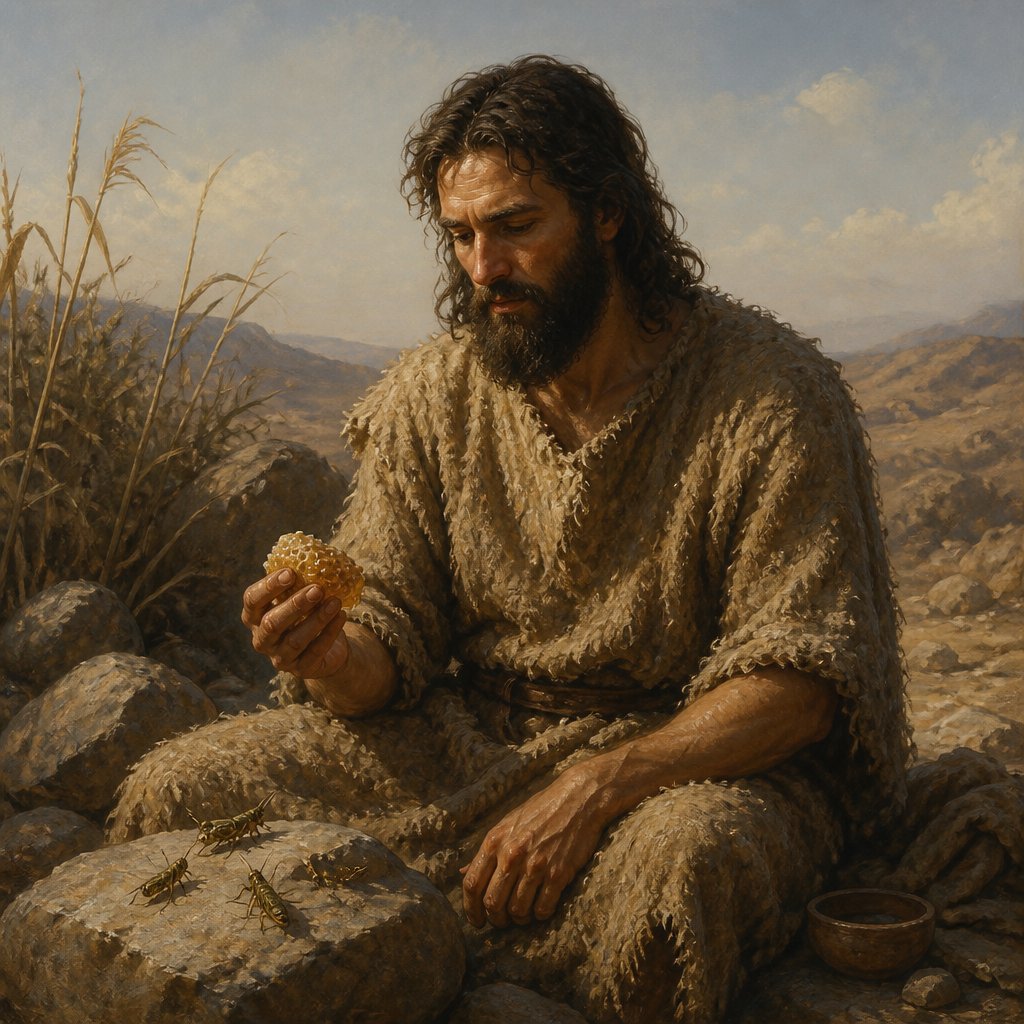
In the Gospel of Mark, we are introduced to a remarkable figure known as John the Baptist. In Mark 1:6 (KJV), we read, "And John was clothed with camel's hair, and with a girdle of a skin about his loins; and he did eat locusts and wild honey." This verse, though simple, is profoundly layered and invites us to delve into the spirit and mission of this prophetic figure, whose life serves as a beacon of humility and devotion.
**Clothing of Humility**
John’s wardrobe is conspicuously humble. The camel's hair and skin girdle signify not only his rejection of worldly comforts but also his total dependence on God. In an age where appearances often dictate value, John's attire reminds us that true worth lies not in what we wear but in what we embody. The prophet Zechariah spoke of simplicity, stating, "These are the things you are to do: Speak the truth to each other, and render true and sound judgment in your courts" (Zechariah 8:16). John exemplifies this truth in his life – a life lived in stark contrast to the ostentation characteristic of societal norms.
His choice to wear such rough clothing speaks volumes about his character and mission. He was not trying to blend into the mainstream culture of indulgence and luxury; rather, he embraced a life of sacrificial simplicity. In doing so, he challenged those around him to reevaluate their own lives and priorities. As followers of Christ, we are reminded that our lives can proclaim the Gospel more powerfully than our words.
**Sustenance from the Wild**
John's diet is equally notable: "...and he did eat locusts and wild honey." This points us to another dimension of his existence – reliance on God for provision. Locusts, often regarded as unclean in the Jewish dietary laws (Leviticus 11:22), together with wild honey, illustrate a life that embraces what God provides in nature, however unconventional. John was not consumed by consumerism; instead, he thrived in the wilderness, drawing sustenance from the Creator's hand.
Moreover, locusts can symbolize destruction while honey represents abundance and sweetness, mirroring the dual nature of John's message: he called people to repentance from sin (destruction) while simultaneously offering them the sweetness of God's love and grace. Thus, his very life encapsulated the Gospel – a call out of darkness into light. In our own lives, how often do we overlook the provision God has set before us? Let us learn to see His hand in our daily bread, embracing a lifestyle marked by gratitude and humility.
**The Call to Prepare**
John's entire existence was centered on preparing the way for Christ. His unconventional life calls us not only to embrace a spirit of humility but to actively participate in the Kingdom's work. He was a voice in the wilderness, declaring, "Prepare ye the way of the Lord" (Mark 1:3). This call rings true today more than it ever has, as we find ourselves in a wilderness of our own – a world distracted by technology, materialism, and self-absorption.
In responding to this call, we must remember that we are to reflect God’s glory in our actions and decisions. Each of us is invited to be a reflection of John the Baptist’s mission in our own context, encouraging repentance and hope. In our workplaces, our homes, and our communities, we are to proclaim the coming of the Lord through both our words and our lives.
As we meditate on the figure of John the Baptist this week, may we be encouraged to recognize the profound gift of humility, to appreciate the sustenance God surrounds us with, and to embrace the sacred call to prepare the way for Christ in our lives and the lives of others. Let us echo John’s radical faith in a world craving authenticity and truth.
Get our apps


Artwork for Mark 1:6

Mark 1:6 - "And John was clothed with camel's hair, and with a girdle of a skin about his loins; and he did eat locusts and wild honey;"
"And John was clothed with camel's hair, and with a girdle of a skin about his loins; and he did eat locusts and wild honey;" - Mark 1:6

Mark 6:1-6

Mark 6:1 - "And he went out from thence, and came into his own country; and his disciples follow him."

Mark 16:6-8

Mark 16:6-8

Mark 6:6 - "And he marvelled because of their unbelief. And he went round about the villages, teaching."

Mark 16:6-8

Mark 6:32 - "And they departed into a desert place by ship privately."
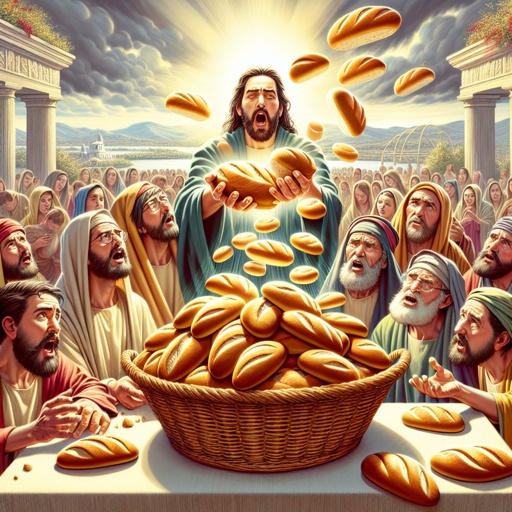
Mark 6:52 - "For they considered not the miracle of the loaves: for their heart was hardened."

Mark 6:9 - "But be shod with sandals; and not put on two coats."

Mark 6:40 - "And they sat down in ranks, by hundreds, and by fifties."

Mark 6:42 - "And they did all eat, and were filled."

Mark 2:6 - "But there were certain of the scribes sitting there, and reasoning in their hearts,"
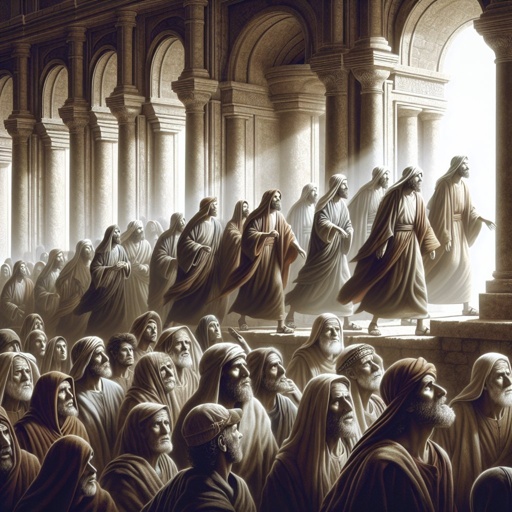
Mark 6:12 - "And they went out, and preached that men should repent."

Mark 6:43 - "And they took up twelve baskets full of the fragments, and of the fishes."

Mark 9:6 - "For he wist not what to say; for they were sore afraid."

Mark 6:44 - "And they that did eat of the loaves were about five thousand men."

Mark 6:15 - "Others said, That it is Elias. And others said, That it is a prophet, or as one of the prophets."

Mark 10:6 - "But from the beginning of the creation God made them male and female."

Mark 6:54 - "And when they were come out of the ship, straightway they knew him,"

Mark 6:47 - "And when even was come, the ship was in the midst of the sea, and he alone on the land."
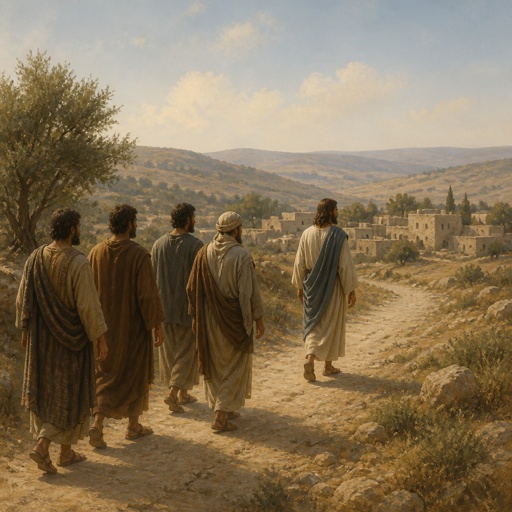
"And he went out from thence, and came into his own country; and his disciples follow him." - Mark 6:1

Mark 6:53 - "And when they had passed over, they came into the land of Gennesaret, and drew to the shore."

Mark 4:6 - "But when the sun was up, it was scorched; and because it had no root, it withered away."
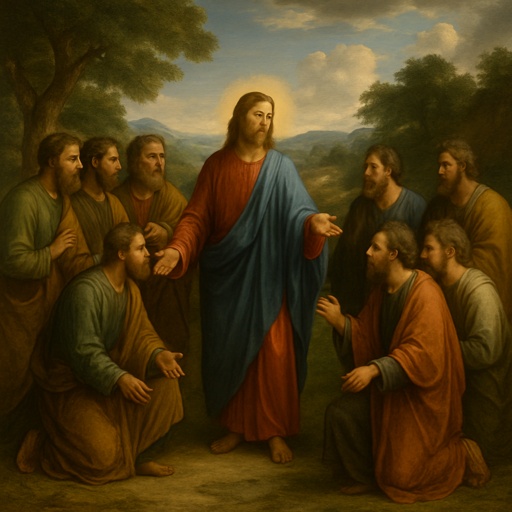
Mark 6:7 says that Jesus called his twelve disciples and began to send them out two by two, giving them authority over unclean spirits.

Mark 6:28 - "And brought his head in a charger, and gave it to the damsel: and the damsel gave it to her mother."

Mark 6:46 - "And when he had sent them away, he departed into a mountain to pray."

Mark 5:6 - "But when he saw Jesus afar off, he ran and worshipped him,"

Mark 15:6 - "Now at that feast he released unto them one prisoner, whomsoever they desired."