The Journey of the Wise: Seeking the King of Kings
“Now when Jesus was born in Bethlehem of Judaea in the days of Herod the king, behold, there came wise men from the east to Jerusalem,” — Matthew 2:1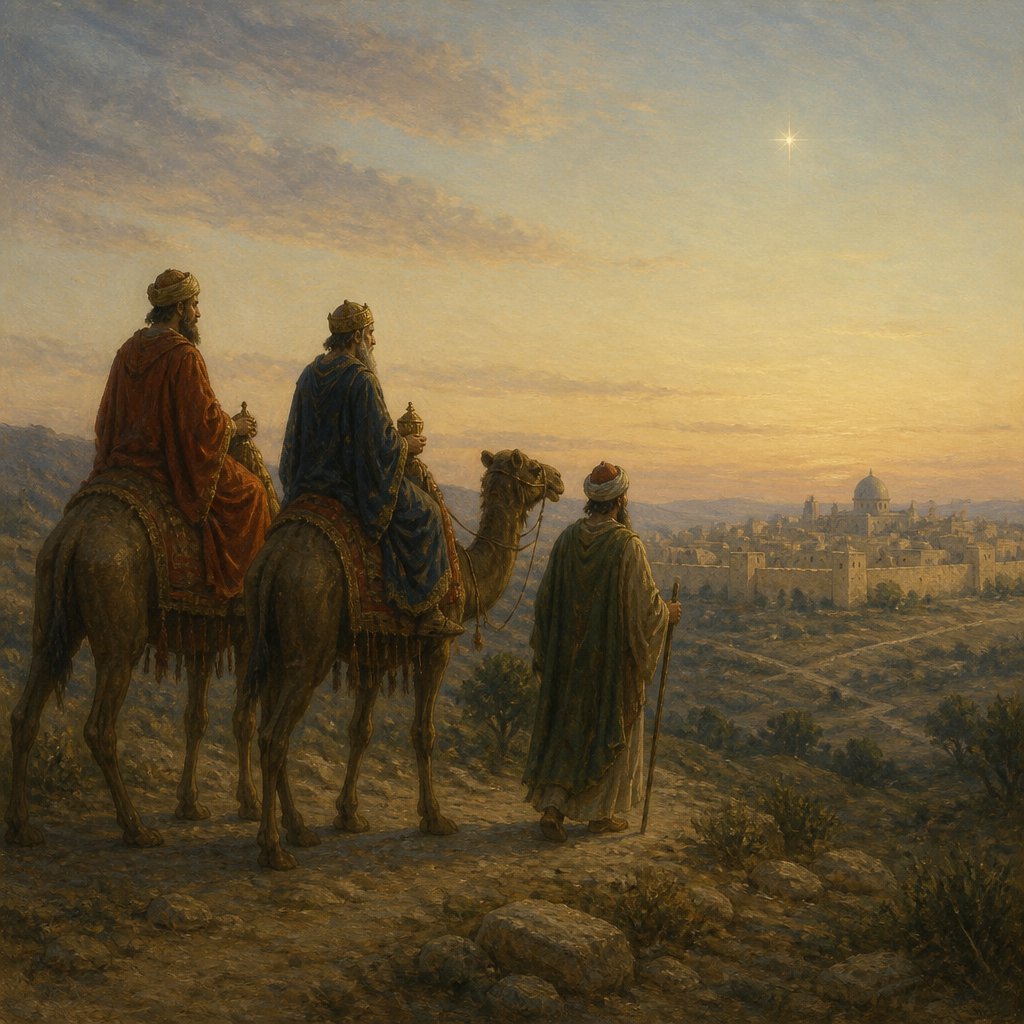
As we reflect on Matthew 2:1, which reads, "Now when Jesus was born in Bethlehem of Judaea in the days of Herod the king, behold, there came wise men from the east to Jerusalem," we are invited to delve into a profound narrative that marks the humble beginnings of our Savior. This passage not only reveals the birth of Jesus but also introduces us to a group of seekers who journey through the unknown, propelled by faith and purpose.
**Context of the Birth**
The geographical and sociopolitical context of Jesus' birth is crucial to understanding the magnitude of this event. Bethlehem, a small town in Judea, was prophesied to be the birthplace of the Messiah (Micah 5:2). The mention of King Herod—known for his tyranny and paranoia—sets a stark contrast against the backdrop of the humble and peaceful birth of Christ. The wise men, also known as Magi, represent a divine acknowledgment of Jesus’ significance, coming from distant lands, they epitomize wisdom and a quest for truth, even when it leads them to challenging predicaments.
**The Journey**
The journey undertaken by these wise men is symbolic. They traveled from the east, a region that held rich history, knowledge, and perhaps a pagan heritage. It reminds us that God’s call transcends boundaries, cultures, and belief systems. Their journey was not easy—likely fraught with obstacles, uncertainty, and fatigue. Yet, their determination to follow the star displayed an unyielding faith. In our lives, we encounter our own ‘journeys.’ We may face obstacles while seeking to deepen our relationship with God, or we may navigate through challenges in obedience to His calling. The wise men teach us that the pursuit of Christ often requires us to step outside our comfort zones and venture into the unfamiliar.
**The Significance of Seeking**
When the wise men arrived in Jerusalem, their inquiry, "Where is he that is born King of the Jews?" (Matthew 2:2) suggests they understood the significance of the one they sought. They recognized that Jesus was not merely a child to be admired but the King destined to lead and save humanity. This acknowledgement challenges us to evaluate our own understanding of Jesus. Do we see Him solely as a historical figure, a subject of study, or do we recognize Him as our Lord and Savior deserving of our worship and reverence?
**Divine Guidance**
God, in His infinite wisdom, guides these seekers through the Heavens. A star leads them to Jerusalem, and their journey is reflective of the spiritual journey we undergo as believers. Often, we find ourselves longing for direction in our lives, uncertain of the path ahead. Just like the wise men, we can rest assured that our God, through the Holy Spirit, provides guidance. Proverbs 3:5-6 encourages us: "Trust in the Lord with all thine heart; and lean not unto thine own understanding. In all thy ways acknowledge him, and he shall direct thy paths."
**Worship and Reverence**
Upon finding Jesus, the wise men fell down and worshipped Him, presenting gifts of gold, frankincense, and myrrh. Their response is a model for our worship: one marked by humility, reverence, and recognition of Christ’s attributes—His kingship, His divinity, and His future suffering. Gold symbolizes His kingship, frankincense acknowledges His divinity, and myrrh foreshadows His death. This beautiful act of worship encourages us to reflect on how we approach Christ. Are we bringing our all before Him? In our worship, do we offer our lives as living sacrifices, holy and acceptable to Him (Romans 12:1)?
**Conclusion**
The birth of Jesus in Bethlehem heralds a new beginning, a dawn of hope for humanity. As we contemplate the journey of the wise men, let us be inspired to embark on our own journey—a journey of seeking, worshiping, and acknowledging the true King. Just as the wise men found Jesus and transformed their lives, may we also seek Him diligently, recognize Him in the midst of our struggles, and respond with worship that flows from a heart deeply entwined in love and reverence for our Savior.
Get our apps


Artwork for Matthew 2:1

Matthew 2:1-2

Matthew 2:1-12

Matthew 2:1-12

Matthew 2:1-12

Matthew 2:1-12

Matthew 2:1 - "Now when Jesus was born in Bethlehem of Judaea in the days of Herod the king, behold, there came wise men from the east to Jerusalem,"

"Now when Jesus was born in Bethlehem of Judaea in the days of Herod the king, behold, there came wise men from the east to Jerusalem," - Matthew 2:1

Matthew 1:2

Matthew 2:9

Matthew 1:2 - "Abraham begat Isaac; and Isaac begat Jacob; and Jacob begat Judas and his brethren;"

Matthew 7:1-2 - "Do not judge, or you too will be judged. For in the same way you judge others, you will be judged, and with the measure you use, it will be measured to you."

Matthew 2:23

Matthew 2:13

Matthew 2:23

Matthew 6:2

Matthew 6:2

Matthew 2:11

Matthew 6:2

Matthew 6:2

Matthew 2:9

Matthew 2:23

Matthew 6:2

Matthew 2:13

matthew 2:14

Matthew 2:23

Matthew 2:21

"Abraham begat Isaac; and Isaac begat Jacob; and Jacob begat Judas and his brethren;" - Matthew 1:2

Matthew 6.24

Matthew 2:3-4

Matthew 2:3-4