What does Matthew 2:1 mean?
“Now when Jesus was born in Bethlehem of Judaea in the days of Herod the king, behold, there came wise men from the east to Jerusalem,” — Matthew 2:1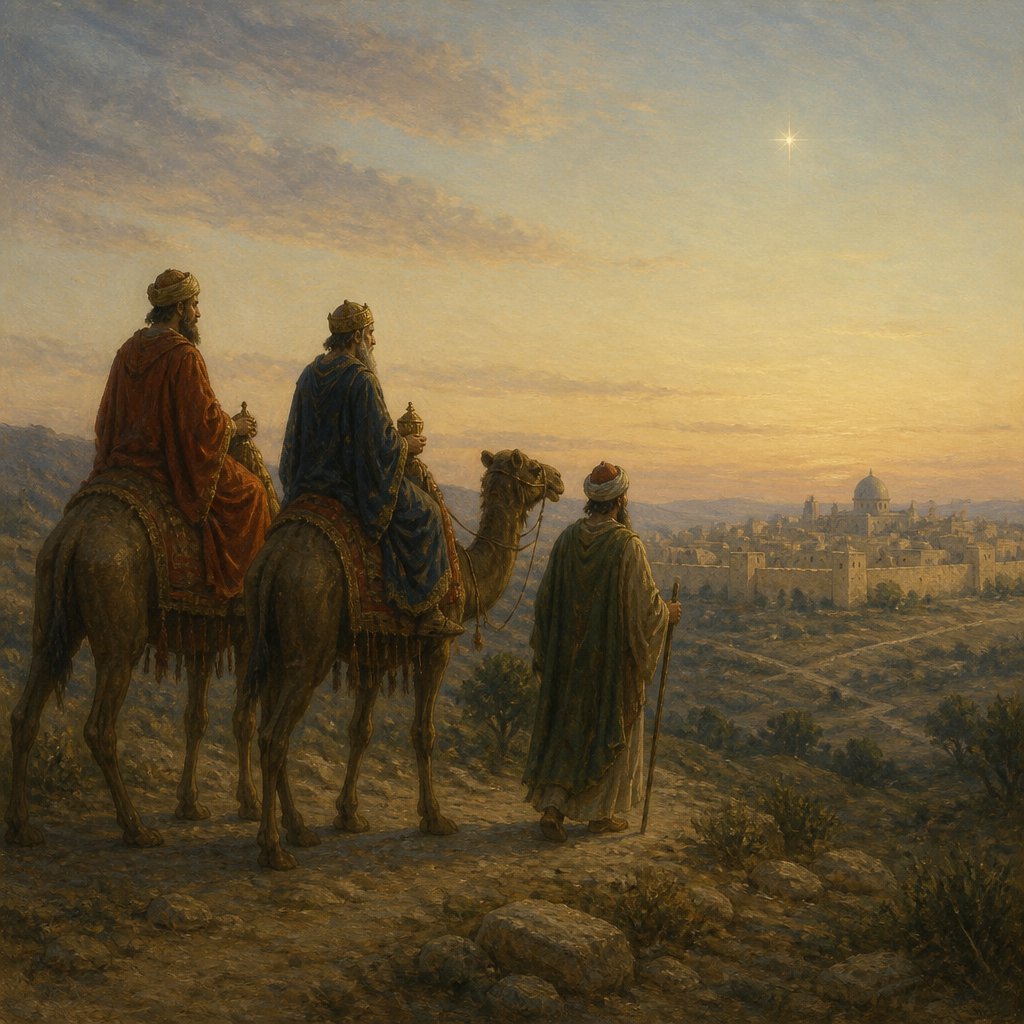
Matthew 2:1 from the King James Version of the Bible states, "Now when Jesus was born in Bethlehem of Judaea in the days of Herod the king, behold, there came wise men from the east to Jerusalem." This verse marks the beginning of the story of the visit of the wise men, or Magi, to pay homage to the newborn Jesus.
This verse is significant as it sets the stage for the arrival of the wise men, who play a crucial role in the Nativity story. It also provides important geographical and historical context by mentioning Bethlehem of Judaea as the birthplace of Jesus and Herod the king as the ruler at the time. The mention of the wise men coming from the east adds an air of mystery and intrigue to the story.
The theme of the divine revelation and the recognition of Jesus as the promised Messiah is central to this verse. The arrival of the wise men from the east signifies the universal significance of Jesus' birth and the fulfillment of Old Testament prophecies. The fact that the wise men, who were non-Jewish, traveled from afar to pay homage to the newborn Jesus reinforces the idea that Jesus is the Savior of all people, not just the Jews.
The mention of Herod the king in this verse also foreshadows the conflict and opposition that Jesus will face throughout his life. Herod's insecurity and fear of losing his power and throne will lead him to order the massacre of male infants in Bethlehem, in an attempt to eliminate any potential threat to his reign. This sets the stage for the political and spiritual battle between the forces of darkness and the kingdom of God, which will culminate in Jesus' ultimate victory through his death and resurrection.
The symbolism in this verse is rich and layered. The mention of Bethlehem, which means "house of bread" in Hebrew, foreshadows Jesus' role as the "bread of life" and the ultimate provider of spiritual nourishment. The arrival of the wise men from the east is often interpreted as a symbol of the fulfillment of Old Testament prophecies, such as the words of the prophet Isaiah: "Nations will come to your light, and kings to the brightness of your dawn" (Isaiah 60:3).
The gifts of gold, frankincense, and myrrh that the wise men bring to Jesus also carry symbolic significance. Gold represents Jesus' kingship and divinity, frankincense symbolizes his priestly role as the mediator between God and humanity, and myrrh points to his sacrificial death and burial. These gifts further underscore the universal and timeless significance of Jesus' birth, as they are fit for a king, a priest, and a suffering servant.
In a broader context, this verse is part of the larger narrative of the Nativity, which includes the annunciation to Mary, the birth of Jesus in Bethlehem, the visit of the shepherds, and the presentation of Jesus in the temple. Together, these events form the foundation of the Christian faith and affirm the belief in Jesus as the promised Messiah and the Son of God.
Overall, Matthew 2:1 sets the stage for the unfolding of the Nativity story and introduces important themes of divine revelation, universal salvation, and the conflict of spiritual forces. The verse also contains rich symbolism that points to Jesus' identity and mission as the Savior of the world. It invites readers to reflect on the significance of Jesus' birth and to ponder the implications of his coming for all people, regardless of their background or social status.
Get our apps


Artwork for Matthew 2:1

Matthew 2:1-2

Matthew 2:1-12

Matthew 2:1-12

Matthew 2:1-12

Matthew 2:1-12

Matthew 2:1 - "Now when Jesus was born in Bethlehem of Judaea in the days of Herod the king, behold, there came wise men from the east to Jerusalem,"

"Now when Jesus was born in Bethlehem of Judaea in the days of Herod the king, behold, there came wise men from the east to Jerusalem," - Matthew 2:1

Matthew 1:2

Matthew 2:9

Matthew 1:2 - "Abraham begat Isaac; and Isaac begat Jacob; and Jacob begat Judas and his brethren;"

Matthew 7:1-2 - "Do not judge, or you too will be judged. For in the same way you judge others, you will be judged, and with the measure you use, it will be measured to you."

Matthew 2:23

Matthew 2:13

Matthew 2:23

Matthew 6:2

Matthew 6:2

Matthew 2:11

Matthew 6:2

Matthew 6:2

Matthew 2:9

Matthew 2:23

Matthew 6:2

Matthew 2:13

matthew 2:14

Matthew 2:23

Matthew 2:21

"Abraham begat Isaac; and Isaac begat Jacob; and Jacob begat Judas and his brethren;" - Matthew 1:2

Matthew 6.24

Matthew 2:3-4

Matthew 2:3-4