The Silence of the Lamb: Reflections on Matthew 26:62
“And the high priest arose, and said unto him, Answerest thou nothing? what is it which these witness against thee?” — Matthew 26:62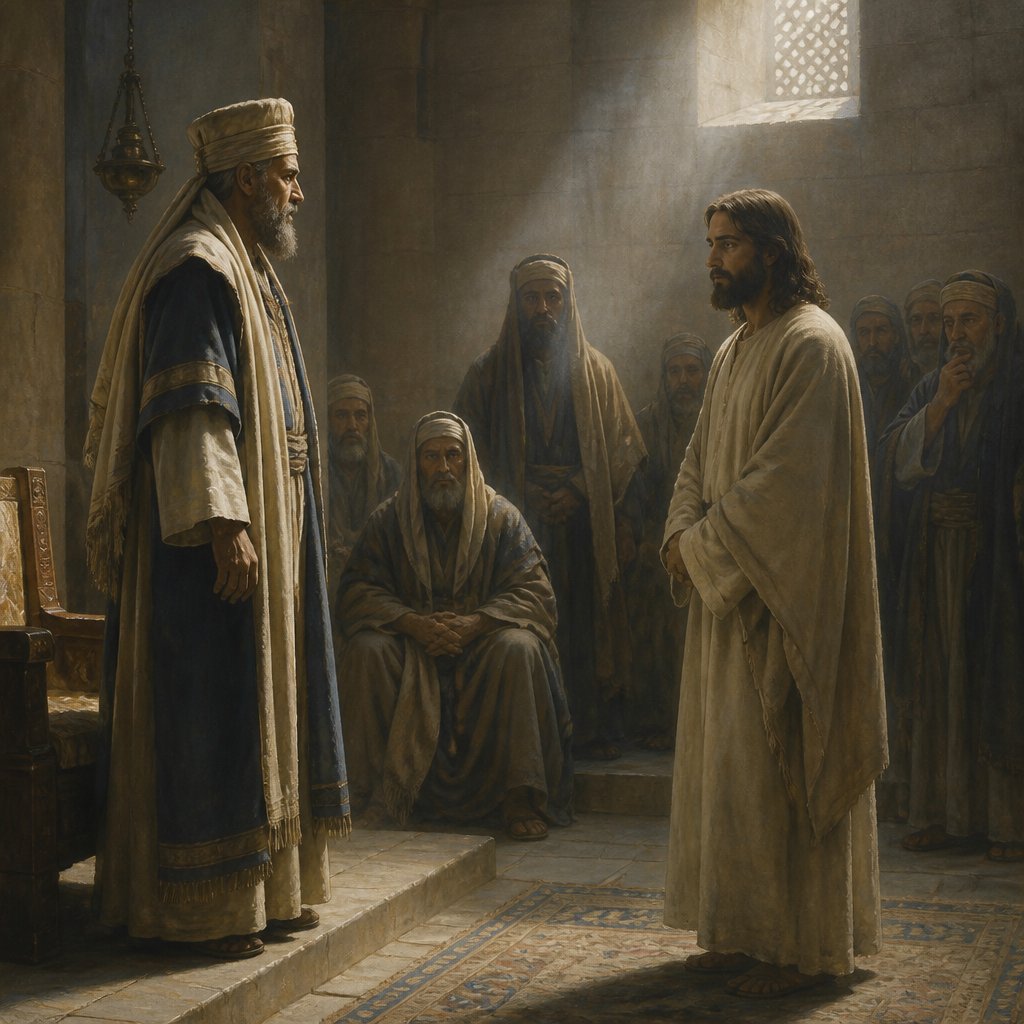
In the twilight of His earthly ministry, Jesus stands before the high priest in the anguish of impending crucifixion. The air is thick with tension, and the stakes are monumental. In this pivotal moment, amidst false accusations and chaotic tumult, the high priest questions Jesus with a provocative inquiry: "And the high priest arose, and said unto him, Answerest thou nothing? what is it which these witness against thee?" (Matthew 26:62 KJV). This verse not only highlights the stark reality of our Lord's trial but invites profound meditation on the significance of silence, truth, and testimony.
### The Context of Silence
Before the questioning of the high priest, we find Jesus isolated, confronted with the weight of hatred, betrayal, and injustice. The world around Him has conspired, manufacturing testimony to condemn Him, yet He stands resolute, unmoved by the accusations hurled against Him. In the silence of Jesus, we witness a divine kind of strength—a decision not to engage with falsehoods.
Silence often speaks louder than words, and here we find profound meaning. Jesus is not silent out of fear but out of purpose. He is fulfilling the prophecies and embracing the path laid before Him. Isaiah foretold this very moment, stating, "He was oppressed, and he was afflicted, yet he opened not his mouth: he is brought as a lamb to the slaughter" (Isaiah 53:7 KJV). The Lamb of God willingly accepts the role designated for Him, embracing a silence that echoes the heart of God’s plan for salvation.
### Confronting Injustice
In our own lives, we may face situations that invoke unrighteous accusations or misunderstandings, similar to what Jesus bore. Often, we feel the urge to defend ourselves, to articulate our innocence, to raise our voices against the injustice. However, in some circumstances, we may find that silence is the most powerful response we can offer. In doing so, we align ourselves with Christ’s example, demonstrating that our peace rests not in the validation of others but in the knowledge of our worth and God’s ultimate sovereignty.
### The Power of Testimony
The high priest’s question raises a larger question about the nature of testimony. Those who bore false witness against Jesus spoke with fervor, attempting to twist His words and character. Yet, Jesus knew that the truth would ultimately prevail. Sometimes, our own testimonies may be misrepresented, as they were during Jesus’ trial. Remaining silent does not mean accept defeat; rather, it’s an act of faith—believing that God will vindicate us in His time and way.
In moments of adversity, we must ask ourselves: Who are we truly testifying for? Are we seeking to defend our honor or to magnify God's glory? Jesus’ example reveals that even under pressure, glorifying God takes precedence over proving one’s innocence. When we choose to uphold truth over the desire for human justification, we shine as beacons of Christ in a world often steeped in chaos and contention.
### Embracing Our Trials
This brings us to a beautiful revelation—trials reveal who we truly are and whom we trust. When we find ourselves in the courtroom of public opinion or life’s challenges, we must learn to meditate upon Christ. Can we mirror His quiet confidence in the face of adversity? Indeed, Jesus’ strength lies in His unwavering resolve to fulfill His ultimate calling.
### Conclusion: Finding Strength in Silence
As we contemplate Matthew 26:62, let it remind us of the power that lies within silence when rooted in trust and purpose. In a world clamoring for justification and acknowledgment, may we, like Jesus, discern when to speak and when to embody the tranquility of faith. In doing so, we participate in the legacy of the Lamb, trusting that even in moments of injustice, God’s plan for salvation continues to unfold, bearing witness to the truth in ways we cannot imagine.
Let us lean into our silent moments as opportunities for growth, reflection, and drawing closer to Our Savior, who bore it all for us in silent courage.
Get our apps


Artwork for Matthew 26:62
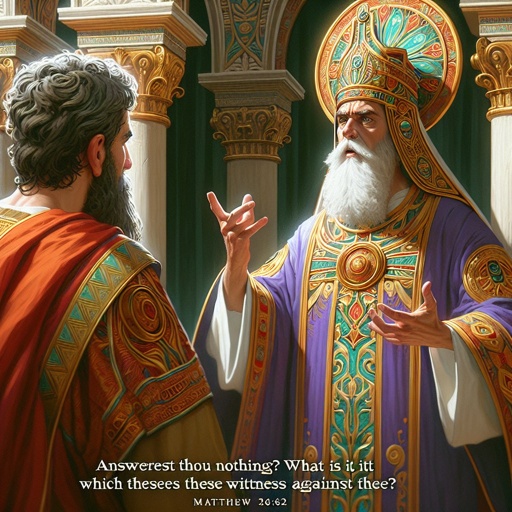
Matthew 26:62 - "And the high priest arose, and said unto him, Answerest thou nothing? what is it which these witness against thee?"
"And the high priest arose, and said unto him, Answerest thou nothing? what is it which these witness against thee?" - Matthew 26:62

Matthew 26:62-66 - "Then the high priest stood up and said to Jesus, “Are you not going to answer? What is this testimony that these men are bringing against you?” But Jesus remained silent. The high priest said to him, “I charge you under oath by the living God: Tell us if you are the Messiah, the Son of God.” “You have said so,” Jesus replied. “But I say to all of you: From now on you will see the Son of Man sitting at the right hand of the Mighty One and coming on the clouds of heaven.” Then the high priest tore his clothes and said, “He has spoken blasphemy! Why do we need any more witnesses? Look, now you have heard the blasphemy. What do you think?” “He is worthy of death,” they answered."
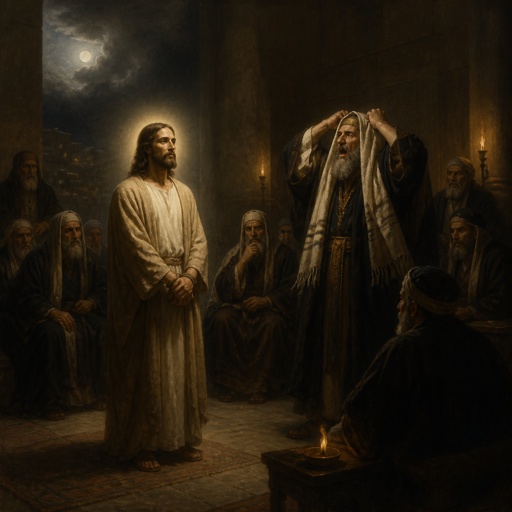
"Then the high priest stood up and said to Jesus, “Are you not going to answer? What is this testimony that these men are bringing against you?” But Jesus remained silent. The high priest said to him, “I charge you under oath by the living God: Tell us if you are the Messiah, the Son of God.” “You have said so,” Jesus replied. “But I say to all of you: From now on you will see the Son of Man sitting at the right hand of the Mighty One and coming on the clouds of heaven.” Then the high priest tore his clothes and said, “He has spoken blasphemy! Why do we need any more witnesses? Look, now you have heard the blasphemy. What do you think?” “He is worthy of death,” they answered." - Matthew 26:62-66

Matthew 27:62 - "¶ Now the next day, that followed the day of the preparation, the chief priests and Pharisees came together unto Pilate,"

Numbers 26:62 - "And those that were numbered of them were twenty and three thousand, all males from a month old and upward: for they were not numbered among the children of Israel, because there was no inheritance given them among the children of Israel."
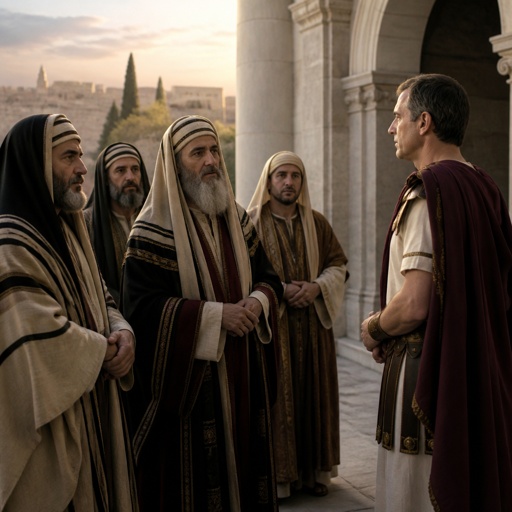
"¶ Now the next day, that followed the day of the preparation, the chief priests and Pharisees came together unto Pilate," - Matthew 27:62

Matthew 26:25

Matthew 26:15

Matthew 19:26

Matthew 26:15

Matthew 27:26

Matthew 27:26

Matthew 26:53

Matthew 26:65

Matthew 26:41

Matthew 26:53
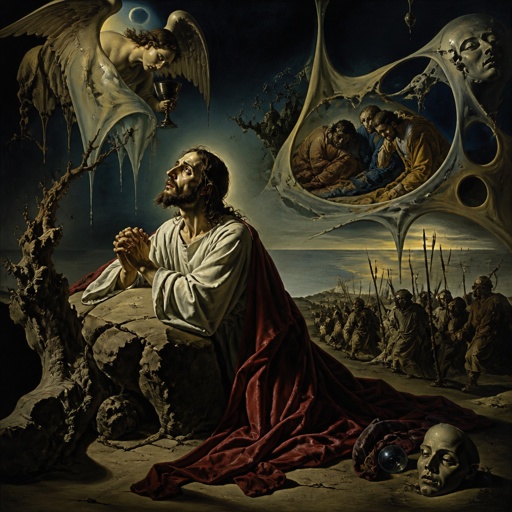
Matthew 26:36-46
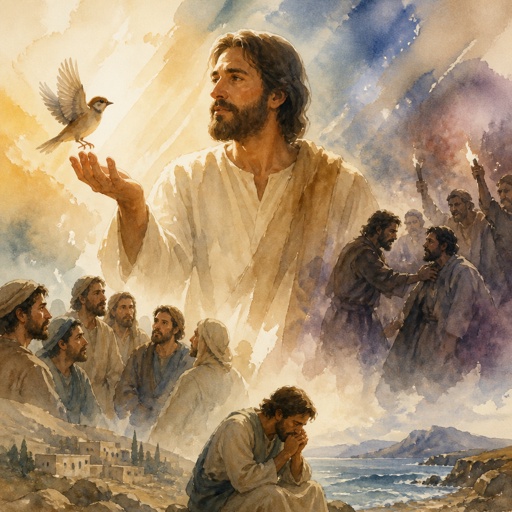
Matthew 10:26-33

Matthew 26:26 - "¶ And as they were eating, Jesus took bread, and blessed it, and brake it, and gave it to the disciples, and said, Take, eat; this is my body."

Matthew 22:26 - "Likewise the second also, and the third, unto the seventh."

Matthew 9:26 - "And the fame hereof went abroad into all that land."

Matthew 26:54 - "But how then shall the scriptures be fulfilled, that thus it must be?"

Matthew 26:6 - "¶ Now when Jesus was in Bethany, in the house of Simon the leper,"

Matthew 26:4 - "And consulted that they might take Jesus by subtilty, and kill him."

Matthew 26:5 - "But they said, Not on the feast day, lest there be an uproar among the people."

Matthew 26:16 - "And from that time he sought opportunity to betray him."

Matthew 26:72 - "And again he denied with an oath, I do not know the man."

Matthew 11:26 - "Even so, Father: for so it seemed good in thy sight."

Matthew 26:20 - "Now when the even was come, he sat down with the twelve."