What does Matthew 26:62 mean?
“And the high priest arose, and said unto him, Answerest thou nothing? what is it which these witness against thee?” — Matthew 26:62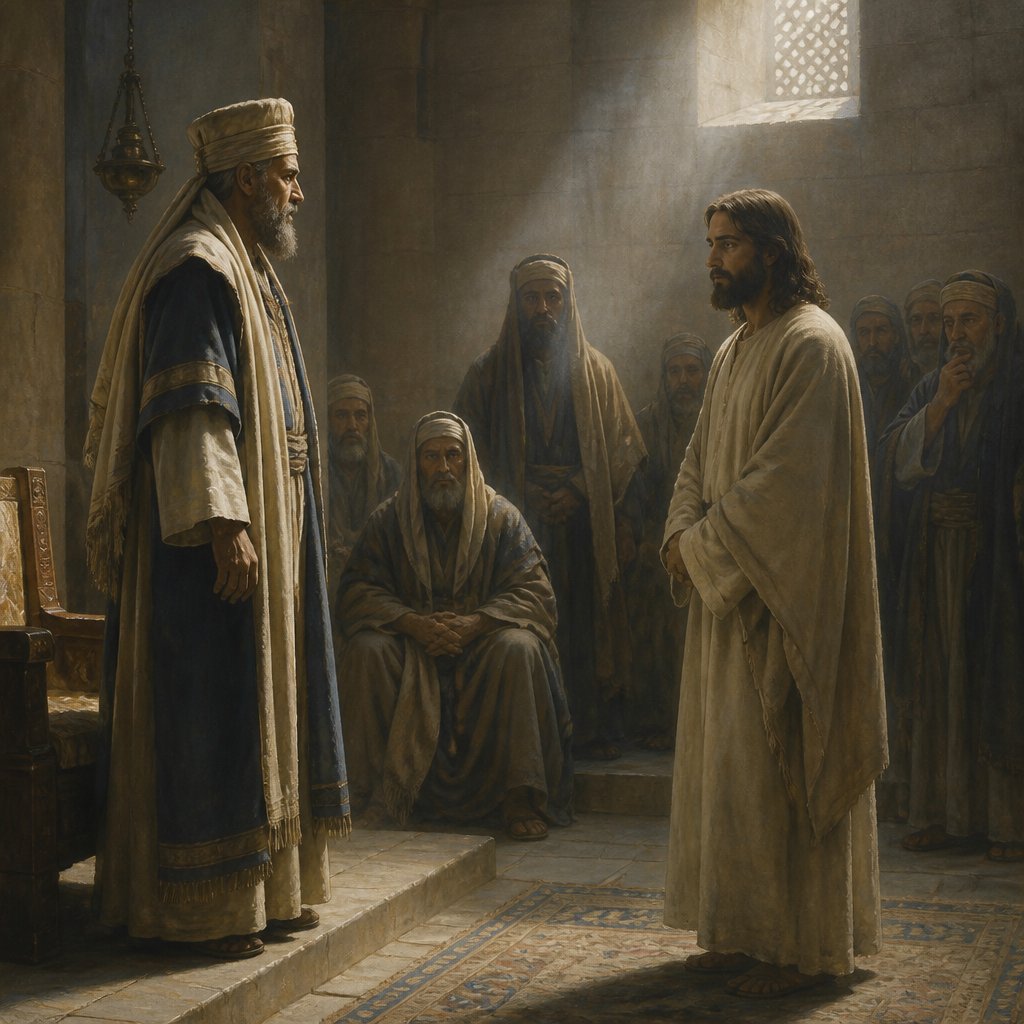
Matthew 26:62 (KJV) says, "And the high priest arose, and said unto him, Answerest thou nothing? What is it which these witness against thee?"
This verse appears in the New Testament of the Bible and is part of the narrative of Jesus' trial before the Jewish religious authorities. The High Priest refers to Caiaphas, the acting high priest at that time, who was questioning Jesus as part of a plot to find him guilty of blasphemy and have him executed.
The context of this verse is crucial to understanding its deeper meaning. Jesus had been arrested and brought before the religious leaders, who sought to find evidence against him in order to sentence him to death. The religious leaders were trying to find false witnesses to testify against Jesus, but even the false testimonies did not align. This verse captures the moment when the high priest confronts Jesus, questioning why he remains silent in the face of these accusations.
One of the central themes of this verse is the injustice of Jesus' trial. Throughout the Gospels, Jesus is depicted as a figure of moral integrity, love, and compassion. He is innocent and yet is facing false accusations and a biased trial. This verse highlights the injustice and the manipulation of the legal system for the purpose of eliminating a threat to the religious hierarchy.
Another theme present in this verse is Jesus' silence. In the face of false accusations and unjust treatment, Jesus remains silent. This can be seen as a reflection of Jesus' willingness to endure suffering and persecution for the greater purpose of fulfilling God's plan for salvation. It also highlights the fulfillment of the prophecy in Isaiah 53:7, "He was oppressed, and he was afflicted, yet he opened not his mouth; like a lamb that is led to the slaughter, and like a sheep that before its shearers is silent, so he opened not his mouth."
The interaction between the high priest and Jesus in this verse also symbolizes the clash between spiritual authority and divine authority. The high priest, representing the religious establishment, is attempting to assert his authority over Jesus. Jesus, on the other hand, represents divine authority and the will of God. This conflict foreshadows the greater spiritual battle that is taking place, with Jesus being the ultimate victor over the powers of sin and death.
Furthermore, this verse speaks to the broader theme of fulfillment of prophecy. Throughout the Gospels, Jesus fulfills numerous prophecies from the Old Testament, and his trial, crucifixion, and resurrection are all part of God's redemptive plan for humanity. This verse is a part of the unfolding of these prophecies, emphasizing the divine orchestration of events leading to Jesus' crucifixion and ultimately, the fulfillment of God's plan for salvation.
In conclusion, Matthew 26:62 (KJV) captures a pivotal moment in the narrative of Jesus' trial, highlighting themes of injustice, divine authority, prophecy fulfillment, and Jesus' willingness to suffer for the greater purpose of redemption. This verse serves as a reminder of the sacrificial love and unwavering commitment of Jesus to fulfill God's plan for the salvation of humanity.
Get our apps


Artwork for Matthew 26:62
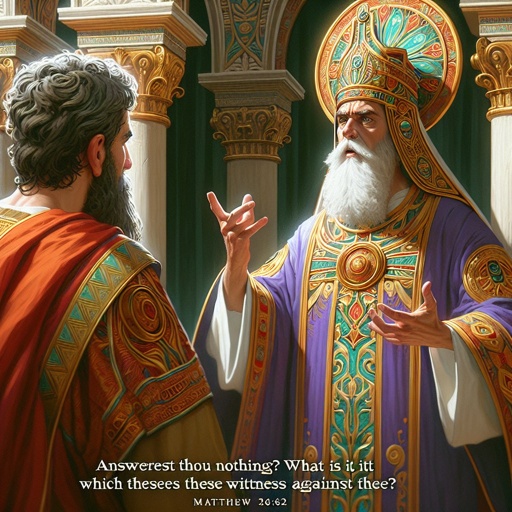
Matthew 26:62 - "And the high priest arose, and said unto him, Answerest thou nothing? what is it which these witness against thee?"
"And the high priest arose, and said unto him, Answerest thou nothing? what is it which these witness against thee?" - Matthew 26:62

Matthew 26:62-66 - "Then the high priest stood up and said to Jesus, “Are you not going to answer? What is this testimony that these men are bringing against you?” But Jesus remained silent. The high priest said to him, “I charge you under oath by the living God: Tell us if you are the Messiah, the Son of God.” “You have said so,” Jesus replied. “But I say to all of you: From now on you will see the Son of Man sitting at the right hand of the Mighty One and coming on the clouds of heaven.” Then the high priest tore his clothes and said, “He has spoken blasphemy! Why do we need any more witnesses? Look, now you have heard the blasphemy. What do you think?” “He is worthy of death,” they answered."
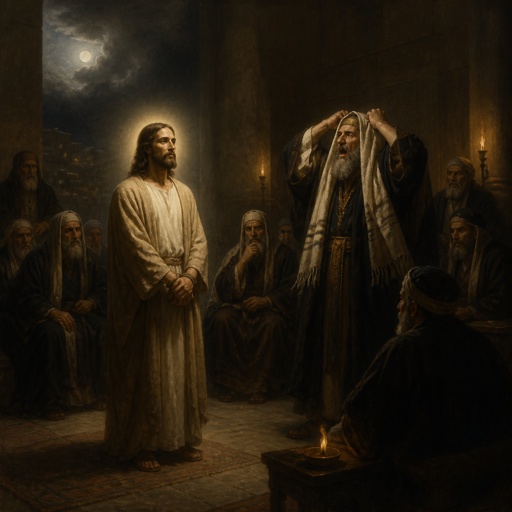
"Then the high priest stood up and said to Jesus, “Are you not going to answer? What is this testimony that these men are bringing against you?” But Jesus remained silent. The high priest said to him, “I charge you under oath by the living God: Tell us if you are the Messiah, the Son of God.” “You have said so,” Jesus replied. “But I say to all of you: From now on you will see the Son of Man sitting at the right hand of the Mighty One and coming on the clouds of heaven.” Then the high priest tore his clothes and said, “He has spoken blasphemy! Why do we need any more witnesses? Look, now you have heard the blasphemy. What do you think?” “He is worthy of death,” they answered." - Matthew 26:62-66

Matthew 27:62 - "¶ Now the next day, that followed the day of the preparation, the chief priests and Pharisees came together unto Pilate,"

Numbers 26:62 - "And those that were numbered of them were twenty and three thousand, all males from a month old and upward: for they were not numbered among the children of Israel, because there was no inheritance given them among the children of Israel."
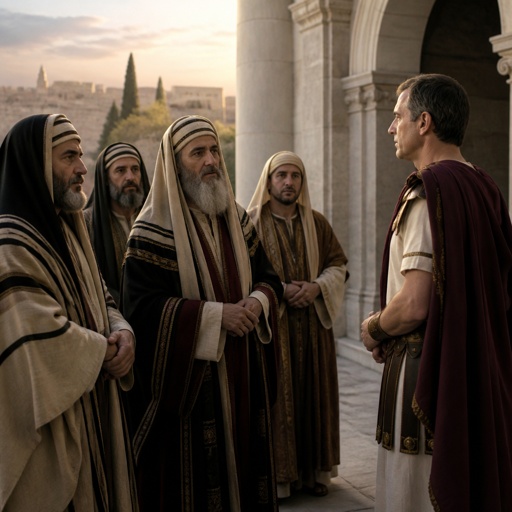
"¶ Now the next day, that followed the day of the preparation, the chief priests and Pharisees came together unto Pilate," - Matthew 27:62

Matthew 26:25

Matthew 26:15

Matthew 19:26

Matthew 26:15

Matthew 27:26

Matthew 27:26

Matthew 26:53

Matthew 26:65

Matthew 26:41

Matthew 26:53
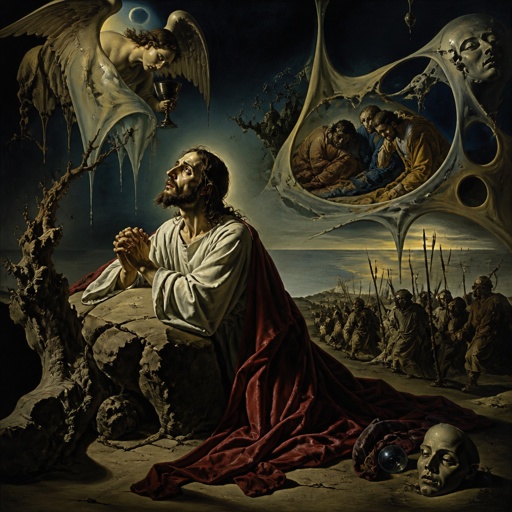
Matthew 26:36-46
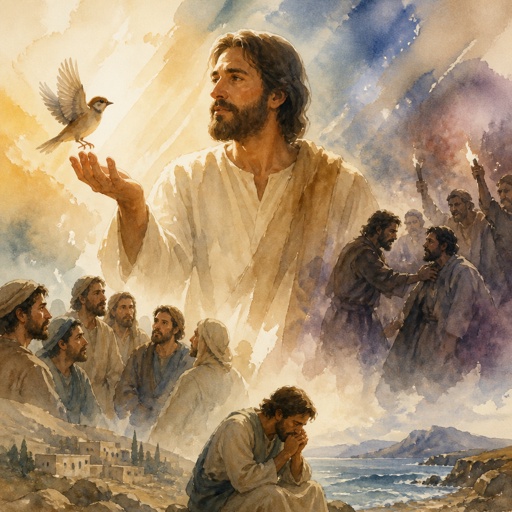
Matthew 10:26-33

Matthew 26:26 - "¶ And as they were eating, Jesus took bread, and blessed it, and brake it, and gave it to the disciples, and said, Take, eat; this is my body."

Matthew 22:26 - "Likewise the second also, and the third, unto the seventh."

Matthew 9:26 - "And the fame hereof went abroad into all that land."

Matthew 26:54 - "But how then shall the scriptures be fulfilled, that thus it must be?"

Matthew 26:6 - "¶ Now when Jesus was in Bethany, in the house of Simon the leper,"

Matthew 26:4 - "And consulted that they might take Jesus by subtilty, and kill him."

Matthew 26:5 - "But they said, Not on the feast day, lest there be an uproar among the people."

Matthew 26:16 - "And from that time he sought opportunity to betray him."

Matthew 26:72 - "And again he denied with an oath, I do not know the man."

Matthew 11:26 - "Even so, Father: for so it seemed good in thy sight."

Matthew 26:20 - "Now when the even was come, he sat down with the twelve."