Seeing Clearly: The Call to Self-Examination
“Thou hypocrite, first cast out the beam out of thine own eye; and then shalt thou see clearly to cast out the mote out of thy brother’s eye.” — Matthew 7:5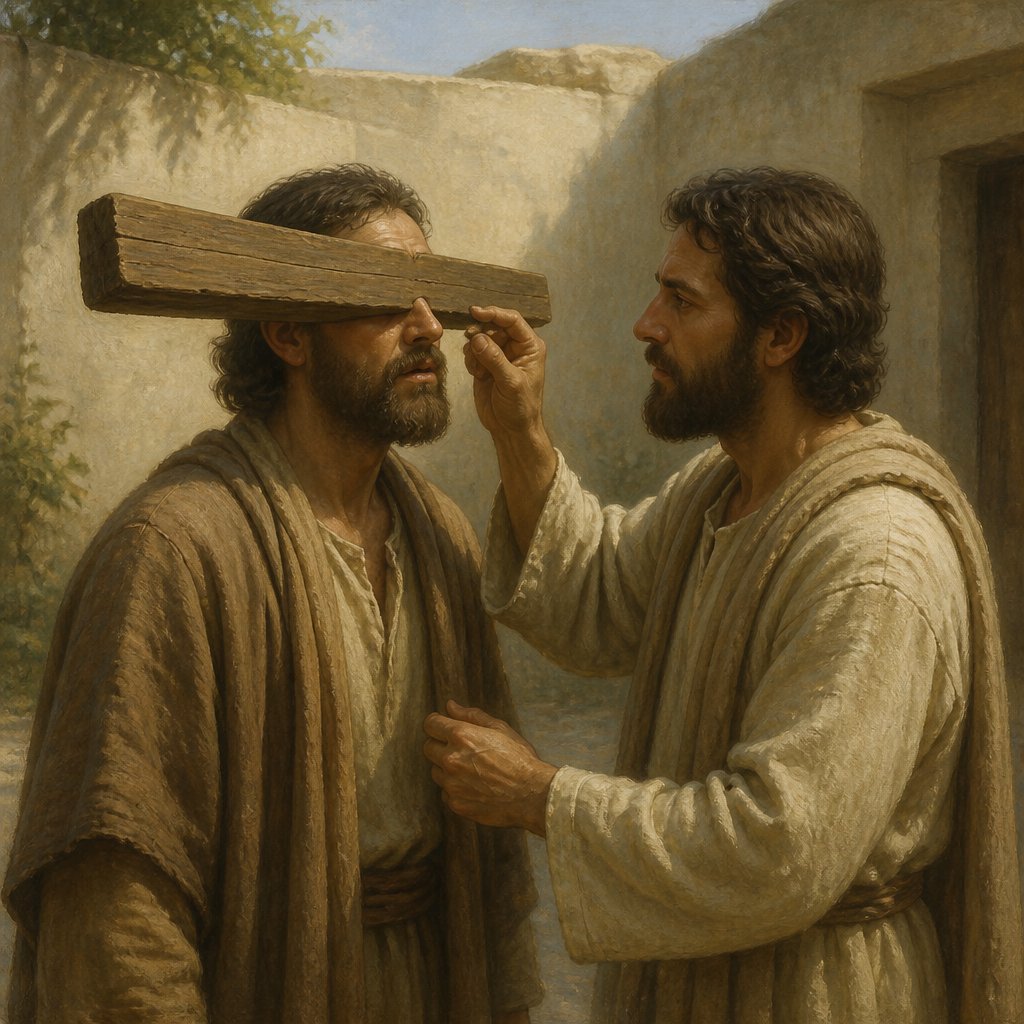
Matthew 7:5 (KJV) reads, "Thou hypocrite, first cast out the beam out of thine own eye; and then shalt thou see clearly to cast out the mote out of thy brother's eye." This powerful admonition from the lips of Jesus challenges us to engage in a profound act of self-reflection and humility before we take it upon ourselves to judge or correct others.
In this verse, Jesus uses vivid imagery—the beam and the mote—to illustrate the wide disparities that often exist between our faults and those of others. The 'beam' represents a significant flaw or sin in our own lives while the 'mote' symbolizes a minor flaw in another. It is ironic, yet tragically human, how often we overlook our major shortcomings while fixating on the small imperfections of others.
As followers of Christ, we are called to uphold the truth, stand for righteousness, and help our brethren in their walk with God. Yet, in our eagerness to point out others' flaws, we must first hold a mirror to our own lives. The process of examining our hearts is essential. Self-examination is a vital spiritual discipline that yields deeper awareness of our own shortcomings, a more compassionate heart for others, and a clearer vision to offer genuine support rather than condemnation.
Let's unpack the implications of this verse. The term ‘hypocrite’ is a harsh label, indicating someone whose actions do not align with their professed beliefs. In essence, a hypocrite is someone who is quick to criticize while being oblivious to their own faults. Jesus’s words serve as a direct challenge to our propensity for judgment. Before we admonish others for their sins or weaknesses, we must first recognize the gravity of our own transgressions. It's a call to authenticity - to live out the very principles we wish to guide others by.
As we grapple with this truth, let us begin with prayer. We must ask the Holy Spirit not only to reveal the ‘beams’ in our eyes but also to cultivate a heart of humility within us. In Psalm 139:23-24, David prays, "Search me, O God, and know my heart: try me, and know my thoughts: And see if there be any wicked way in me, and lead me in the way everlasting." This should be our earnest desire - to be cleansed and made aware of anything within us that could hinder our walk with God or negatively impact our relationships with others.
Once we have dealt with our own shortcomings, we earn the right to help others. When we approach our brothers and sisters in Christ not from a place of superiority but with an understanding of our shared human frailty, our counsel becomes more constructive. We can offer help without condemnation, knowing that we too are imperfect beings in need of grace.
Jesus does not negate the act of helping others; rather, He emphasizes the importance of order and authenticity. It is about refining our focus, ensuring we are discerning without hypocrisy. Galatians 6:1 instructs us, "Brethren, if a man be overtaken in a fault, ye which are spiritual, restore such an one in the spirit of meekness; considering thyself, lest thou also be tempted." This teaches us that while we are to help our neighbors remove their motes, we must do so with great care for our own spiritual state.
In conclusion, Matthew 7:5 serves as a profound reminder of the necessity of self-examination and humility. Let us take the time to search our hearts, remove the beams, and approach others with love and clarity. This will not only honor God but also fosters unity and understanding in the body of Christ, transforming potential conflict into a partnership for growth and restoration. Pray today for the eyes of your heart to be opened, so you can see both yourself and your neighbor through the lens of grace.
Get our apps


Artwork for Matthew 7:5

Matthew 7:5 - "Thou hypocrite, first cast out the beam out of thine own eye; and then shalt thou see clearly to cast out the mote out of thy brother's eye."
"Thou hypocrite, first cast out the beam out of thine own eye; and then shalt thou see clearly to cast out the mote out of thy brother's eye." - Matthew 7:5

Matthew 5:7 - "Blessed are the merciful: for they shall obtain mercy."

"Blessed are the merciful: for they shall obtain mercy." - Matthew 5:7

Matthew 7:7

Matthew 5:5 - "Blessed are the meek: for they shall inherit the earth."

Matthew 5:44

Matthew 5:44

Matthew 5

Matthew 5

Matthew 5:44

Matthew 5:44

Matthew 5

Matthew 7:13-14

Matthew 7:13-14

Matthew 7:13-14

Matthew 7:13-14

Matthew 7:13-14

Matthew 7:13-14

Matthew 7:13-14

Matthew 7:13-14

Matthew 7:13-14

Matthew 7:13-14

Matthew 7:13-14

Matthew 5:44

Matthew 5:44

Matthew 5:14

Matthew 5:44

Matthew 6:5

Matthew 5:14