Dwelling in God's Promises: A Journey through Nehemiah 11:25
“And for the villages, with their fields, some of the children of Judah dwelt at Kirjath-arba, and in the villages thereof, and at Dibon, and in the villages thereof, and at Jekabzeel, and in the villages thereof,” — Nehemiah 11:25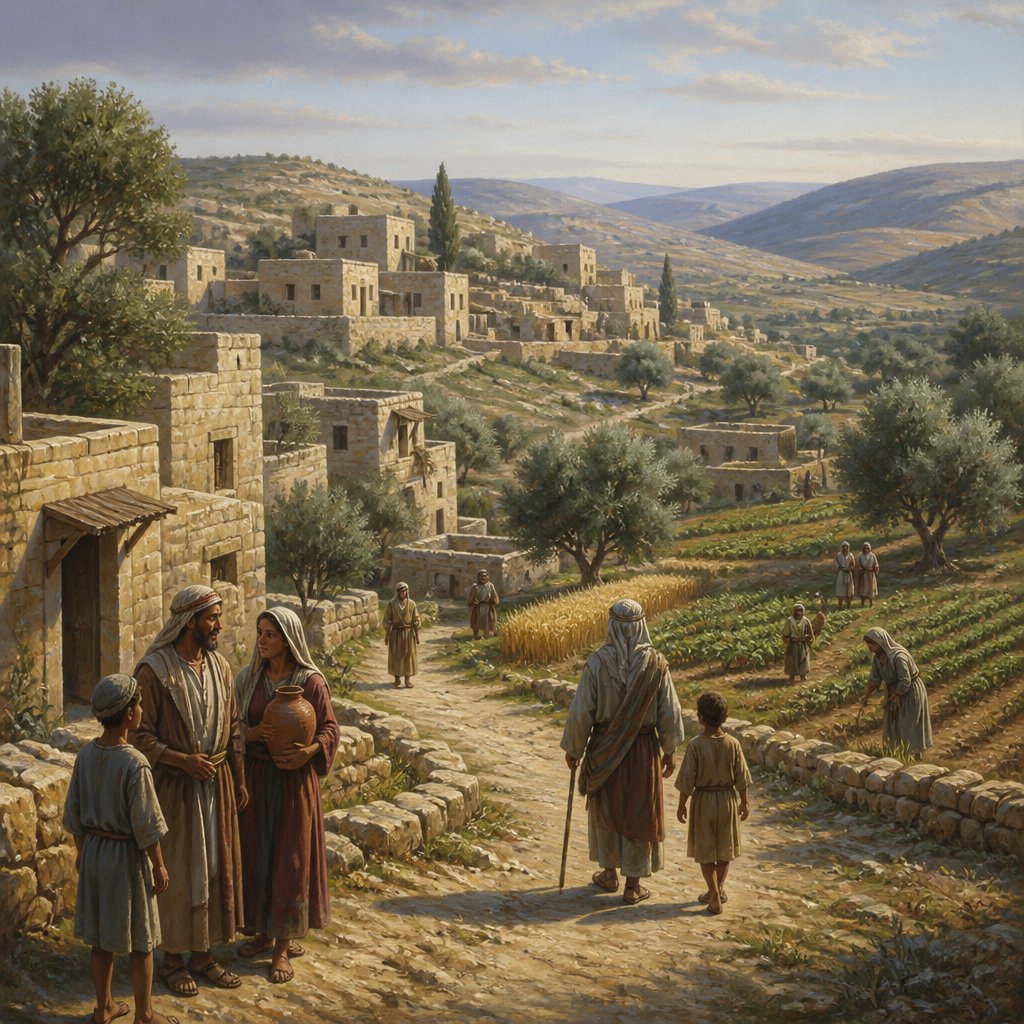
When we delve into Nehemiah 11:25, we come across a seemingly simple statement that lists the locations where the children of Judah chose to dwell. The verse reads: "And for the villages, with their fields, some of the children of Judah dwelt at Kirjath-arba, and in the villages thereof, and at Dibon, and in the villages thereof, and at Jekabzeel, and in the villages thereof." (KJV) At first glance, this verse might seem mundane or just a historical account, but upon closer inspection, it is laden with spiritual insights and life applications for us today.
Nehemiah's narrative is a powerful reminder of God’s providence and the importance of community and belonging. After a period of exile, the Israelites were returning to their homeland, where God promised to restore them. In this restoration process, their identities were being redefined—not just as individuals, but as a collective nation that had a new covenant and purpose in God. The list of villages emphasizes that God cares about the specific places where His people dwell and how these locations contribute to their community and security.
The naming of the villages—their geographical references—carries weight. Kirjath-arba, known as the city of Arba, is described in the narrative as an important city historically linked with the patriarch Abraham and later, his descendants. Dibon was a city known for its richness and resources, while Jekabzeel also held its significance in the allocation of land to God’s people. Each settlement represents part of the divine map that God designed for His chosen ones—highlighting their heritage and the blessings that come with it. These are not just locations on a map; they symbolize a journey to belonging and God’s faithfulness.
In our contemporary lives, where do we find our belonging? Are we content with the places we inhabit? Much like the children of Judah, we each have our own ‘villages’ in which we dwell—our homes, communities, workplaces, and churches. As we navigate our daily lives, we must remember that we have been called to dwell in the spaces where God has placed us and to contribute purposefully to the community around us. Just as God provided the children of Judah with designated places to restore their identities, He invites us to recognize our part in the tapestry of His plan within our own circles.
Moreover, the mention of "their fields" alongside the villages indicates that each place is meant to be cultivated and nurtured. Fields represent our work and calling, reflecting the effort we apply in our lives to bring glory to God. What fields do you cultivate in your life? Are you tending to the relationships, responsibilities, and challenges in your field with the same intention and dedication as the children of Judah?
The act of dwelling suggests not just a physical presence but an emotional and spiritual investment in those locations. Just as those who dwelt in Kirjath-arba and its surrounding villages committed themselves to rebuilding from the ruins of their past, we too are called to build in faith. Seeking out opportunities to serve, actively fostering community, and pursuing the growth of our places of dwelling can transform our current surroundings into a testimony of God’s love and provision.
As we reflect on Nehemiah 11:25, let us embrace a spirit of gratitude for the villages we inhabit, recognizing that God has placed us strategically to fulfill His purposes. Whether it be nurturing a family within a neighborhood, enhancing our workplace with integrity, or being active in our churches, we are all contributors towards the advancement of God's kingdom in our unique contexts.
In conclusion, let us pray for the grace to dwell faithfully in our villages and to make the most of our fields. May we be inspired by the children of Judah's commitment to return and rebuild, understanding that our place in God’s plan is a valuable and significant one.
Get our apps


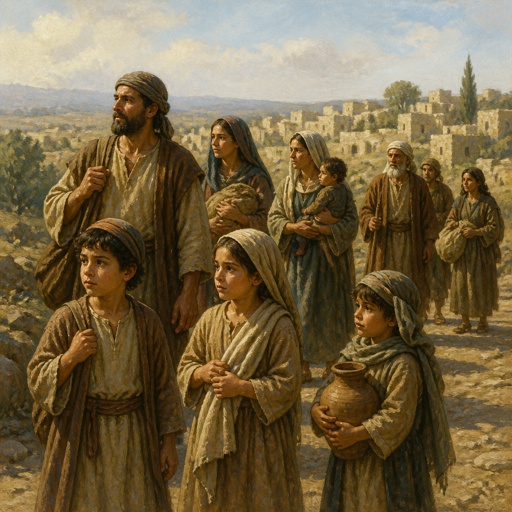
Artwork for Nehemiah 11:25
Nehemiah 11:25 - "And for the villages, with their fields, some of the children of Judah dwelt at Kirjath-arba, and in the villages thereof, and at Dibon, and in the villages thereof, and at Jekabzeel, and in the villages thereof,"
"And for the villages, with their fields, some of the children of Judah dwelt at Kirjath-arba, and in the villages thereof, and at Dibon, and in the villages thereof, and at Jekabzeel, and in the villages thereof," - Nehemiah 11:25

Nehemiah 10:25 - "Rehum, Hashabnah, Maaseiah,"

Nehemiah 7:25 - "The children of Gibeon, ninety and five."

Nehemiah 11:11-14

Nehemiah 11:13

Nehemiah 11:1-19
"Rehum, Hashabnah, Maaseiah," - Nehemiah 10:25

Nehemiah 11:34 - "Hadid, Zeboim, Neballat,"

Nehemiah 10:11 - "Micha, Rehob, Hashabiah,"

Nehemiah 11:33 - "Hazor, Ramah, Gittaim,"

Nehemiah 11:32 - "And at Anathoth, Nob, Ananiah,"
"The children of Gibeon, ninety and five." - Nehemiah 7:25

Nehemiah 11:26 - "And at Jeshua, and at Moladah, and at Beth-phelet,"

Nehemiah 11:29 - "And at En-rimmon, and at Zareah, and at Jarmuth,"

Nehemiah 11:35 - "Lod, and Ono, the valley of craftsmen."

Nehemiah 11:28 - "And at Ziklag, and at Mekonah, and in the villages thereof,"

Nehemiah 11:36 - "And of the Levites were divisions in Judah, and in Benjamin."

Nehemiah 11:10 - "Of the priests: Jedaiah the son of Joiarib, Jachin."

Nehemiah 12:25 - "Mattaniah, and Bakbukiah, Obadiah, Meshullam, Talmon, Akkub, were porters keeping the ward at the thresholds of the gates."

Nehemiah 12:11 - "And Joiada begat Jonathan, and Jonathan begat Jaddua."

Nehemiah 11:27 - "And at Hazar-shual, and at Beer-sheba, and in the villages thereof,"

Nehemiah 2:11 - "So I came to Jerusalem, and was there three days."

Nehemiah 11:11 - "Seraiah the son of Hilkiah, the son of Meshullam, the son of Zadok, the son of Meraioth, the son of Ahitub, was the ruler of the house of God."

"And at Anathoth, Nob, Ananiah," - Nehemiah 11:32

"Hadid, Zeboim, Neballat," - Nehemiah 11:34

"Hazor, Ramah, Gittaim," - Nehemiah 11:33

"Micha, Rehob, Hashabiah," - Nehemiah 10:11

Nehemiah 11:21 - "But the Nethinims dwelt in Ophel: and Ziha and Gispa were over the Nethinims."

Nehemiah 11:8 - "And after him Gabbai, Sallai, nine hundred twenty and eight."