Guarding the Sanctity of God’s House
“On that day they read in the book of Moses in the audience of the people; and therein was found written, that the Ammonite and the Moabite should not come into the congregation of God for ever;” — Nehemiah 13:1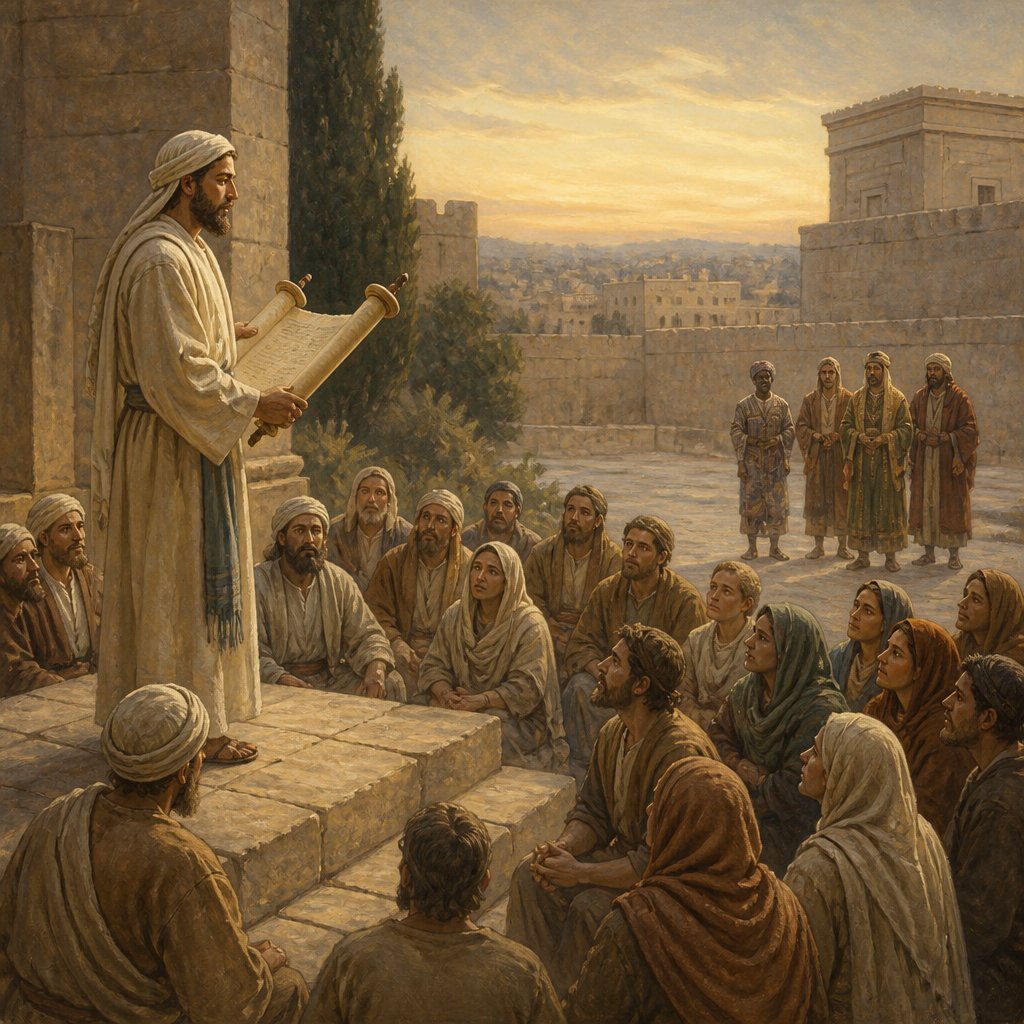
The verse from Nehemiah 13:1 states, "On that day they read in the book of Moses in the audience of the people; and therein was found written, that the Ammonite and the Moabite should not come into the congregation of God for ever." This passage reveals a profound moment in the post-exilic community of Israel, highlighting the importance of adhering faithfully to God's laws and the implications for worship and community life.
At first glance, we might wonder why the presence of the Ammonites and Moabites was deemed so unacceptable. These clans, originating from Lot’s children, had historical enmities with Israel and had been known for their idolatry and immorality. Their exclusion from God’s congregation was not simply a matter of ethnic purity but about spiritual integrity. The Israelites understood that to mingle with those who did not share their covenant with God could result in the dilution of their faith and practices. This directive served as a safeguard to maintain the holiness of worship and community life among God’s people.
In the contemporary context, the principle remains vital for us today as we seek to build a community of faith that honors God in all aspects. While we are called to love and reach out to people of all backgrounds, we must also be vigilant about maintaining the core tenets of our faith and being aware of the influences that could lead us astray. This requires discernment and wisdom, as we navigate relationships in a pluralistic society.
When the Israelites read from the Book of Moses, it wasn’t a mere ritual; it was a corporate acknowledgment of God’s word and a commitment to obey it. They were coming together to remember who they were in God’s eyes—a holy nation, set apart for His purposes. The act of reading scripture in the congregation reinforced their identity and united them under the divine will. Similarly, in our churches today, the reading and teaching of Scripture should be central to our gatherings, reminding us of our shared identity in Christ and our collective responsibility to uphold holiness in our community.
Nehemiah's leadership exemplifies a commitment to God’s standards. After returning from Persia, he found that the people had strayed, allowing foreign influences into their worship and community. His response was immediate and fervent; he led the people back to God's standards. This determination isn’t just a historical account of an ancient leader but a challenge for all of us in our personal and communal lives.
As individuals, we are called to examine our own lives for any influences that might compromise our faith. What are the 'Ammonites' and 'Moabites' in our lives? Are there relationships, practices, or influences that draw us away from recognizing our identity as children of God? These could range from toxic relationships, worldly priorities, or even habits that lead us into complacency about our spiritual walk.
Moreover, Nehemiah’s actions remind us of the importance of accountability and community in our spiritual journey. It is vital for us to engage with one another, to encourage and help each other remain true to the faith by holding one another accountable for our spiritual growth. Just as Nehemiah read the Scriptures aloud in the presence of the people, so too should we foster environments where God's Word is read, discussed, and applied in our lives.
In conclusion, the lesson we glean from Nehemiah 13:1 is a call to uphold the sanctity and unity of our faith community. While we must engage with and love those outside our faith, we must simultaneously guard against influences that would lead us away from God’s ways. May we continually strive to honor God, uphold His Word, and remain steadfast as a congregation that reflects His character.
Let us deliberate on our commitments, renew them with God’s Word, and remember that holiness, discernment, and genuine community are integral to our walk with Christ. Seek the Lord earnestly, align yourself with His purposes, and surround yourself with those who strengthen your faith. Only then can we stand strong as a congregation worthy of His presence.
Get our apps


Artwork for Nehemiah 13:1

Nehemiah 13:1 - "On that day they read in the book of Moses in the audience of the people; and therein was found written, that the Ammonite and the Moabite should not come into the congregation of God for ever;"
"On that day they read in the book of Moses in the audience of the people; and therein was found written, that the Ammonite and the Moabite should not come into the congregation of God for ever;" - Nehemiah 13:1

Nehemiah 11:13

Nehemiah 10:13 - "Hodijah, Bani, Beninu."

Nehemiah 12:13 - "Of Ezra, Meshullam; of Amariah, Jehohanan;"

Nehemiah 7:13 - "The children of Zattu, eight hundred forty and five."

"Hodijah, Bani, Beninu." - Nehemiah 10:13

Nehemiah 1:1 - "The words of Nehemiah the son of Hachaliah. And it came to pass in the month Chisleu, in the twentieth year, as I was in Shushan the palace,"

Nehemiah 10:1 - "Now those that sealed were, Nehemiah, the Tirshatha, the son of Hachaliah, and Zidkijah,"

"Of Ezra, Meshullam; of Amariah, Jehohanan;" - Nehemiah 12:13

Nehemiah 13:12 - "Then brought all Judah the tithe of the corn and the new wine and the oil unto the treasuries."

Nehemiah 13:31 - "And for the wood offering, at times appointed, and for the firstfruits. Remember me, O my God, for good."

Nehemiah 13:20 - "So the merchants and sellers of all kind of ware lodged without Jerusalem once or twice."

Nehemiah 13:4 - "¶ And before this, Eliashib the priest, having the oversight of the chamber of the house of our God, was allied unto Tobiah:"

Nehemiah 13:23 - "¶ In those days also saw I Jews that had married wives of Ashdod, of Ammon, and of Moab:"

Nehemiah 13:29 - "Remember them, O my God, because they have defiled the priesthood, and the covenant of the priesthood, and of the Levites."

Nehemiah 13:24 - "And their children spake half in the speech of Ashdod, and could not speak in the Jews' language, but according to the language of each people."

Nehemiah 13:8 - "And it grieved me sore: therefore I cast forth all the household stuff of Tobiah out of the chamber."

Nehemiah 11:1-19

Nehemiah 13:3 - "Now it came to pass, when they had heard the law, that they separated from Israel all the mixed multitude."

Nehemiah 13:9 - "Then I commanded, and they cleansed the chambers: and thither brought I again the vessels of the house of God, with the meat offering and the frankincense."

Nehemiah 13:7 - "And I came to Jerusalem, and understood of the evil that Eliashib did for Tobiah, in preparing him a chamber in the courts of the house of God."

"The children of Zattu, eight hundred forty and five." - Nehemiah 7:13

Nehemiah 8:10

Nehemiah 13:13 - "And I made treasurers over the treasuries, Shelemiah the priest, and Zadok the scribe, and of the Levites, Pedaiah: and next to them was Hanan the son of Zaccur, the son of Mattaniah: for they were counted faithful, and their office was to distribute unto their brethren."

Nehemiah 13:30 - "Thus cleansed I them from all strangers, and appointed the wards of the priests and the Levites, every one in his business;"

Nehemiah 13:17 - "Then I contended with the nobles of Judah, and said unto them, What evil thing is this that ye do, and profane the sabbath day?"

Nehemiah 13:11 - "Then contended I with the rulers, and said, Why is the house of God forsaken? And I gathered them together, and set them in their place."

Nehemiah 13:27 - "Shall we then hearken unto you to do all this great evil, to transgress against our God in marrying strange wives?"

Nehemiah 11:11-14