What does Nehemiah 13:1 mean?
“On that day they read in the book of Moses in the audience of the people; and therein was found written, that the Ammonite and the Moabite should not come into the congregation of God for ever;” — Nehemiah 13:1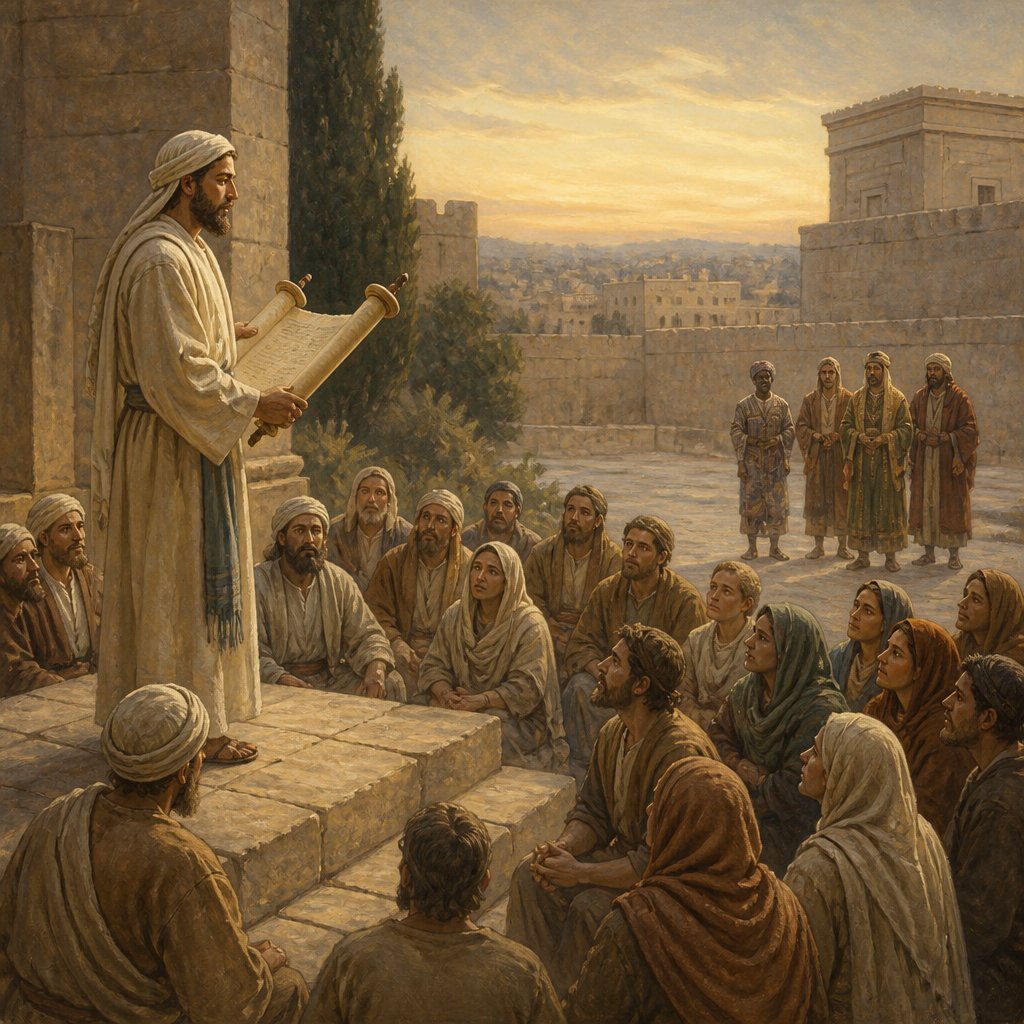
The Bible verse Nehemiah 13:1 from the King James Version (KJV) reads, "On that day they read in the book of Moses in the audience of the people; and therein was found written, that the Ammonite and the Moabite should not come into the congregation of God for ever." This verse is taken from the book of Nehemiah, which is a book in the Old Testament and is part of the historical books of the Bible. The book of Nehemiah tells the story of Nehemiah, who was a Jewish official serving as cupbearer to the Persian king Artaxerxes. He was granted permission to return to Jerusalem to rebuild the city's walls and restore the people's faith in God. Nehemiah 13:1 is situated in the final chapter of the book, which records Nehemiah's efforts to purge the community of practices that were inconsistent with God's law.
The context of this verse is important for understanding its significance. Nehemiah had returned to Jerusalem to find that the people had fallen into sin once again after the initial reforms made during his tenure. In particular, Nehemiah was troubled by the fact that the people had allowed the Ammonites and Moabites to enter into the assembly of God, despite the specific prohibition against it in the book of Moses. This verse underscores the importance of obedience to God's law and the consequences of disobedience.
One of the key themes of Nehemiah 13:1 is the importance of maintaining purity and holiness within the community of God's people. The prohibition against the Ammonites and the Moabites was rooted in their historical opposition to the Israelites and their refusal to provide support to the Israelites as they journeyed through the wilderness. This verse serves as a reminder that God's people are called to be set apart and to maintain a faithful and obedient relationship with God. Allowing the Ammonites and Moabites into the congregation was a violation of this principle, and Nehemiah's actions to rectify the situation reflect his commitment to upholding the purity and holiness of the community.
Furthermore, the verse speaks to the broader theme of the consequences of disobedience and the need for repentance. Throughout the book of Nehemiah, the people repeatedly strayed from the laws and ordinances set forth in the book of Moses. Nehemiah's efforts to reform the community and restore their faithfulness to God demonstrate the importance of recognizing and repenting of sin. The discovery of the prohibition against the Ammonites and Moabites serves as a catalyst for Nehemiah to take action and address the spiritual waywardness of the people.
Symbolism plays a crucial role in understanding the significance of this verse. The prohibition against the Ammonites and Moabites represents the boundary between the people of God and those who are hostile to God's purposes. Allowing the Ammonites and Moabites into the assembly represents compromising the holiness and purity of the community. This serves as a symbolic reminder of the need for spiritual vigilance and the importance of maintaining fidelity to God's commands.
In conclusion, Nehemiah 13:1 from the King James Version of the Bible carries significant themes and teachings about the importance of obedience to God's law, maintaining purity and holiness within the community, the consequences of disobedience, and the need for repentance. The verse serves as a powerful reminder of the enduring relevance of the Old Testament teachings and the significance of upholding the faithfulness and obedience to God.
Get our apps


Artwork for Nehemiah 13:1

Nehemiah 13:1 - "On that day they read in the book of Moses in the audience of the people; and therein was found written, that the Ammonite and the Moabite should not come into the congregation of God for ever;"
"On that day they read in the book of Moses in the audience of the people; and therein was found written, that the Ammonite and the Moabite should not come into the congregation of God for ever;" - Nehemiah 13:1

Nehemiah 11:13

Nehemiah 10:13 - "Hodijah, Bani, Beninu."

Nehemiah 12:13 - "Of Ezra, Meshullam; of Amariah, Jehohanan;"

Nehemiah 7:13 - "The children of Zattu, eight hundred forty and five."

"Hodijah, Bani, Beninu." - Nehemiah 10:13

Nehemiah 1:1 - "The words of Nehemiah the son of Hachaliah. And it came to pass in the month Chisleu, in the twentieth year, as I was in Shushan the palace,"

Nehemiah 10:1 - "Now those that sealed were, Nehemiah, the Tirshatha, the son of Hachaliah, and Zidkijah,"

"Of Ezra, Meshullam; of Amariah, Jehohanan;" - Nehemiah 12:13

Nehemiah 13:12 - "Then brought all Judah the tithe of the corn and the new wine and the oil unto the treasuries."

Nehemiah 13:31 - "And for the wood offering, at times appointed, and for the firstfruits. Remember me, O my God, for good."

Nehemiah 13:20 - "So the merchants and sellers of all kind of ware lodged without Jerusalem once or twice."

Nehemiah 13:4 - "¶ And before this, Eliashib the priest, having the oversight of the chamber of the house of our God, was allied unto Tobiah:"

Nehemiah 13:23 - "¶ In those days also saw I Jews that had married wives of Ashdod, of Ammon, and of Moab:"

Nehemiah 13:29 - "Remember them, O my God, because they have defiled the priesthood, and the covenant of the priesthood, and of the Levites."

Nehemiah 13:24 - "And their children spake half in the speech of Ashdod, and could not speak in the Jews' language, but according to the language of each people."

Nehemiah 13:8 - "And it grieved me sore: therefore I cast forth all the household stuff of Tobiah out of the chamber."

Nehemiah 11:1-19

Nehemiah 13:3 - "Now it came to pass, when they had heard the law, that they separated from Israel all the mixed multitude."

Nehemiah 13:9 - "Then I commanded, and they cleansed the chambers: and thither brought I again the vessels of the house of God, with the meat offering and the frankincense."

Nehemiah 13:7 - "And I came to Jerusalem, and understood of the evil that Eliashib did for Tobiah, in preparing him a chamber in the courts of the house of God."

"The children of Zattu, eight hundred forty and five." - Nehemiah 7:13

Nehemiah 8:10

Nehemiah 13:13 - "And I made treasurers over the treasuries, Shelemiah the priest, and Zadok the scribe, and of the Levites, Pedaiah: and next to them was Hanan the son of Zaccur, the son of Mattaniah: for they were counted faithful, and their office was to distribute unto their brethren."

Nehemiah 13:30 - "Thus cleansed I them from all strangers, and appointed the wards of the priests and the Levites, every one in his business;"

Nehemiah 13:17 - "Then I contended with the nobles of Judah, and said unto them, What evil thing is this that ye do, and profane the sabbath day?"

Nehemiah 13:11 - "Then contended I with the rulers, and said, Why is the house of God forsaken? And I gathered them together, and set them in their place."

Nehemiah 13:27 - "Shall we then hearken unto you to do all this great evil, to transgress against our God in marrying strange wives?"

Nehemiah 11:11-14