Faithfulness and Godly Leadership: A Reflection on Nehemiah 7:2
“That I gave my brother Hanani, and Hananiah the ruler of the palace, charge over Jerusalem: for he was a faithful man, and feared God above many.” — Nehemiah 7:2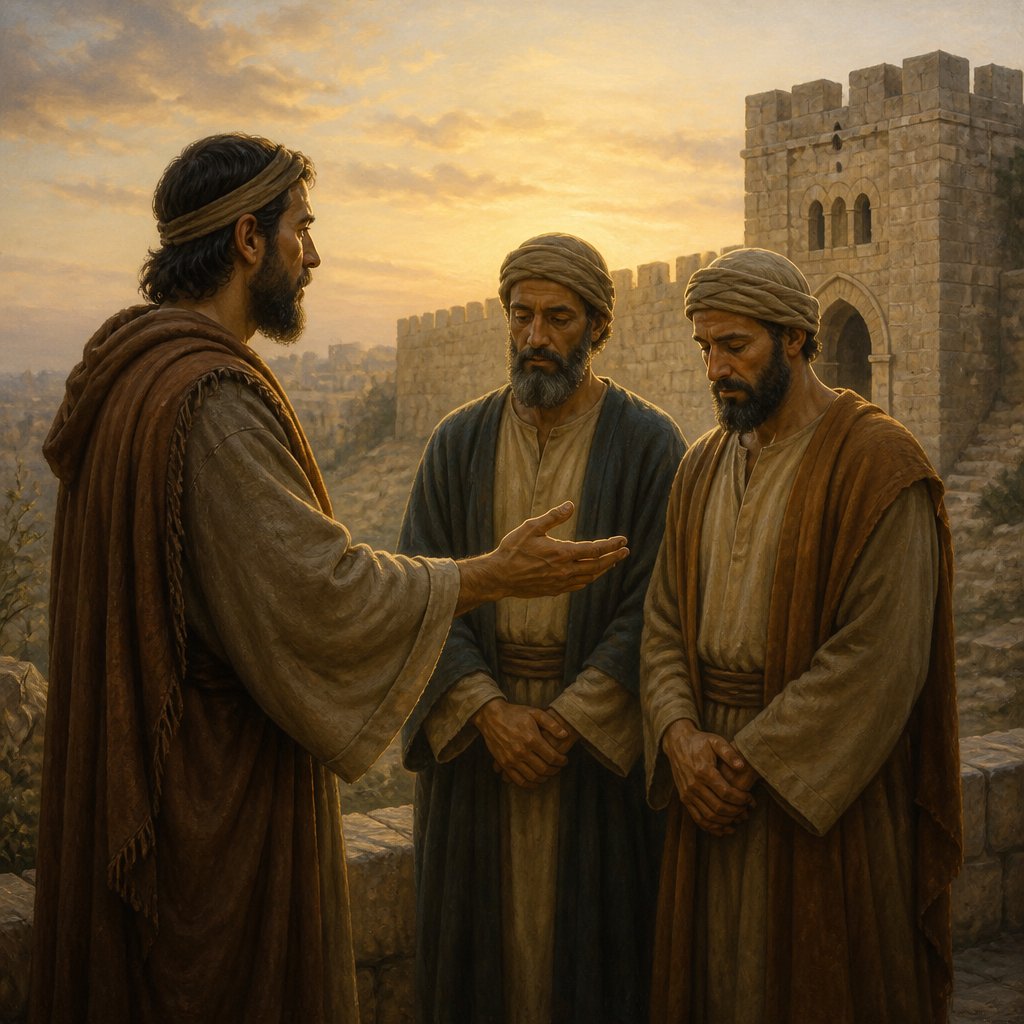
Nehemiah 7:2 reads, "That I gave my brother Hanani, and Hananiah the ruler of the palace, charge over Jerusalem: for he was a faithful man, and feared God above many." This verse comes at a pivotal moment in the rebuilding of Jerusalem’s walls and signifies not only Nehemiah's commitment to restoration but also highlights the critical importance of leadership grounded in faithfulness and reverence for God.
To fully appreciate this scripture, we must understand the context in which Nehemiah operates. After hearing of the desolate state of Jerusalem from his brother Hanani, Nehemiah's heart was burdened, and he embarked on a journey to restore not just the physical walls of the city but also the spiritual and communal integrity of the Jewish people. As he concludes the rebuilding of the walls, he recognizes that true restoration requires not merely physical reconstruction but also a fortified leadership that embodies faithfulness to God.
When Nehemiah delegates authority to his brother Hanani and Hananiah, he does so with profound discernment. He specifically identifies Hananiah as a "faithful man" who "feared God above many." This is a striking endorsement from Nehemiah, indicating that in a tumultuous time when the people were vulnerable to threats and trust was scarce, integrity and piety were paramount traits sought in leadership. The term "faithful" speaks to a constancy of character—a reliability that isn’t merely about capability but also about a deep-rooted commitment to God’s ways.
In our contemporary context, it’s crucial to ask ourselves: What does it mean to lead faithfully? Leadership isn't just about occupying a position of authority; it is about embodying the principles of service, integrity, and reverence. Just as Nehemiah entrusted Jerusalem into the hands of those who had proven themselves worthy, so must we be diligent in selecting our leaders—whether in our communities, churches, or workplaces. We should look for those whose life reflects a genuine fear of God, a reverence that shapes ethical decisions and compassion towards others.
To fear God is to recognize His holiness, His justice, and His overwhelming love. It informs our interactions and our direction as leaders. Could Nehemiah have chosen differently? Certainly. In a world that often values charisma and ambition over character, the temptation to appoint those who seem successful in worldly terms can be overwhelming. Yet, Nehemiah’s call to faithful and godly leadership challenges us. It invites us to reevaluate our criteria for leadership and success, urging us to prioritize those who walk in faith and integrity.
As we reflect on this verse, let us consider our own lives. As followers of Christ, we are all called to lead in some capacity—whether in our homes, among friends, or in the workplace. Do we exhibit faithfulness in our responsibilities? How do we honor God in our actions and decisions? Like Hananiah, are we cultivating a fear of God that exceeds the distractions and temptations of our culture?
Moreover, Nehemiah’s choice of leaders fosters an environment ripe for revival. When leadership embodies faithfulness and reverence, it inspires collective trust and encourages broader participation in the rebuilding of spiritual walls within our communities. This invites not only a healthy organizational culture but also ignites a movement of restoration that echoes beyond the leaders’ immediate sphere into the wider world.
Let us pray and seek to become individuals who are faithful and who fear God. May we commit our ways to Him, ensuring that our influence is marked by integrity, wisdom, and divine reverence. As we live out our faith in every aspect of our lives, may it inspire those around us to uphold the same values. Let us strive to be like Hanani and Hananiah, faithful men and women of God in a time when such qualities are desperately needed.
Get our apps


Artwork for Nehemiah 7:2

Nehemiah 7:2 - "That I gave my brother Hanani, and Hananiah the ruler of the palace, charge over Jerusalem: for he was a faithful man, and feared God above many."
"That I gave my brother Hanani, and Hananiah the ruler of the palace, charge over Jerusalem: for he was a faithful man, and feared God above many." - Nehemiah 7:2

Nehemiah 7:7 - "Who came with Zerubbabel, Jeshua, Nehemiah, Azariah, Raamiah, Nahamani, Mordecai, Bilshan, Mispereth, Bigvai, Nehum, Baanah. The number, I say, of the men of the people of Israel was this;"

Nehemiah 10:7 - "Meshullam, Abijah, Mijamin,"

Nehemiah 2:7 - "Moreover I said unto the king, If it please the king, let letters be given me to the governors beyond the river, that they may convey me over till I come into Judah;"

Nehemiah 7:42 - "The children of Harim, a thousand and seventeen."

Nehemiah 7:24 - "The children of Hariph, an hundred and twelve."

Nehemiah 7:56 - "The children of Neziah, the children of Hatipha."

Nehemiah 7:25 - "The children of Gibeon, ninety and five."

Nehemiah 7:40 - "The children of Immer, a thousand fifty and two."

Nehemiah 7:31 - "The men of Michmas, an hundred and twenty and two."

Nehemiah 7:33 - "The men of the other Nebo, fifty and two."

Nehemiah 7:21 - "The children of Ater of Hezekiah, ninety and eight."

Nehemiah 7:28 - "The men of Beth-azmaveth, forty and two."

Nehemiah 7:14 - "The children of Zaccai, seven hundred and threescore."

Nehemiah 7:27 - "The men of Anathoth, an hundred twenty and eight."

Nehemiah 7:35 - "The children of Harim, three hundred and twenty."

Nehemiah 7:16 - "The children of Bebai, six hundred twenty and eight."

Nehemiah 7:58 - "The children of Jaala, the children of Darkon, the children of Giddel,"

Nehemiah 7:9 - "The children of Shephatiah, three hundred seventy and two."

Nehemiah 7:48 - "The children of Lebana, the children of Hagaba, the children of Shalmai,"

Nehemiah 7:19 - "The children of Bigvai, two thousand threescore and seven."

Nehemiah 7:15 - "The children of Binnui, six hundred forty and eight."

Nehemiah 7:44 - "¶ The singers: the children of Asaph, an hundred forty and eight."

Nehemiah 7:18 - "The children of Adonikam, six hundred threescore and seven."

Nehemiah 7:13 - "The children of Zattu, eight hundred forty and five."

Nehemiah 7:49 - "The children of Hanan, the children of Giddel, the children of Gahar,"

Nehemiah 7:55 - "The children of Barkos, the children of Sisera, the children of Tamah,"

Nehemiah 7:20 - "The children of Adin, six hundred fifty and five."

Nehemiah 7:10 - "The children of Arah, six hundred fifty and two."