The Beauty of Repentance: Finding Joy in Holiness
“And Nehemiah, which is the Tirshatha, and Ezra the priest the scribe, and the Levites that taught the people, said unto all the people, This day is holy unto the LORD your God; mourn not, nor weep. For all the people wept, when they heard the words of the law.” — Nehemiah 8:9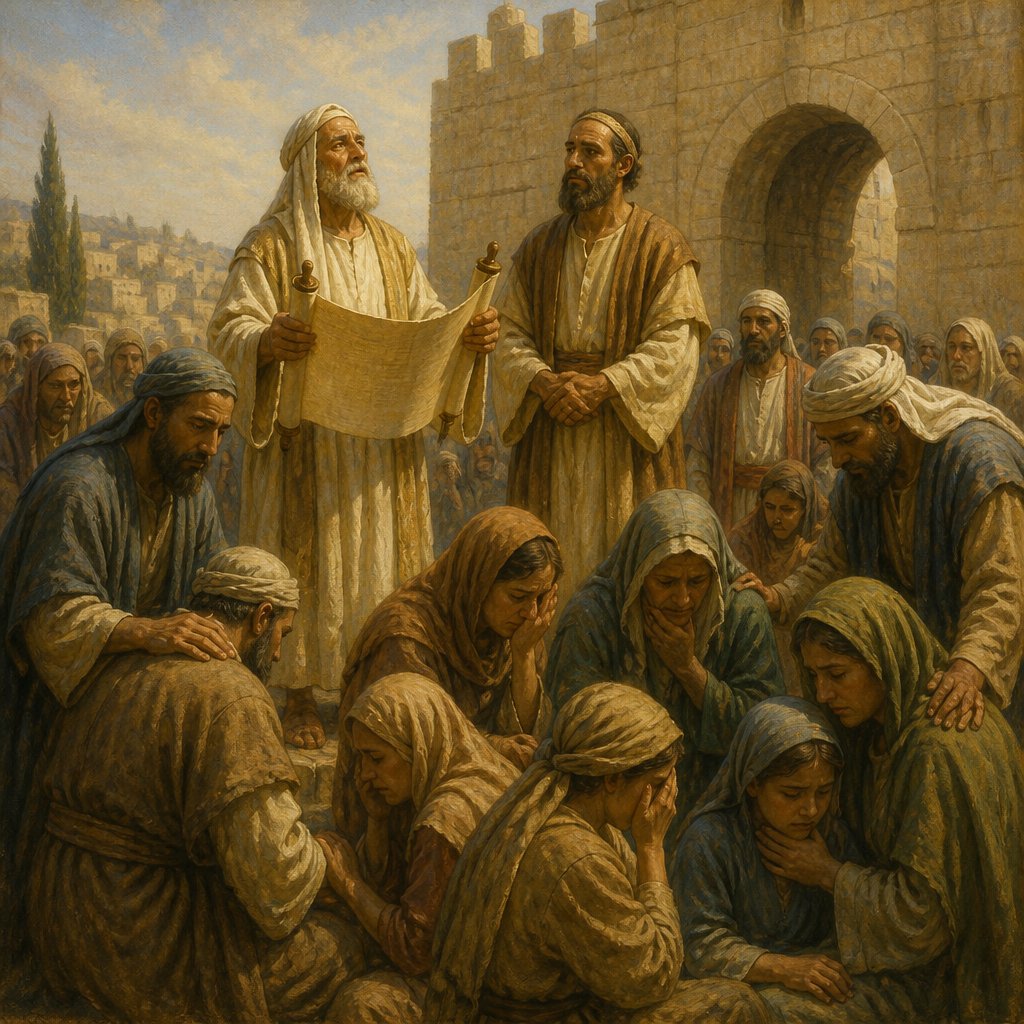
Nehemiah 8:9 (KJV) reads: "And Nehemiah, which is the Tirshatha, and Ezra the priest the scribe, and the Levites that taught the people, said unto all the people, This day is holy unto the LORD your God; mourn not, nor weep. For all the people wept, when they heard the words of the law."
In the grand narrative of Scripture, the book of Nehemiah highlights a critical moment for the people of Israel. After years of exile and hardship, the Israelites were returning to their homeland, facing the monumental task of restoring their lives, culture, and relationship with God. In this chapter, we see an extraordinary gathering where Ezra, the scribe, reads the Law to the assembled people, and their reaction is profound—overwhelming sorrow grips them as they are confronted with the weight of their transgressions. At that moment, they recognize their distance from the holiness of God as they listen to His commandments, designed not only to govern their actions but to also shape their very identities.
Herein lies an undeniable truth: the Word of God has the power to pierce our hearts. It reveals our flaws and failures, challenges our misunderstandings, and corrects our paths. The immediate reaction of the people—tears and mourning—speaks to the reality of our human experience: when we encounter the holiness of God in His Word, we often find ourselves in stark contrast.
However, this moment of despair does not go unaddressed. Nehemiah, in his role as the governor, alongside Ezra and the Levites, offers words of encouragement and direction. They remind the people that the day they are experiencing is holy unto the LORD. It is a day set apart, marked not just by mourning and sorrow, but by a call to joyful celebration and renewed hope. They say, "mourn not, nor weep," indicating that while the acknowledgment of sin is essential, it must transition into repentance that leads to joy.
This message resonates deeply within many of our own spiritual journeys. How often do we hear the Word of God and feel the weight of conviction upon our hearts? In moments of reflection on our own shortcomings—be it through dishonesty, bitterness, or neglecting our relationship with God—we may feel compelled to mourn. And while there is a time for sorrow and introspection, we must not remain in despair. Just as Nehemiah later instructs the Israelites,
"The joy of the Lord is your strength" (Nehemiah 8:10 KJV).
When we grasp the elegance of repentance, we begin to see that it is not merely about acknowledging our sin, but also about embracing the forgiveness, grace, and transformative power of God that follows. Repentance opens the door for a fresh start, a return to holiness, and an invitation to rejoice in the restoration made possible through Christ.
What Nehemiah and Ezra understood was this: in moments of conviction and sorrow over sin, God is not looking for us to wallow in grief. Instead, He invites us to rise from our weeping and experience the beauty of holiness through the joy of reconciliation. As Hebrews 12:11 (KJV) tells us, "Now no chastening for the present seemeth to be joyous, but grievous: nevertheless afterward it yieldeth the peaceable fruit of righteousness unto them which are exercised thereby." God desires for us to come to Him not only with contrition but also with the hope and joy that stems from His mercy.
In our lives, we must cultivate an understanding that while our mistakes and sins may bring us low, they are not the end of our story. Instead, they are the beginning of a new chapter—a chapter filled with grace, joy, and purpose. So as we reflect on Nehemiah 8:9, let us remember that on the path to holiness, mourning may come first, but joy surely follows. This day is indeed holy unto the LORD, and in our reconnection with Him, we will find not just forgiveness, but also an abundance of joy that strengthens our souls.
May we always allow the Word of God to guide us through our sorrow into the overwhelming joy of His grace!
Get our apps


Artwork for Nehemiah 8:9

Nehemiah 8:9 - "¶ And Nehemiah, which is the Tirshatha, and Ezra the priest the scribe, and the Levites that taught the people, said unto all the people, This day is holy unto the LORD your God; mourn not, nor weep. For all the people wept, when they heard the words of the law."
"¶ And Nehemiah, which is the Tirshatha, and Ezra the priest the scribe, and the Levites that taught the people, said unto all the people, This day is holy unto the LORD your God; mourn not, nor weep. For all the people wept, when they heard the words of the law." - Nehemiah 8:9

"And foundest his heart faithful before thee, and madest a covenant with him to give the land of the Canaanites, the Hittites, the Amorites, and the Perizzites, and the Jebusites, and the Girgashites, to give it, I say, to his seed, and hast performed thy words; for thou art righteous:" - Nehemiah 9:8

Nehemiah 8:10

Nehemiah 6:9

Nehemiah 8:10

Nehemiah 8:10

Nehemiah 9:8 - "And foundest his heart faithful before thee, and madest a covenant with him to give the land of the Canaanites, the Hittites, the Amorites, and the Perizzites, and the Jebusites, and the Girgashites, to give it, I say, to his seed, and hast performed thy words; for thou art righteous:"

Nehemiah 9:9 - "And didst see the affliction of our fathers in Egypt, and heardest their cry by the Red sea;"

Nehemiah 8:8 - "So they read in the book in the law of God distinctly, and gave the sense, and caused them to understand the reading."

Nehemiah 10:8 - "Maaziah, Bilgai, Shemaiah: these were the priests."

Nehemiah 7:9 - "The children of Shephatiah, three hundred seventy and two."

Nehemiah 7:8 - "The children of Parosh, two thousand an hundred seventy and two."

Nehemiah 11:8 - "And after him Gabbai, Sallai, nine hundred twenty and eight."

Nehemiah 9:16 - "But they and our fathers dealt proudly, and hardened their necks, and hearkened not to thy commandments,"

Nehemiah 4:8 - "And conspired all of them together to come and to fight against Jerusalem, and to hinder it."

Nehemiah 12:9 - "Also Bakbukiah and Unni, their brethren, were over against them in the watches."

Nehemiah 10:9 - "And the Levites: both Jeshua the son of Azaniah, Binnui of the sons of Henadad, Kadmiel;"

Nehemiah 11:9 - "And Joel the son of Zichri was their overseer: and Judah the son of Senuah was second over the city."

Nehemiah 3:9 - "And next unto them repaired Rephaiah the son of Hur, the ruler of the half part of Jerusalem."

Nehemiah 9:2 - "And the seed of Israel separated themselves from all strangers, and stood and confessed their sins, and the iniquities of their fathers."
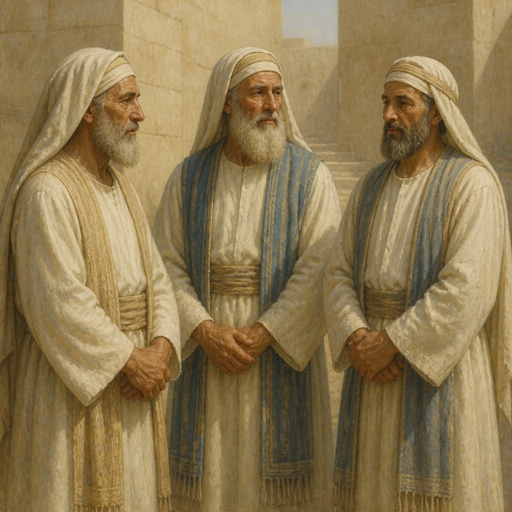
"Maaziah, Bilgai, Shemaiah: these were the priests." - Nehemiah 10:8

Nehemiah 13:8 - "And it grieved me sore: therefore I cast forth all the household stuff of Tobiah out of the chamber."

Nehemiah 9:38 - "And because of all this we make a sure covenant, and write it; and our princes, Levites, and priests, seal unto it."

"And didst see the affliction of our fathers in Egypt, and heardest their cry by the Red sea;" - Nehemiah 9:9

Nehemiah 13:9 - "Then I commanded, and they cleansed the chambers: and thither brought I again the vessels of the house of God, with the meat offering and the frankincense."

"The children of Shephatiah, three hundred seventy and two." - Nehemiah 7:9

Nehemiah 9:1 - "Now in the twenty and fourth day of this month the children of Israel were assembled with fasting, and with sackclothes, and earth upon them."

Nehemiah 12:8 - "Moreover the Levites: Jeshua, Binnui, Kadmiel, Sherebiah, Judah, and Mattaniah, which was over the thanksgiving, he and his brethren."

Nehemiah 8:11 - "So the Levites stilled all the people, saying, Hold your peace, for the day is holy; neither be ye grieved."