The Song of the Lord in a Foreign Land
“How shall we sing the LORD’s song in a strange land?” — Psalms 137:4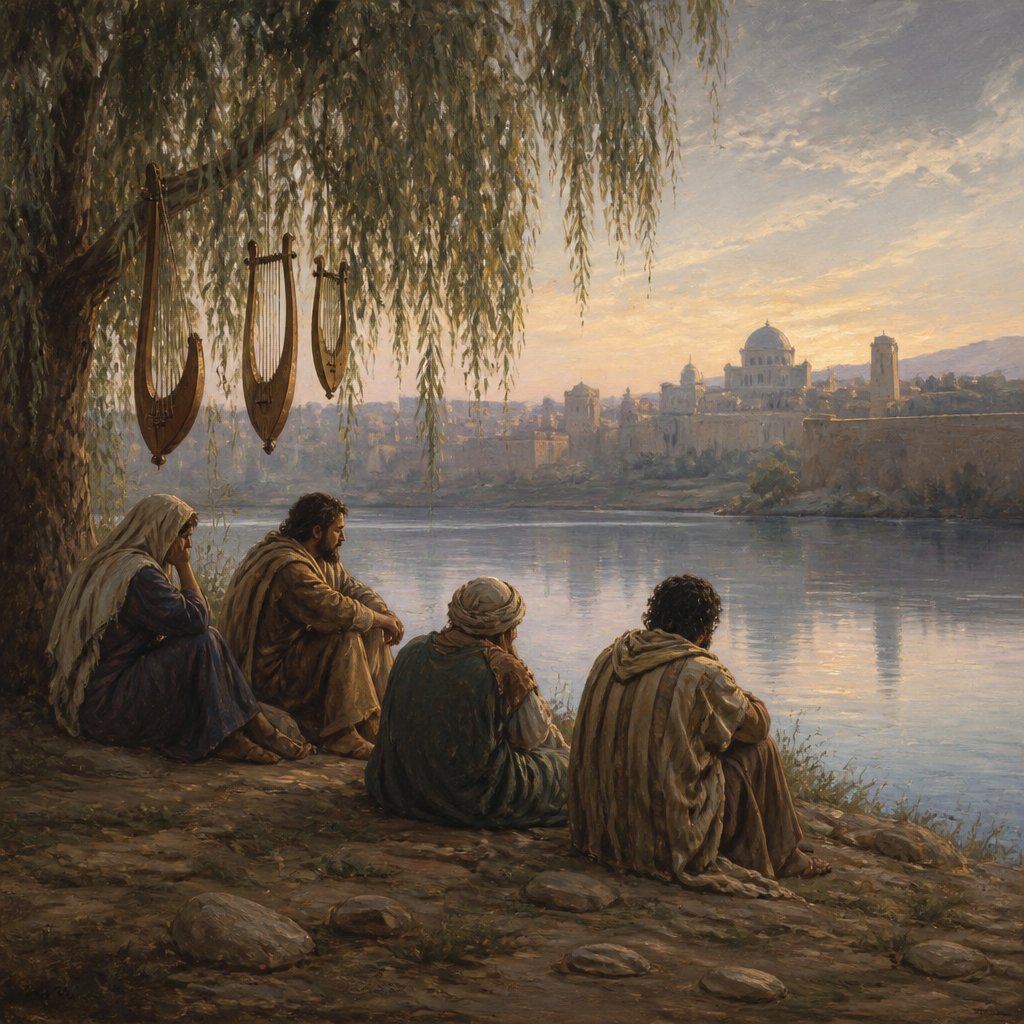
Psalm 137 is one of the most poignant expressions of lament found in Scripture. It reflects the profound sorrow of the Israelites during their Babylonian exile, a time when they found themselves disconnected from their homeland, culture, and, most importantly, their God. The verse 4 reads, "How shall we sing the LORD'S song in a strange land?" This simple yet powerful question encapsulates the struggles of faith amidst trials.
In this verse, we see the expression of a deep loss for the sacred—an inability to engage in the very act of worship that had defined their relationship with God. Singing the Lord's song was not merely a cultural pastime; it was an embodiment of their identity, a declaration of their faith, and a source of joy amidst adversity. However, in a foreign land, they wrestled with feelings of despair and helplessness. The weight of their sorrow made the act of singing feel almost impossible. How could they lift their voices in praise when everything around them said otherwise?
This verse begs us to reflect on our own lives. How often do we find ourselves in 'strange lands'? These can be physical locations away from home, but they can also refer to spiritual, emotional, or relational states of being. Perhaps we are in a season of grief, a time of uncertainty, or navigating through profound disappointments. Like the Israelites, we may find ourselves asking how to sing our songs of praise when so much seems to contradict the very essence of our faith.
Yet, in our moments of bewilderment, we must remember that the God we worship is not limited by our circumstances. The act of singing, or worship in any form, is not just about the outward expression but rather an inward attitude toward God, irrespective of our external surroundings. Worshiping God in a strange land often requires a call to deep resilience and faith, much like the Israelites needed to muster during their exile. They had to cling to their heritage, to the words of the Psalms that had been imbued in their culture, and to the promises of God, even when the road ahead looked bleak.
The Israelites' lamentation also brings to light a vital aspect of worship: its communal nature. In verse 1, we read how they sat down by the rivers of Babylon, weeping as they remembered Zion. The physical act of weeping was intertwined with memory, grief, and a longing for something lost. They were not alone; they were together in their sorrow, and their collective struggle gave rise to the recognition of their need for God.Indeed, many times, the act of singing—the giving of praise—flows best when we are enveloped in community, surrounded by those who share in our burdens, joys, and faith. In a strange land, gathering together to worship, even in silence or sorrow, reminds us of the faithfulness of God across all hardships.
True worship transcends our physical and emotional locations. It requires an acknowledgment of God's sovereignty and goodness, especially during trials. In Acts 16, Paul and Silas are imprisoned, yet they choose to sing hymns at midnight. Their praise was contingent not on their circumstances but rather on their faith in a God who is unchanging.
As you reflect on Psalm 137:4, consider what 'strange lands' you may currently inhabit. Where do you find it difficult to sing the Lord's song? Instead of allowing the unfamiliarity or discomfort of your situation to dampen your spirit, turn it into an opportunity for deeper worship. Pray, sing, or speak praises over your life, affirming God’s presence, faithfulness, and love, even when everything around you feels overwhelming.
Let the refrain of the Lord's song be heard in the most unexpected places of your life, for they become sacred spaces of encounter. By honoring God in those strange lands, we discover that our voices can indeed rise above despair, and our songs can echo hope to those around us.
Get our apps


Artwork for Psalms 137:4

Psalms 137:4 - "How shall we sing the LORD'S song in a strange land?"

"How shall we sing the LORD'S song in a strange land?" - Psalms 137:4

"Righteous art thou, O LORD, and upright are thy judgments." - Psalms 119:137

Psalms 137:2 - "We hanged our harps upon the willows in the midst thereof."

Psalms 119:137 - "Righteous art thou, O LORD, and upright are thy judgments."

"We hanged our harps upon the willows in the midst thereof." - Psalms 137:2

Psalms 137:9 - "Happy shall he be, that taketh and dasheth thy little ones against the stones."

"Happy shall he be, that taketh and dasheth thy little ones against the stones." - Psalms 137:9

Psalms 137:1 - "By the rivers of Babylon, there we sat down, yea, we wept, when we remembered Zion."

Psalms 137:5 - "If I forget thee, O Jerusalem, let my right hand forget her cunning."

"If I forget thee, O Jerusalem, let my right hand forget her cunning." - Psalms 137:5

Psalms 137:7 - "Remember, O LORD, the children of Edom in the day of Jerusalem; who said, Rase it, rase it, even to the foundation thereof."

"By the rivers of Babylon, there we sat down, yea, we wept, when we remembered Zion." - Psalms 137:1

Psalms 137:8 - "O daughter of Babylon, who art to be destroyed; happy shall he be, that rewardeth thee as thou hast served us."

PSALMS 137;5 SHOWING THE OLD CITY OF JERUSALEM

"O daughter of Babylon, who art to be destroyed; happy shall he be, that rewardeth thee as thou hast served us." - Psalms 137:8

Psalms 137:3 - "For there they that carried us away captive required of us a song; and they that wasted us required of us mirth, saying, Sing us one of the songs of Zion."

Psalms 137:6 - "If I do not remember thee, let my tongue cleave to the roof of my mouth; if I prefer not Jerusalem above my chief joy."

"If I do not remember thee, let my tongue cleave to the roof of my mouth; if I prefer not Jerusalem above my chief joy." - Psalms 137:6

"For there they that carried us away captive required of us a song; and they that wasted us required of us mirth, saying, Sing us one of the songs of Zion." - Psalms 137:3
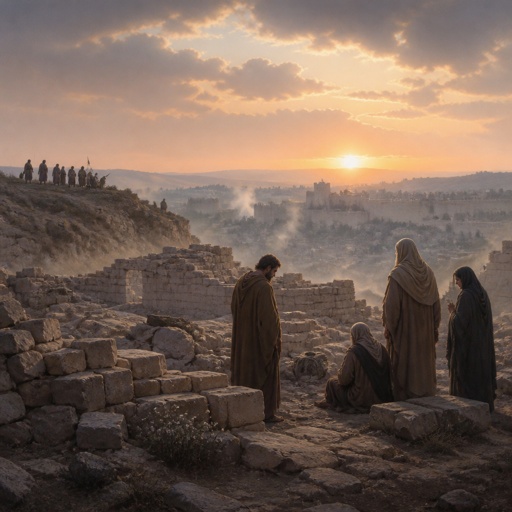
"Remember, O LORD, the children of Edom in the day of Jerusalem; who said, Rase it, rase it, even to the foundation thereof." - Psalms 137:7

Psalms 114:4 - "The mountains skipped like rams, and the little hills like lambs."

"For this was a statute for Israel, and a law of the God of Jacob." - Psalms 81:4

"For there are no bands in their death: but their strength is firm." - Psalms 73:4

Psalms 104:4 - "Who maketh his angels spirits; his ministers a flaming fire:"

Psalms 63:4 - "Thus will I bless thee while I live: I will lift up my hands in thy name."

"Offer the sacrifices of righteousness, and put your trust in the LORD." - Psalms 4:5

"They wandered in the wilderness in a solitary way; they found no city to dwell in." - Psalms 107:4

"As arrows are in the hand of a mighty man; so are children of the youth." - Psalms 127:4

Psalms 23:4