What does Psalms 137:4 mean?
“How shall we sing the LORD’s song in a strange land?” — Psalms 137:4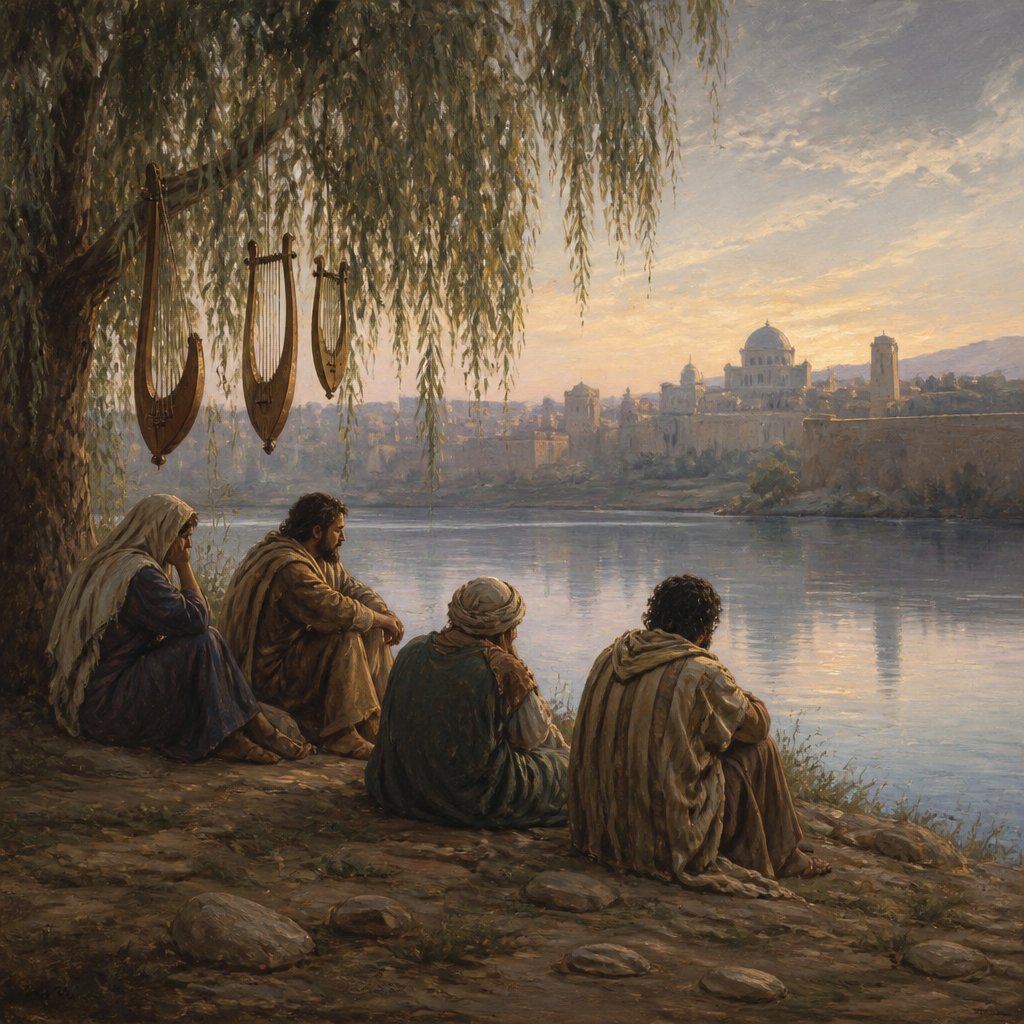
Psalm 137 is a powerful and emotional reflection of the Israelites' exile in Babylon. It is a lamentation of their grief and longing for their homeland, Jerusalem. Psalm 137:4, in particular, captures the intense sorrow and despair felt by the Israelites as they grieve the loss of their city and the Temple.
The verse reads, "How shall we sing the Lord's song in a strange land?" This question reflects the deep sense of displacement and disconnection the Israelites felt in Babylon. In their homeland, they were able to freely worship and praise God, but in exile, they felt unable to do so. They were surrounded by a foreign culture and religion, and the thought of singing the Lord's song in such a place seemed unfathomable to them.
This verse speaks to the theme of displacement and longing for home. The Israelites' exile represents the spiritual and emotional exile of anyone who is separated from their true home or sense of belonging. Throughout history and even today, countless people experience displacement, whether due to war, persecution, or economic necessity. Psalm 137:4 serves as a testament to the human experience of yearning for a place of safety, familiarity, and connection.
The context of Psalm 137 is also important in understanding the significance of this verse. The Israelites were forcibly removed from their homeland by the Babylonians and taken to a foreign land. This traumatic event had a profound impact on their sense of identity and faith. The Babylonian exile is a central event in Jewish history and is often referenced in the Bible as a time of great suffering and loss.
In addition to its historical context, Psalm 137:4 has a timeless quality that resonates with anyone who has experienced a sense of alienation or displacement. The verse speaks to the universal human experience of feeling out of place and longing for a sense of home and belonging. It also reflects the difficulty of maintaining faith and spiritual practice in the midst of adversity and unfamiliar surroundings.
The symbolism in Psalm 137:4 is rich and multifaceted. The "Lord's song" represents not only the act of worship and praise but also the deep connection to God and faith. In a strange land, the Israelites felt unable to fully express their faith and connect with God as they had in Jerusalem. This symbolizes the struggle to maintain faith and spiritual practice in the face of hardship and adversity.
The "strange land" symbolizes the foreign and unfamiliar environment in which the Israelites found themselves. It represents not only physical displacement but also the emotional and spiritual disconnection from their roots. The inability to sing the Lord's song in a strange land underscores the sense of loss and disorientation experienced by the Israelites, as well as the difficulty of finding hope and comfort in such circumstances.
Overall, Psalm 137:4 is a poignant and evocative reflection on the experience of exile and displacement. It captures the deep sense of sorrow, longing, and disconnection felt by the Israelites as they grieve the loss of their homeland and struggle to maintain their faith in a foreign land. This verse continues to resonate with people of all backgrounds who have experienced the pain of displacement and the longing for a sense of home and belonging. It serves as a reminder of the power of faith and the human capacity for resilience in the face of adversity.
Get our apps


Artwork for Psalms 137:4

Psalms 137:4 - "How shall we sing the LORD'S song in a strange land?"

"How shall we sing the LORD'S song in a strange land?" - Psalms 137:4

"Righteous art thou, O LORD, and upright are thy judgments." - Psalms 119:137

Psalms 137:2 - "We hanged our harps upon the willows in the midst thereof."

Psalms 119:137 - "Righteous art thou, O LORD, and upright are thy judgments."

"We hanged our harps upon the willows in the midst thereof." - Psalms 137:2

Psalms 137:9 - "Happy shall he be, that taketh and dasheth thy little ones against the stones."

"Happy shall he be, that taketh and dasheth thy little ones against the stones." - Psalms 137:9

Psalms 137:1 - "By the rivers of Babylon, there we sat down, yea, we wept, when we remembered Zion."

Psalms 137:5 - "If I forget thee, O Jerusalem, let my right hand forget her cunning."

"If I forget thee, O Jerusalem, let my right hand forget her cunning." - Psalms 137:5

Psalms 137:7 - "Remember, O LORD, the children of Edom in the day of Jerusalem; who said, Rase it, rase it, even to the foundation thereof."

"By the rivers of Babylon, there we sat down, yea, we wept, when we remembered Zion." - Psalms 137:1

Psalms 137:8 - "O daughter of Babylon, who art to be destroyed; happy shall he be, that rewardeth thee as thou hast served us."

PSALMS 137;5 SHOWING THE OLD CITY OF JERUSALEM

"O daughter of Babylon, who art to be destroyed; happy shall he be, that rewardeth thee as thou hast served us." - Psalms 137:8

Psalms 137:3 - "For there they that carried us away captive required of us a song; and they that wasted us required of us mirth, saying, Sing us one of the songs of Zion."

Psalms 137:6 - "If I do not remember thee, let my tongue cleave to the roof of my mouth; if I prefer not Jerusalem above my chief joy."

"If I do not remember thee, let my tongue cleave to the roof of my mouth; if I prefer not Jerusalem above my chief joy." - Psalms 137:6

"For there they that carried us away captive required of us a song; and they that wasted us required of us mirth, saying, Sing us one of the songs of Zion." - Psalms 137:3
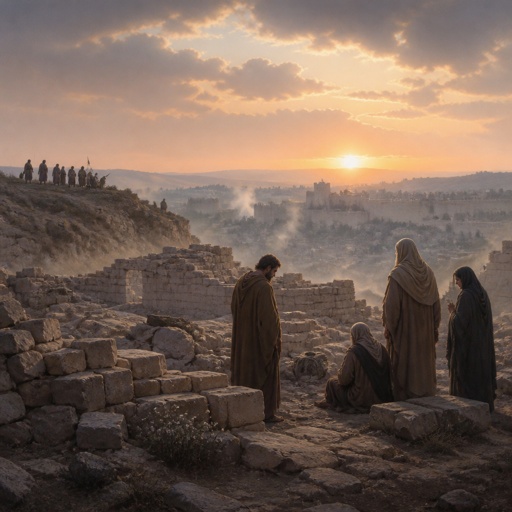
"Remember, O LORD, the children of Edom in the day of Jerusalem; who said, Rase it, rase it, even to the foundation thereof." - Psalms 137:7

Psalms 114:4 - "The mountains skipped like rams, and the little hills like lambs."

"For this was a statute for Israel, and a law of the God of Jacob." - Psalms 81:4

"For there are no bands in their death: but their strength is firm." - Psalms 73:4

Psalms 104:4 - "Who maketh his angels spirits; his ministers a flaming fire:"

Psalms 63:4 - "Thus will I bless thee while I live: I will lift up my hands in thy name."

"Offer the sacrifices of righteousness, and put your trust in the LORD." - Psalms 4:5

"They wandered in the wilderness in a solitary way; they found no city to dwell in." - Psalms 107:4

"As arrows are in the hand of a mighty man; so are children of the youth." - Psalms 127:4

Psalms 23:4