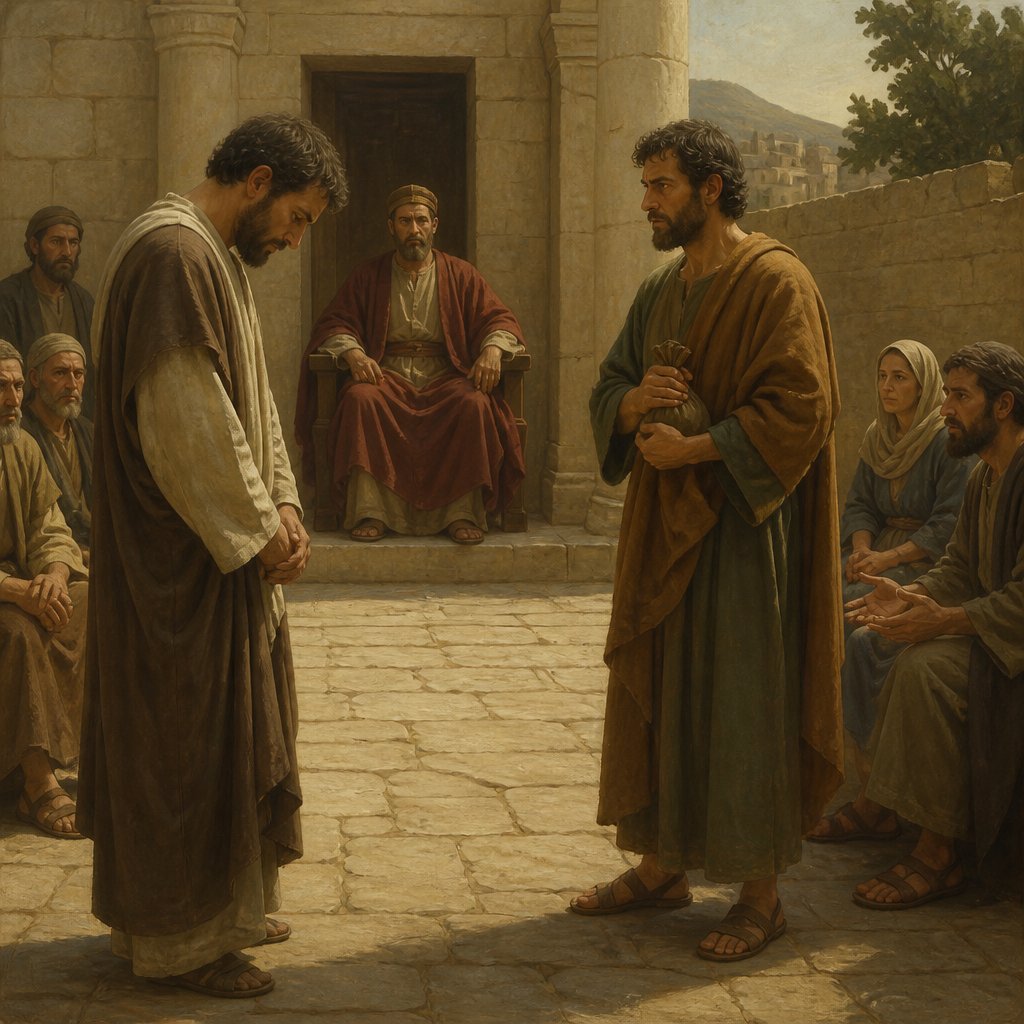
1 Corinthians 6:1-8 in the King James Version of the Bible reads:
"Dare any of you, having a matter against another, go to law before the unjust, and not before the saints? Do ye not know that the saints shall judge the world? and if the world shall be judged by you, are ye unworthy to judge the smallest matters? Know ye not that we shall judge angels? how much more things that pertain to this life? If then ye have judgments of things pertaining to this life, set them to judge who are least esteemed in the church. I speak to your shame. Is it so, that there is not a wise man among you? no, not one that shall be able to judge between his brethren? But brother goeth to law with brother, and that before the unbelievers. Now therefore there is utterly a fault among you, because ye go to law one with another. Why do ye not rather take wrong? why do ye not rather suffer yourselves to be defrauded? Nay, ye do wrong, and defraud, and that your brethren. Know ye not that the unrighteous shall not inherit the kingdom of God? Be not deceived: neither fornicators, nor idolaters, nor adulterers, nor effeminate, nor abusers of themselves with mankind, Nor thieves, nor covetous, nor drunkards, nor revilers, nor extortioners, shall inherit the kingdom of God."
The passage from 1 Corinthians 6:1-8 addresses the issue of Christians taking legal disputes before secular courts, rather than resolving them within the Christian community. The passage raises questions about the abilities and responsibilities of the saints to judge the world and the angels, and challenges the behavior of the Corinthian believers in handling their conflicts with one another.
One of the central themes of this passage is the importance of resolving disputes within the Christian community. The apostle Paul admonishes the Corinthians for taking their legal matters before secular authorities, rather than seeking resolution within the church. He reminds them of the role and responsibilities of the saints, who will judge the world and the angels in the future. By taking their disputes outside of the church, the Corinthians were not only undermining the authority of the saints, but also bringing shame to the community of believers.
The passage also emphasizes the importance of wisdom and discernment within the Christian community. Paul questions whether there is not a wise man among them who is able to judge between his brethren. The implication is that the Corinthians should be able to resolve their conflicts internally, rather than resorting to the judgment of unbelievers. This speaks to the need for mature and wise individuals within the church who are able to guide and mediate in disputes, rather than allowing conflicts to escalate to external courts.
Furthermore, the passage addresses the issue of wrongdoing and defrauding within the Christian community. Paul challenges the Corinthians to consider why they are not willing to be wronged or defrauded by their brethren, rather than engaging in legal battles with one another. This admonition emphasizes the importance of humility, forgiveness, and selflessness within the Christian community, and the necessity of prioritizing reconciliation over personal gain.
The passage also includes a warning about the unrighteousness that will not inherit the kingdom of God. Paul lists a number of sins and vices, such as fornication, idolatry, adultery, theft, greed, drunkenness, and extortion, and warns that those who engage in such behavior will not inherit the kingdom of God. This serves as a reminder to the Corinthians, and to believers today, of the need for righteous living and the avoidance of sinful behavior.
Symbolism in this passage is primarily represented by the contrast between the Christian community and the secular world. The saints are portrayed as having a higher calling and responsibility to judge the world and the angels, reflecting the spiritual authority and wisdom within the Christian community. The contrast between the believers who are willing to go to law against one another and the unrighteous who will not inherit the kingdom of God serves as a reminder of the distinction between the values and priorities of the Christian faith and those of the world.
In conclusion, 1 Corinthians 6:1-8 addresses the importance of resolving disputes within the Christian community, the need for wise judgment and discernment, the priority of humility and reconciliation, and the call to righteousness and avoidance of sinful behavior. The passage serves as a reminder to believers of their responsibilities to one another and to the broader community, and highlights the values and priorities of the Christian faith in contrast to the secular world.
Get our apps


Artwork for 1 Corinthians 6:1-8
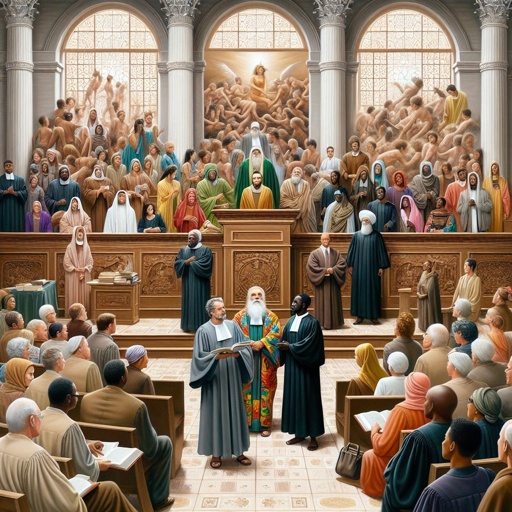
1 Corinthians 6:1-8 - "Dare any of you, having a matter against another, go to law before the unrighteous, and not before the saints? Do you not know that the saints will judge the world? And if the world will be judged by you, are you unworthy to judge the smallest matters? Do you not know that we shall judge angels? How much more, things that pertain to this life? If then you have judgments concerning things pertaining to this life, do you appoint those who are least esteemed by the church to judge? I say this to your shame. Is it so, that there is not a wise man among you, not even one, who will be able to judge between his brethren? But brother goes to law against brother, and that before unbelievers! Now therefore, it is already an utter failure for you that you go to law against one another. Why do you not rather accept wrong? Why do you not rather let yourselves be cheated? No, you yourselves do wrong and cheat, and you do these things to your brethren!"
"Dare any of you, having a matter against another, go to law before the unrighteous, and not before the saints? Do you not know that the saints will judge the world? And if the world will be judged by you, are you unworthy to judge the smallest matters? Do you not know that we shall judge angels? How much more, things that pertain to this life? If then you have judgments concerning things pertaining to this life, do you appoint those who are least esteemed by the church to judge? I say this to your shame. Is it so, that there is not a wise man among you, not even one, who will be able to judge between his brethren? But brother goes to law against brother, and that before unbelievers! Now therefore, it is already an utter failure for you that you go to law against one another. Why do you not rather accept wrong? Why do you not rather let yourselves be cheated? No, you yourselves do wrong and cheat, and you do these things to your brethren!" - 1 Corinthians 6:1-8

1 Corinthians 6:8 - "Nay, ye do wrong, and defraud, and that your brethren."

1 Corinthians 6:1 - "Dare any of you, having a matter against another, go to law before the unjust, and not before the saints?"

"Nay, ye do wrong, and defraud, and that your brethren." - 1 Corinthians 6:8

1 Corinthians 1:6 - "Even as the testimony of Christ was confirmed in you:"

1 Corinthians 8:6 - "But to us there is but one God, the Father, of whom are all things, and we in him; and one Lord Jesus Christ, by whom are all things, and we by him."

1 Corinthians 13:4-6

1 Corinthians 13:4-6

1 Corinthians 13:4-6

1 Corinthians 13:4-6

1 Corinthians 13:4-6

1 Corinthians 13:4-6

1 Corinthians 13:4-6

1 Corinthians 13:4-6

1 Corinthians 6:6 - "But brother goeth to law with brother, and that before the unbelievers."

1 Corinthians 6:19

1 Corinthians 6:19

1 Corinthians 6:19

1 Corinthians 6:19

1 Corinthians 6:19

1 Corinthians 6:19

1 Corinthians 11:8 - "For the man is not of the woman; but the woman of the man."

1 Corinthians 16:8 - "But I will tarry at Ephesus until Pentecost."

1 Corinthians 7:6 - "But I speak this by permission, and not of commandment."

1 Corinthians 13:6 - "Rejoiceth not in iniquity, but rejoiceth in the truth;"

1 Corinthians 15:8-11

1 Corinthians 6:19-20

1 Corinthians 6:19-20

1 Corinthians 6:19-20