What does 1 Kings 1:10 mean?
“But Nathan the prophet, and Benaiah, and the mighty men, and Solomon his brother, he called not.” — 1 Kings 1:10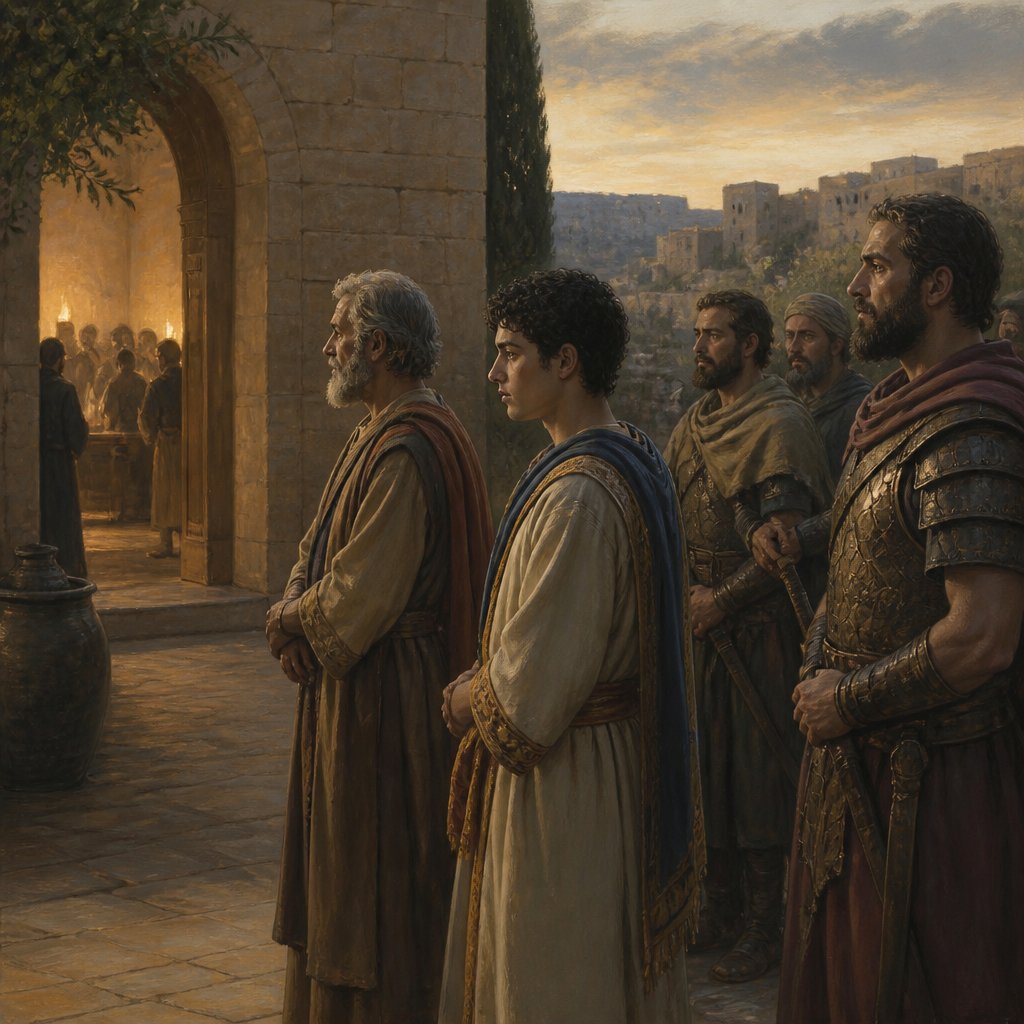
1 Kings 1:10 (KJV) states: "But Nathan the prophet, and Benaiah, and the mighty men, and Solomon his brother, he called not."
This verse is part of the narrative in 1 Kings that describes the events leading up to the end of David's life and the succession of his son, Solomon, as the new king of Israel. The verse provides insight into the political intrigue and power struggles that surrounded the transition of leadership in ancient Israel.
In this verse, we see that Adonijah, another son of David, is attempting to assert his claim to the throne by organizing a feast and inviting a select group of influential individuals, including the priests, Joab the commander of the army, and his brother, Solomon. However, it is noted that Nathan the prophet, Benaiah, and the mighty men are not included in Adonijah's invitation list. This omission reveals Adonijah's attempt to consolidate his power base by excluding those who may be loyal to Solomon or pose a threat to his own claim to the throne.
The theme of power struggle and succession is prominent in this verse, as it reflects the tension and political maneuvering that often accompany leadership transitions. It also highlights the importance of alliances and the manipulation of influence in securing one's claim to authority. The exclusion of certain individuals also speaks to the divisive and uncertain nature of political transitions, as well as the potential for betrayal and conflict within a ruling family.
The context of this verse is important for understanding the broader narrative of 1 Kings. David, the beloved and legendary king of Israel, is nearing the end of his life, and there is uncertainty and tension regarding who will succeed him. Adonijah's actions in organizing the feast and attempting to assert his claim to the throne create a sense of anticipation and unease about what the future holds for the kingdom of Israel.
This verse also holds symbolic significance within the biblical narrative. The exclusion of Nathan the prophet, Benaiah, and the mighty men from Adonijah's feast can be seen as a representation of the struggle between good and evil, righteousness and unrighteousness. These individuals are loyal to the true heir to the throne, Solomon, and their exclusion serves as a symbolic rejection of God's plan for the kingship of Israel.
Additionally, the verse highlights the importance of prophecy and the role of the prophet in guiding the nation of Israel. Nathan the prophet is known for his role in rebuking David for his sin with Bathsheba and his subsequent prophetic guidance in the establishment of the Davidic covenant. His exclusion from the feast organized by Adonijah may be seen as a rejection of divine authority and a foreshadowing of the conflict to come.
In conclusion, 1 Kings 1:10 (KJV) provides a glimpse into the political intrigue and power struggles surrounding the transition of leadership in ancient Israel. It highlights the themes of succession, alliances, and the manipulation of influence, while also holding symbolic significance in the biblical narrative. The context of this verse within the broader story of 1 Kings adds depth and meaning to its portrayal of the struggle for power and the role of prophecy in shaping the destiny of the nation of Israel.
Get our apps


Artwork for 1 Kings 1:10

1 Kings 1:10 - "But Nathan the prophet, and Benaiah, and the mighty men, and Solomon his brother, he called not."
"But Nathan the prophet, and Benaiah, and the mighty men, and Solomon his brother, he called not." - 1 Kings 1:10

1 Kings 10:1

1 Kings 10:1

1 kings 10:1

1 Kings 10:23 - "So king Solomon exceeded all the kings of the earth for riches and for wisdom."

1 Kings 8:10

1 Kings 12:10

1 Kings 12:10

1 Kings 8:10

1 Kings 8:10

1 Kings 12:10

1 Kings 8:10

1 Kings 8:10

1 Kings 12:10

1 Kings 8:10

1 Kings 8:10

1 Kings 10:15 - "Beside that he had of the merchantmen, and of the traffick of the spice merchants, and of all the kings of Arabia, and of the governors of the country."

1 Kings 3:10 - "And the speech pleased the Lord, that Solomon had asked this thing."

1 Kings 10:1 - "And when the queen of Sheba heard of the fame of Solomon concerning the name of the LORD, she came to prove him with hard questions."

1 Kings 10:18 - "¶ Moreover the king made a great throne of ivory, and overlaid it with the best gold."

1 Kings 2:10 - "So David slept with his fathers, and was buried in the city of David."

1 Kings 4:10 - "The son of Hesed, in Aruboth; to him pertained Sochoh, and all the land of Hepher:"

1 Kings 10:27 - "And the king made silver to be in Jerusalem as stones, and cedars made he to be as the sycomore trees that are in the vale, for abundance."

1 Kings 13:10 - "So he went another way, and returned not by the way that he came to Beth-el."

1 Kings 10:29 - "And a chariot came up and went out of Egypt for six hundred shekels of silver, and an horse for an hundred and fifty: and so for all the kings of the Hittites, and for the kings of Syria, did they bring them out by their means."

"So king Solomon exceeded all the kings of the earth for riches and for wisdom." - 1 Kings 10:23

1 Kings 15:10 - "And forty and one years reigned he in Jerusalem. And his mother's name was Maachah, the daughter of Abishalom."

1 Kings 5:10 - "So Hiram gave Solomon cedar trees and fir trees according to all his desire."

1 Kings 7:10 - "And the foundation was of costly stones, even great stones, stones of ten cubits, and stones of eight cubits."