What does 1 Kings 18:25 mean?
“And Elijah said unto the prophets of Baal, Choose you one bullock for yourselves, and dress it first; for ye are many; and call on the name of your gods, but put no fire under.” — 1 Kings 18:25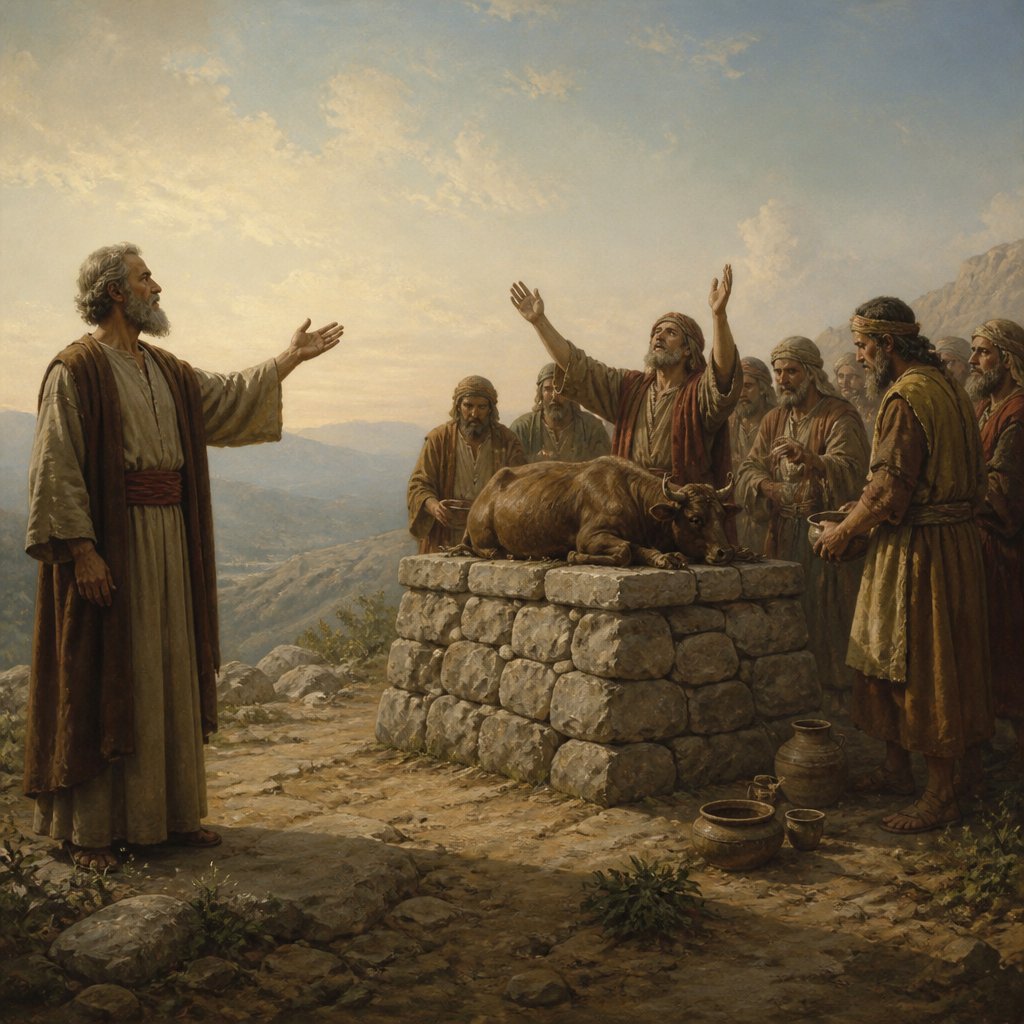
1 Kings 18:25 (KJV) states, "And Elijah said unto the prophets of Baal, Choose you one bullock for yourselves, and dress it first; for ye are many; and call on the name of your gods, but put no fire under."
The context of this verse is crucial for understanding its significance. In the preceding verses, we see that the prophet Elijah has challenged the prophets of Baal to a contest to determine who the one true God is. The people of Israel have been wavering between following the Lord and worshiping the pagan god Baal. Elijah proposes a test, where both he and the prophets of Baal would prepare a sacrifice and call upon their respective deities to bring down fire from heaven to consume it. The God who answered by fire would be recognized as the true God.
This verse is part of a larger narrative in the Book of 1 Kings that emphasizes the power and authority of God. The showdown on Mount Carmel between Elijah and the prophets of Baal serves as a demonstration of God's sovereignty and the futility of worshiping false gods.
The theme of this verse is the contrast between the true God and false idols. Elijah's challenge to the prophets of Baal underscores the importance of worshiping the only true God and exposes the emptiness of idolatry. The verse reflects a deeper spiritual truth about the nature of God and the spiritual battle between truth and falsehood.
Elijah's command to the prophets of Baal to prepare a sacrifice and call on the name of their gods but not to put any fire under it is significant. By instructing them not to light the fire, Elijah is setting the stage for a clear demonstration of the power of the one true God. He is confident that the false gods of the prophets of Baal will not be able to respond, while the Lord, who is the living God, will manifest His power in a miraculous way.
The symbolism in this verse is rich and multifaceted. The bullock that Elijah instructs the prophets of Baal to prepare represents the sacrifice and offering that is central to the worship of God. The act of offering a sacrifice is a symbol of surrender and dedication to God. In this context, it becomes a potent symbol of the faithfulness and power of the one true God.
The absence of fire under the sacrifice highlights the inability of false gods to act and intervene in the affairs of mankind. Fire is often a symbol of divine presence and power in the Bible, and its absence here emphasizes the impotence of the pagan gods. It also serves to magnify the miraculous nature of the fire that will come down from heaven in response to Elijah's prayer.
Furthermore, the preparation of the sacrifice by the prophets of Baal and their subsequent call on the name of their gods reflects the desperate and futile attempts of humanity to find meaning and fulfillment in false idols. It serves as a cautionary tale against the dangers of idolatry and the worship of created things rather than the Creator.
Ultimately, this verse in 1 Kings 18:25 serves as a powerful testament to the supremacy and authority of the one true God. It challenges us to examine our hearts and ensure that we are not worshiping false idols or placing our trust in anything other than the Lord. It reminds us that God is sovereign and that He alone is worthy of our worship and devotion. The showdown on Mount Carmel stands as a timeless example of God's power and faithfulness, and it encourages us to place our trust in Him alone.
Get our apps


Artwork for 1 Kings 18:25

1 Kings 18:25 - "And Elijah said unto the prophets of Baal, Choose you one bullock for yourselves, and dress it first; for ye are many; and call on the name of your gods, but put no fire under."
"And Elijah said unto the prophets of Baal, Choose you one bullock for yourselves, and dress it first; for ye are many; and call on the name of your gods, but put no fire under." - 1 Kings 18:25

Genesis 18:25

2 Kings 25:18 - "¶ And the captain of the guard took Seraiah the chief priest, and Zephaniah the second priest, and the three keepers of the door:"

Jeremiah 25:18 - "To wit, Jerusalem, and the cities of Judah, and the kings thereof, and the princes thereof, to make them a desolation, an astonishment, an hissing, and a curse; as it is this day;"

1 Kings 19:1-18

2 Kings 18:25 - "Am I now come up without the LORD against this place to destroy it? The LORD said to me, Go up against this land, and destroy it."
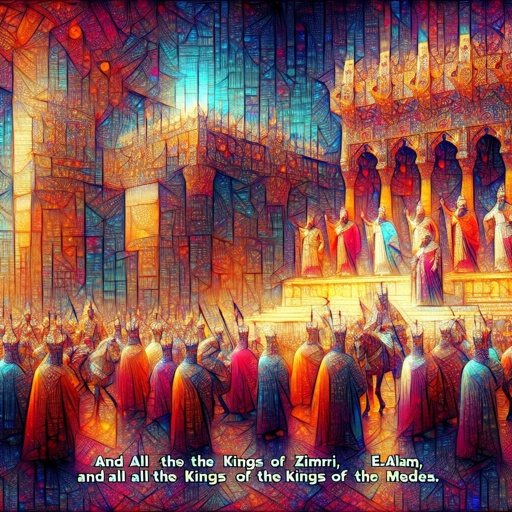
Jeremiah 25:25 - "And all the kings of Zimri, and all the kings of Elam, and all the kings of the Medes,"

1 Kings 4:18 - "Shimei the son of Elah, in Benjamin:"

1 Kings 9:18 - "And Baalath, and Tadmor in the wilderness, in the land,"

2 Kings 1:18 - "Now the rest of the acts of Ahaziah which he did, are they not written in the book of the chronicles of the kings of Israel?"

1 Kings 1:18 - "And now, behold, Adonijah reigneth; and now, my lord the king, thou knowest it not:"

1 Chronicles 25:18 - "The eleventh to Azareel, he, his sons, and his brethren, were twelve:"

1 Kings 3:25 - "And the king said, Divide the living child in two, and give half to the one, and half to the other."

1 Kings 14:25 - "¶ And it came to pass in the fifth year of king Rehoboam, that Shishak king of Egypt came up against Jerusalem:"

1 Kings 10:18 - "¶ Moreover the king made a great throne of ivory, and overlaid it with the best gold."

1 Kings 6:25 - "And the other cherub was ten cubits: both the cherubims were of one measure and one size."

2 Kings 25:1 show King Nebuchadnezzar in war zone

2 Kings 25:1 show King Nebuchadnezzar and the army and the Temple

1 Kings 2:25 - "And king Solomon sent by the hand of Benaiah the son of Jehoiada; and he fell upon him that he died."

1 Kings 2:18 - "And Bath-sheba said, Well; I will speak for thee unto the king."

1 Kings 16:25 - "¶ But Omri wrought evil in the eyes of the LORD, and did worse than all that were before him."

Elijah in the scene 1 Kings 18:36–38

"And all the kings of Zimri, and all the kings of Elam, and all the kings of the Medes," - Jeremiah 25:25

1 Kings 18:2 - "And Elijah went to shew himself unto Ahab. And there was a sore famine in Samaria."

1 Kings 12:25 - "¶ Then Jeroboam built Shechem in mount Ephraim, and dwelt therein; and went out from thence, and built Penuel."

1 Kings 18:35 - "And the water ran round about the altar; and he filled the trench also with water."

1 Kings 18:11 - "And now thou sayest, Go, tell thy lord, Behold, Elijah is here."

1 Kings 18:18 - "And he answered, I have not troubled Israel; but thou, and thy father's house, in that ye have forsaken the commandments of the LORD, and thou hast followed Baalim."

"Shimei the son of Elah, in Benjamin:" - 1 Kings 4:18