What does 2 Kings 19:32 mean?
“Therefore thus saith the LORD concerning the king of Assyria, He shall not come into this city, nor shoot an arrow there, nor come before it with shield, nor cast a bank against it.” — 2 Kings 19:32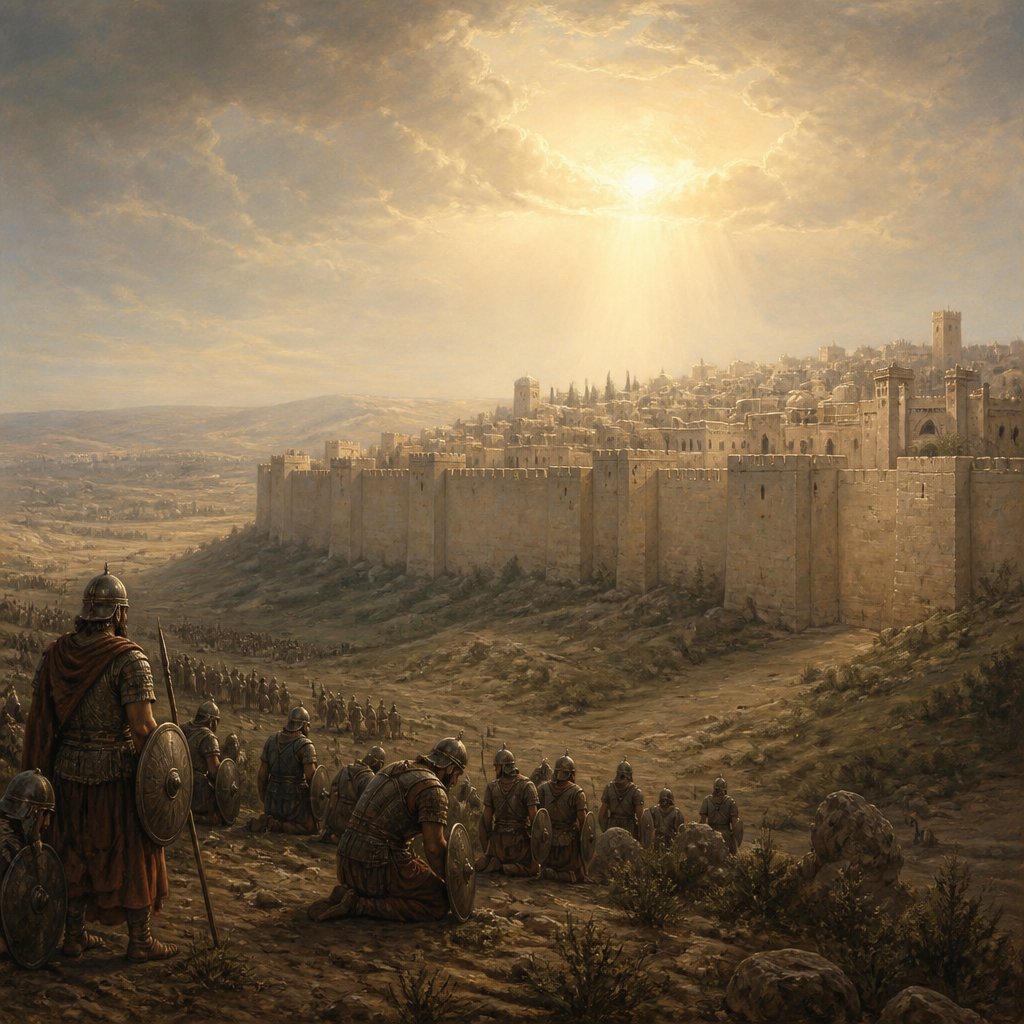
The verse 2 Kings 19:32 in the King James Version of the Bible reads, "Therefore thus saith the Lord concerning the king of Assyria, He shall not come into this city, nor shoot an arrow there, nor come before it with shields, nor cast a bank against it." This verse is a part of the Old Testament narrative, specifically in the book of 2 Kings, which details the history of the Israelite kings and their interactions with other nations.
In this particular verse, the prophet Isaiah is delivering a message from the Lord concerning the king of Assyria and his intentions towards the city of Jerusalem. The king of Assyria, Sennacherib, had invaded the kingdom of Judah and captured many of its cities. He had sent his commander with a great army to deliver a message to King Hezekiah, threatening to conquer Jerusalem as well (2 Kings 18:17-35). However, the Lord reassures Hezekiah through Isaiah that the king of Assyria will not be successful in his attack on Jerusalem. The Lord promises to protect the city and its people, declaring that the king of Assyria will not even come near it, shoot arrows at it, or set up siege camps against it.
The verse embodies several important themes and messages that are prevalent throughout the Bible. One of the primary themes is the faithfulness and protection of God towards His people. Despite the daunting threat of the powerful Assyrian army, the Lord assures the people of Jerusalem that they need not fear, for He will defend them. This serves as a reminder of God's sovereignty and His ability to intervene in the face of adversity, ultimately fulfilling His promises to His chosen people.
Another prominent theme in this verse is the concept of divine providence and sovereignty. The Lord's declaration regarding the king of Assyria's intentions emphasizes His control over the events of the world. The Assyrian king may have had his own plans for conquering Jerusalem, but ultimately, it is God's will that prevails. This reaffirms the belief that God is in control of all things, and His plans will ultimately come to fruition.
The context of this verse is also significant in understanding its symbolism and meaning. During this period, the kingdom of Judah was under threat from various external forces, including the Assyrians, who were known for their military might and conquests. The people of Judah were facing a time of uncertainty and fear as they were surrounded by powerful enemies. In this context, the Lord's assurance through Isaiah would have been a source of great comfort and hope for the people, reaffirming their trust in God's protection and deliverance.
Symbolically, this verse serves as a reminder of the power and faithfulness of God. It illustrates the idea that God is a stronghold and refuge for His people in times of trouble. The imagery of the king of Assyria being unable to even approach the city of Jerusalem with his weapons and siege equipment symbolizes the divine protection and defense that God provides for His people. It also symbolizes the futility of human effort against the will of God.
In conclusion, 2 Kings 19:32 in the King James Version of the Bible conveys a powerful message of God's faithfulness, protection, and sovereignty. It serves as a source of encouragement and hope for believers, reminding them that God is in control of all things and will ultimately fulfill His promises. This verse holds timeless significance, offering assurance and comfort to those who trust in the Lord's providential care.
Get our apps


Artwork for 2 Kings 19:32

2 Kings 19:32 - "Therefore thus saith the LORD concerning the king of Assyria, He shall not come into this city, nor shoot an arrow there, nor come before it with shield, nor cast a bank against it."
"Therefore thus saith the LORD concerning the king of Assyria, He shall not come into this city, nor shoot an arrow there, nor come before it with shield, nor cast a bank against it." - 2 Kings 19:32

2 Kings 19:2

2 Kings 19:2

2 Chronicles 32:32 - "Now the rest of the acts of Hezekiah, and his goodness, behold, they are written in the vision of Isaiah the prophet, the son of Amoz, and in the book of the kings of Judah and Israel."

2 Kings 19:2

2 Kings 19:17 - "Of a truth, LORD, the kings of Assyria have destroyed the nations and their lands,"

2 Kings 4:32 - "And when Elisha was come into the house, behold, the child was dead, and laid upon his bed."

2 Kings 12:19 - "¶ And the rest of the acts of Joash, and all that he did, are they not written in the book of the chronicles of the kings of Judah?"

2 Kings 3:16-19

2 Chronicles 32:19 - "And they spake against the God of Jerusalem, as against the gods of the people of the earth, which were the work of the hands of man."

2 Kings 15:32 - "¶ In the second year of Pekah the son of Remaliah king of Israel began Jotham the son of Uzziah king of Judah to reign."

2 Kings 23:32 - "And he did that which was evil in the sight of the LORD, according to all that his fathers had done."

2 Kings 16:19 - "¶ Now the rest of the acts of Ahaz which he did, are they not written in the book of the chronicles of the kings of Judah?"

2 Kings 19:5 - "So the servants of king Hezekiah came to Isaiah."

2 Kings 10:32 - "¶ In those days the LORD began to cut Israel short: and Hazael smote them in all the coasts of Israel;"

2 Kings 19:36 - "So Sennacherib king of Assyria departed, and went and returned, and dwelt at Nineveh."

2 Kings 19:13 - "Where is the king of Hamath, and the king of Arpad, and the king of the city of Sepharvaim, of Hena, and Ivah?"

2 Kings 17:32 - "So they feared the LORD, and made unto themselves of the lowest of them priests of the high places, which sacrificed for them in the houses of the high places."

2 Kings 9:32 - "And he lifted up his face to the window, and said, Who is on my side? who? And there looked out to him two or three eunuchs."

2 Kings 19:11 - "Behold, thou hast heard what the kings of Assyria have done to all lands, by destroying them utterly: and shalt thou be delivered?"

Genesis 19-32

2 Kings 19:2 - "And he sent Eliakim, which was over the household, and Shebna the scribe, and the elders of the priests, covered with sackcloth, to Isaiah the prophet the son of Amoz."

2 Samuel 19:32 - "Now Barzillai was a very aged man, even fourscore years old: and he had provided the king of sustenance while he lay at Mahanaim; for he was a very great man."

2 Kings 19:34 - "For I will defend this city, to save it, for mine own sake, and for my servant David's sake."

"Of a truth, LORD, the kings of Assyria have destroyed the nations and their lands," - 2 Kings 19:17

2 Kings 24:19 - "And he did that which was evil in the sight of the LORD, according to all that Jehoiakim had done."

2 Kings 17:19 - "Also Judah kept not the commandments of the LORD their God, but walked in the statutes of Israel which they made."

2 Kings 19:33 - "By the way that he came, by the same shall he return, and shall not come into this city, saith the LORD."

"So the servants of king Hezekiah came to Isaiah." - 2 Kings 19:5