What does Acts 10:7 mean?
"And when the angel which spake unto Cornelius was departed, he called two of his household servants, and a devout soldier of them that waited on him continually;" - Acts 10:7
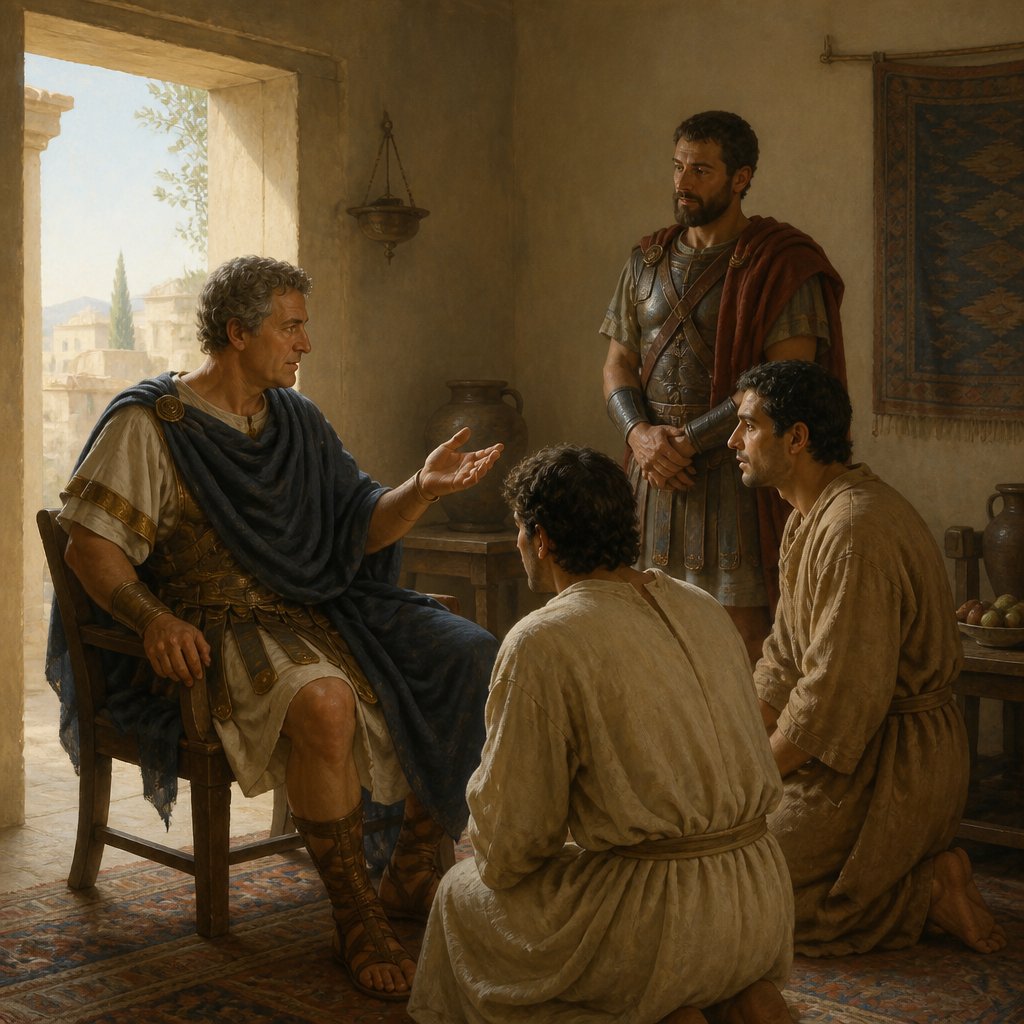
Acts 10:7 (KJV) reads as follows: "And when the angel which spake unto Cornelius was departed, he called two of his household servants, and a devout soldier of them that waited on him continually."
In this passage, we witness a pivotal moment in the Book of Acts, as the early Christian movement expands beyond its Jewish origins to include Gentiles. The context for this verse is the story of Cornelius, a Roman centurion who receives a vision from God and is visited by an angel. The broader context within the Book of Acts is the spread of the gospel to the non-Jewish world, and the resulting tensions and challenges faced by the early Christian community as they navigate the inclusion of Gentiles into their midst.
The verse serves as a bridge between the divine encounter experienced by Cornelius personally and the response he has to this encounter. Cornelius, a devout and God-fearing man, is prepared to receive the message that God has for him. The calling of his household servants and a devout soldier signifies his readiness and willingness to listen and obey the divine instruction he is about to receive. The inclusion of the soldier in this scene is particularly noteworthy, as it suggests that Cornelius' spiritual openness extends beyond his own household to those under his authority and influence.
From a thematic perspective, Acts 10:7 captures the themes of divine revelation, obedience, and the universal scope of the gospel. The divine revelation is seen through the presence of the angel, who speaks to Cornelius and prepares him to receive the message that will change the course of his life and the Christian movement as a whole. Obedience is evident in Cornelius' immediate response to the angel's instruction, as he calls for his household servants and the devout soldier without hesitation. This obedience reflects the heart of a man who is open to God's leading and willing to follow through on the divine encounter he has experienced.
Moreover, the universal scope of the gospel is reflected in the inclusion of Cornelius, a Gentile, in the narrative of the early Christian community. This passage challenges the exclusivist tendencies of the early Jewish-Christian identity and emphasizes the inclusive nature of God's plan for salvation. Through Cornelius, we see the radical and transformative power of the gospel to transcend cultural, ethnic, and social barriers, and embrace all who respond in faith to God's call.
From a symbolic perspective, the calling of Cornelius' household servants and the devout soldier can be seen as representative of the inclusivity of the gospel message. The household servants and the soldier represent different social strata and roles within Cornelius' sphere of influence, and their inclusion in this divine encounter echoes the wider inclusivity of the gospel to all people, regardless of social status or background.
In conclusion, Acts 10:7 captures a significant moment in the narrative of the Book of Acts, as it signifies the beginning of a new phase in the spread of the gospel to the Gentile world. This verse highlights the themes of divine revelation, obedience, and the universal scope of the gospel, and symbolically represents the inclusive nature of God's plan for salvation. As Christians continue to engage with this verse, it serves as a reminder of God's expansive love and the call to embrace all who respond in faith to His message of redemption and reconciliation.
Have questions about Acts 10:7?
Dive deeper into this scripture with Bible Chat — an AI-powered tool for exploring God's Word through conversation. Ask questions, get context, and grow in your understanding of the Bible.
Get Our Apps


Acts 10:7 Artwork

Acts 10:7 - "And when the angel which spake unto Cornelius was departed, he called two of his household servants, and a devout soldier of them that waited on him continually;"
"And when the angel which spake unto Cornelius was departed, he called two of his household servants, and a devout soldier of them that waited on him continually;" - Acts 10:7
Acts 7:10 - "And delivered him out of all his afflictions, and gave him favour and wisdom in the sight of Pharaoh king of Egypt; and he made him governor over Egypt and all his house."

Acts 3:6-7

Acts 3:6-7

Acts 3:6-7

Acts 3:6-7

Acts 3:6-7

Acts 14:7 - "And there they preached the gospel."

acts 10:44-46

acts 20:7-12

Acts 10:10 - "And he became very hungry, and would have eaten: but while they made ready, he fell into a trance,"

Acts 7:47 - "But Solomon built him an house."

Acts 7:1 - "Then said the high priest, Are these things so?"

Acts 19:7 - "And all the men were about twelve."

"And there they preached the gospel." - Acts 14:7

Acts 7:50 - "Hath not my hand made all these things?"

Acts 10:16 - "This was done thrice: and the vessel was received up again into heaven."

Acts 7:7 - "And the nation to whom they shall be in bondage will I judge, said God: and after that shall they come forth, and serve me in this place."

Acts 7:18 - "Till another king arose, which knew not Joseph."

Acts 6:10 - "And they were not able to resist the wisdom and the spirit by which he spake."

Acts 10:46 - "For they heard them speak with tongues, and magnify God. Then answered Peter,"

Acts 7:53 - "Who have received the law by the disposition of angels, and have not kept it."

Acts 7:9 - "And the patriarchs, moved with envy, sold Joseph into Egypt: but God was with him,"

Acts 7:22 - "And Moses was learned in all the wisdom of the Egyptians, and was mighty in words and in deeds."

Acts 7:28 - "Wilt thou kill me, as thou diddest the Egyptian yesterday?"

Acts 11:10 - "And this was done three times: and all were drawn up again into heaven."

Acts 10:40 - "Him God raised up the third day, and shewed him openly;"

Acts 10:35 - "But in every nation he that feareth him, and worketh righteousness, is accepted with him."

Acts 10:18 - "And called, and asked whether Simon, which was surnamed Peter, were lodged there."