What does Acts 11:7 mean?
"And I heard a voice saying unto me, Arise, Peter; slay and eat." - Acts 11:7
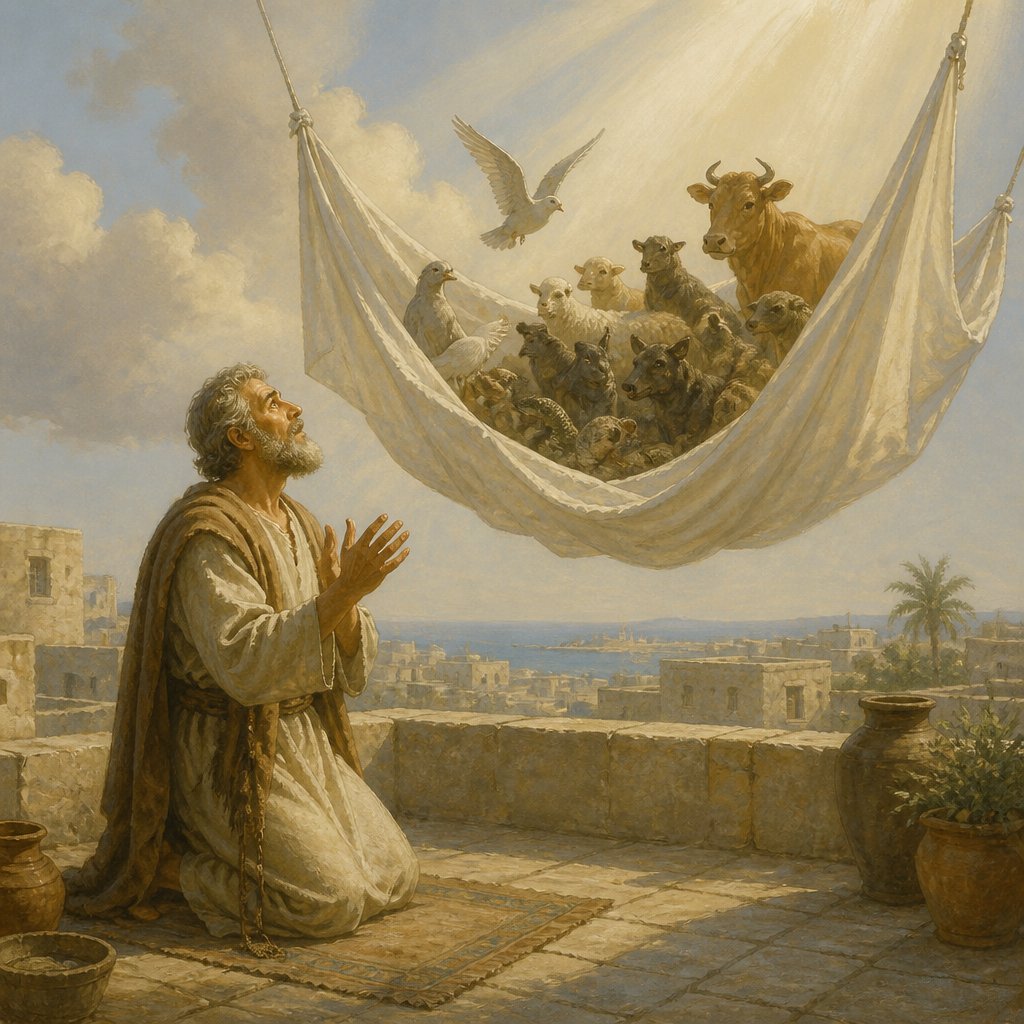
"Act 11:7" in the King James Version reads, "And I heard a voice saying unto me, Arise, Peter; slay and eat." This verse occurs in the context of a vision experienced by the Apostle Peter in the city of Joppa. Peter had gone up on the roof of the house to pray when he fell into a trance and saw heaven opened, and a great sheet knit at the four corners descending unto him.
The significance of this particular verse lies in its broader context within the book of Acts, and within the entire biblical narrative. It represents an important turning point in the early Christian church and in the spread of the gospel message to the Gentiles. The vision that Peter experiences here serves as a pivotal moment in the inclusion of the Gentiles within the Christian community. It has considerable implications for the theme of the universality of salvation that is central to the Christian message.
The themes present in Acts 11:7 are numerous, and they can be further elucidated by examining the broader context of the verse. The book of Acts chronicles the spread of the Christian message from Jerusalem to the ends of the earth, as well as the establishment and growth of the early Christian church. Acts 10-11, in particular, depicts the pivotal transition from a predominantly Jewish Christian community to one that included Gentile converts. The vision experienced by Peter in Acts 11:7 is part of a larger narrative that marks this transition.
The vision is a symbol of God's acceptance of the Gentiles into the Christian community. In the vision, Peter is instructed to kill and eat a variety of animals that were considered unclean according to Jewish dietary laws. Peter initially resists, but is then told by a voice from heaven that he should not declare unclean anything that God has made clean. This message is repeated three times, emphasizing its significance.
The vision serves as a metaphor for the inclusion of the Gentiles in the Christian faith. The unclean animals in the vision represent the Gentile people, whom the Jewish Christians initially considered unclean or unworthy of the gospel message. However, the voice from heaven instructs Peter not to discriminate against them, but to accept them into the fold of Christianity. This message of inclusion and universality is a central theme in the New Testament and has profound implications for the identity and mission of the Christian church.
Acts 11:7 also symbolizes the abolition of the Old Testament dietary laws and the establishment of a new covenant in Christ. The vision symbolizes the breaking down of barriers between Jews and Gentiles and the formation of a new, universal community in Christ. This universalistic theme is emphasized throughout the New Testament, as the apostles and early Christian leaders are shown to be grappling with the implications of the gospel message for the entire world.
In conclusion, Acts 11:7 is a crucial verse within the broader context of the book of Acts and the New Testament as a whole. It represents a key moment in the history of the early Christian church, marking the inclusion of the Gentiles into the Christian community. The verse carries important implications for the themes of universality, inclusion, and the establishment of a new covenant in Christ. Its symbolism and message continue to hold relevance for Christians today, emphasizing the universal nature of the gospel message and the call to embrace all people as part of the body of Christ.
Have questions about Acts 11:7?
Dive deeper into this scripture with Bible Chat — an AI-powered tool for exploring God's Word through conversation. Ask questions, get context, and grow in your understanding of the Bible.
Get Our Apps


Acts 11:7 Artwork

Acts 11:7 - "And I heard a voice saying unto me, Arise, Peter; slay and eat."
"And I heard a voice saying unto me, Arise, Peter; slay and eat." - Acts 11:7

Deuteronomy 11:7 - "But your eyes have seen all the great acts of the LORD which he did."
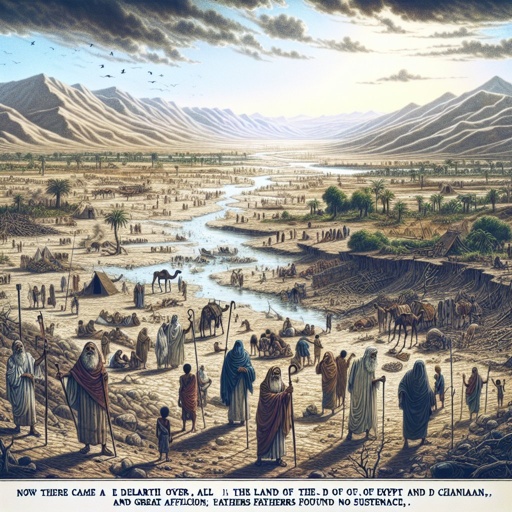
Acts 7:11 - "Now there came a dearth over all the land of Egypt and Chanaan, and great affliction: and our fathers found no sustenance."
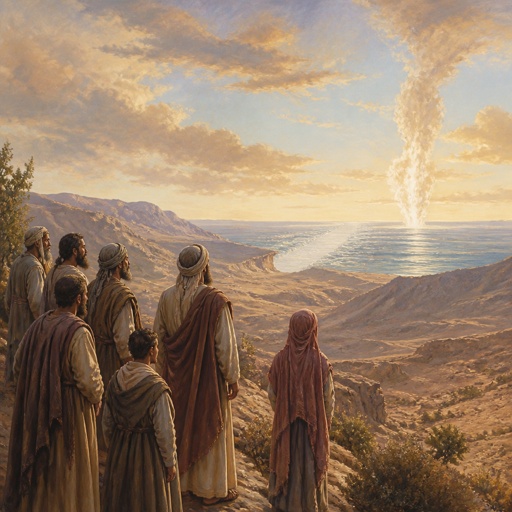
"But your eyes have seen all the great acts of the LORD which he did." - Deuteronomy 11:7

acts 3 11

Acts 11:2

Acts 20:11

Acts 11:2

Acts 11:2

Acts 19: 11

Acts 19:11

Acts 3:6-7

Acts 3:6-7

Acts 3:6-7

Acts 3:6-7

Acts 3:6-7
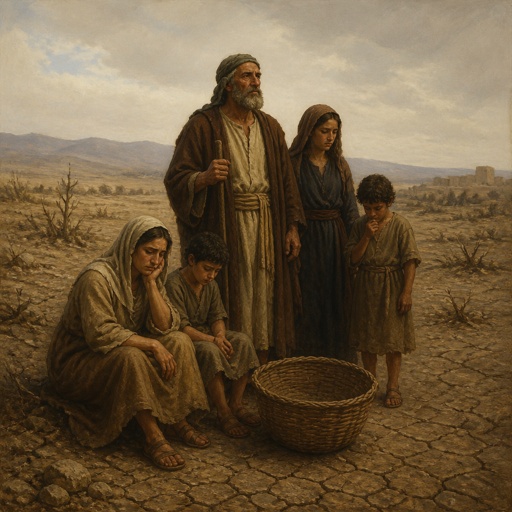
"Now there came a dearth over all the land of Egypt and Chanaan, and great affliction: and our fathers found no sustenance." - Acts 7:11

1 Kings 11:41 - "¶ And the rest of the acts of Solomon, and all that he did, and his wisdom, are they not written in the book of the acts of Solomon?"

Acts 1:1-11

Acts 1:1-11

Acts 14:7 - "And there they preached the gospel."

acts 20:7-12

Acts 11:25 - "Then departed Barnabas to Tarsus, for to seek Saul:"

Acts 7:47 - "But Solomon built him an house."

Acts 19:11 - "And God wrought special miracles by the hands of Paul:"

Acts 7:1 - "Then said the high priest, Are these things so?"

Acts 19:7 - "And all the men were about twelve."

Acts 11:11 - "And, behold, immediately there were three men already come unto the house where I was, sent from Caesarea unto me."

Acts 11:27 - "¶ And in these days came prophets from Jerusalem unto Antioch."