What does Acts 12:7 mean?
“And, behold, the angel of the Lord came upon him, and a light shined in the prison: and he smote Peter on the side, and raised him up, saying, Arise up quickly. And his chains fell off from his hands.” — Acts 12:7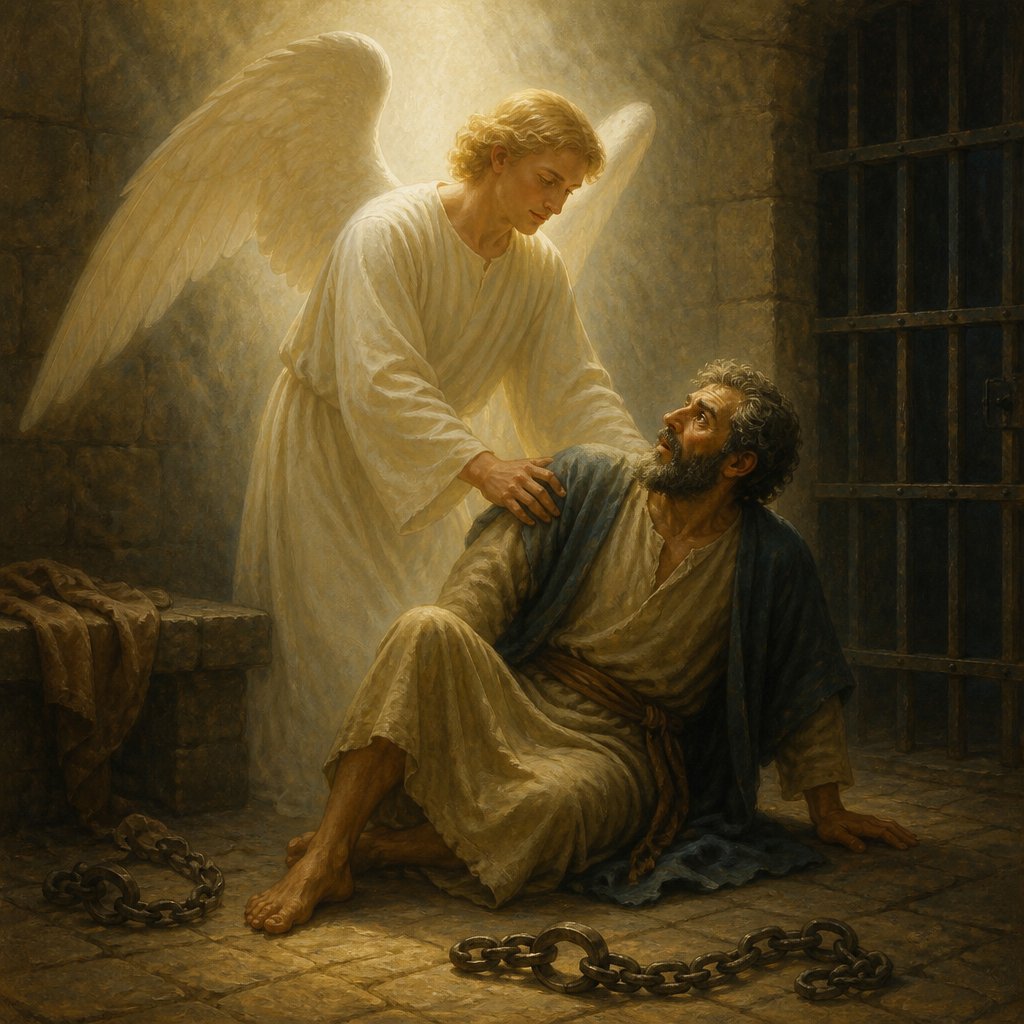
Acts 12:7 in the King James Version reads, “And, behold, the angel of the Lord came upon him, and a light shined in the prison: and he smote Peter on the side, and raised him up, saying, Arise up quickly. And his chains fell off from his hands.” Its meaning unfolds most clearly when it is heard inside its own narrative setting, where the church is under pressure, an apostle is bound, and God answers not with a mere change of feelings but with an act of deliverance that is at once physical, spiritual, and deeply symbolic.
The context is Herod’s violent move against the early believers. James has been killed, and Peter is taken and kept “in prison,” watched by multiple guards, held for a public proceeding. The chapter has already told the reader what is happening beyond the bars: “prayer was made without ceasing of the church unto God for him.” Acts 12:7 sits at the turning point where the hidden work of prayer meets the open work of God’s intervention. Peter is not rescued because the situation is manageable or because he has a natural path of escape; he is rescued precisely where every human avenue is shut. The verse insists that deliverance belongs to the Lord, and that the Lord is not hindered by iron, soldiers, or political power.
The words “And, behold” are not filler. They function like a trumpet in the story, calling attention to something sudden, surprising, and divine. The prison is a place of darkness, control, and confinement, but the first sign of God’s presence is that “the angel of the Lord came upon him.” In Acts, an “angel of the Lord” is repeatedly connected with God’s direct guidance and rescue. The phrase signals that this is not Peter’s ingenuity or luck; it is heaven’s initiative. God sends a messenger into the exact place where Peter is most helpless. The verb “came upon him” conveys nearness and personal action: Peter is not merely observed; he is visited.
Then “a light shined in the prison.” In the plain sense, this is the illumination that accompanies the angel’s presence and enables what follows. Yet Luke’s narrative choice is also rich with biblical resonance. Light in a prison is the opposite of what the place represents. A prison is where the world says freedom has ended; light says God has entered. This light is not described as coming from a torch or from a crack in the wall, but as something that “shined” simply because the angel is there. In Scripture, light often signifies God’s revelation and purity, His power to make what is hidden visible, and His authority over darkness. Here it marks a decisive reversal: the power operating in the cell is no longer Herod’s.
The verse then says the angel “smote Peter on the side, and raised him up.” The action is startlingly physical. Peter is not merely inspired; he is struck and lifted. The detail suggests Peter was sleeping deeply. Indeed the surrounding passage indicates he was asleep between soldiers, chained. The “smote” is not presented as violence for its own sake, but as urgent awakening. It portrays the decisive interruption of ordinary human weakness—fatigue, resignation, even the quiet acceptance of danger—by God’s call to rise. In that moment, Peter is not asked to devise a plan; he is acted upon and commanded. The angel’s touch is both wake-up call and strengthening, because it “raised him up.” The deliverer not only announces freedom; he imparts motion toward it.
The angel’s words, “Arise up quickly,” carry both urgency and obedience. “Arise” is more than “stand”; it is a summons to move from the posture of captivity to the posture of readiness. “Quickly” underscores that God’s deliverance is not leisurely or tentative. The situation is time-sensitive, and God’s command implies that when God opens a door, faith responds without delay. Yet the command is also mercifully simple. In a complex crisis, Peter is given a clear next step. This is often the way God leads in Acts: not always by explaining every stage, but by giving an immediate command that draws the servant forward.
The final clause is the sign that God’s power is not symbolic only but concrete: “And his chains fell off from his hands.” Chains are the plain emblem of captivity, and their falling off without keys, tools, or negotiation proclaims divine authority over what binds. The verse does not say Peter slipped them off; it says they “fell off.” The passive description emphasizes that the bondage releases at God’s presence and command. It is deliverance that does not require Peter to prove strength first. He rises because God raises him; he is free because God unbinds him.
At the same time, the verse has spiritual and thematic weight beyond the historical event. Peter’s chains represent more than Rome’s restraints; they echo the broader biblical reality that God can free His servants from what no human can undo. The manner of deliverance—light shining, a messenger from the Lord, an awakening, a command to rise, chains falling—forms a picture of salvation and liberation that God works. The prison becomes a theater where the supremacy of God is displayed against the pretensions of earthly rulers. Herod can arrest; he cannot finally hold. Soldiers can watch; they cannot prevent God’s entry. Iron can bind; it cannot remain fastened when God decrees release.
Acts 12:7 also highlights the interplay between divine sovereignty and human response. Everything decisive is initiated by God: the angel comes, the light shines, Peter is smitten and raised, the chains fall. Yet Peter must obey the word spoken to him—he must “arise up quickly.” The verse therefore carries a pattern seen throughout Acts: God acts first in grace and power, and His people respond in obedience to what He commands. Deliverance is gift, but it is not passive; it draws the delivered person into movement.
Finally, the verse underscores the significance of the church’s unseen labor. Though Acts 12:7 does not mention prayer explicitly, it sits as God’s answer to the church’s “without ceasing” intercession. The narrative joins heaven’s messenger and heaven’s light with the earthly community’s pleading. The significance is not that prayer forces God’s hand, but that God has ordained to work in fellowship with His people, making their dependence part of the story of His deliverance.
So Acts 12:7 stands as a concentrated testimony that the Lord is able to enter the darkest confinement, awaken His servant, command immediate action, and remove bonds that appear final. It is a verse of interruption and reversal: the night cell is invaded by light, sleep is broken by a holy summons, and chains that represent human power fall away at the presence of God.
Get our apps


Artwork for Acts 12:7
!["And, behold, the angel of the Lord came upon [him], and a light shined in the prison: and he smote Peter on the side, and raised him up, saying, Arise up quickly. And his chains fell off from [his] hands." - Acts 12:7](https://media.bible.art/1f5d2caa-854e-4d42-b8fc-bb2ce298177e-thumbnail.jpg)
"And, behold, the angel of the Lord came upon [him], and a light shined in the prison: and he smote Peter on the side, and raised him up, saying, Arise up quickly. And his chains fell off from [his] hands." - Acts 12:7

Acts 12:7 - "And, behold, the angel of the Lord came upon him, and a light shined in the prison: and he smote Peter on the side, and raised him up, saying, Arise up quickly. And his chains fell off from his hands."
"And, behold, the angel of the Lord came upon him, and a light shined in the prison: and he smote Peter on the side, and raised him up, saying, Arise up quickly. And his chains fell off from his hands." - Acts 12:7

acts 20:7-12
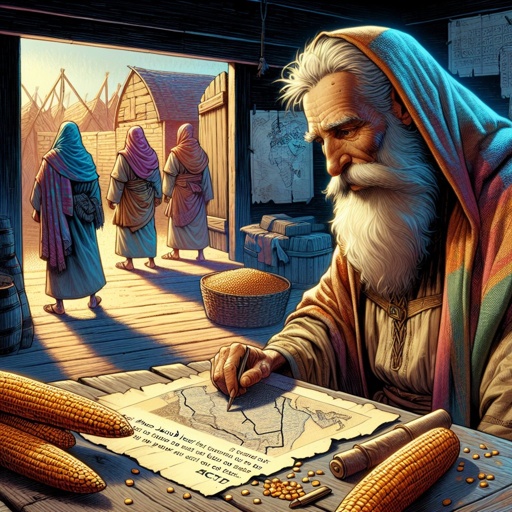
Acts 7:12 - "But when Jacob heard that there was corn in Egypt, he sent out our fathers first."

1 Samuel 12:7 - "Now therefore stand still, that I may reason with you before the LORD of all the righteous acts of the LORD, which he did to you and to your fathers."
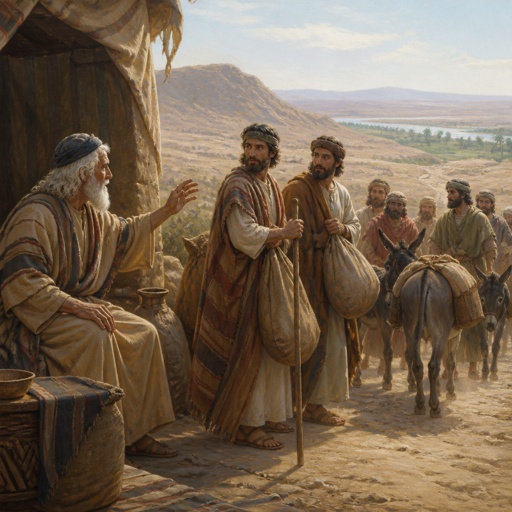
"But when Jacob heard that there was corn in Egypt, he sent out our fathers first." - Acts 7:12

Acts 28:12

Acts 18:12

Acts 18:12

Acts 3:6-7

Acts 3:6-7

Acts 3:6-7

Acts 3:6-7

Acts 3:6-7

Acts 4:8-12

Acts 14:7 - "And there they preached the gospel."

Acts 12:24 - "¶ But the word of God grew and multiplied."

Acts 7:47 - "But Solomon built him an house."

Acts 12:2 - "And he killed James the brother of John with the sword."

Acts 28:12 - "And landing at Syracuse, we tarried there three days."

Acts 7:1 - "Then said the high priest, Are these things so?"

Acts 19:7 - "And all the men were about twelve."

Acts 12:22 - "And the people gave a shout, saying, It is the voice of a god, and not of a man."

"And there they preached the gospel." - Acts 14:7

Acts 20:12 - "And they brought the young man alive, and were not a little comforted."

Acts 7:50 - "Hath not my hand made all these things?"

Acts 7:7 - "And the nation to whom they shall be in bondage will I judge, said God: and after that shall they come forth, and serve me in this place."

Acts 7:18 - "Till another king arose, which knew not Joseph."

Acts 12:13 - "And as Peter knocked at the door of the gate, a damsel came to hearken, named Rhoda."