What does Acts 16:3 mean?
"Him would Paul have to go forth with him; and took and circumcised him because of the Jews which were in those quarters: for they knew all that his father was a Greek." - Acts 16:3
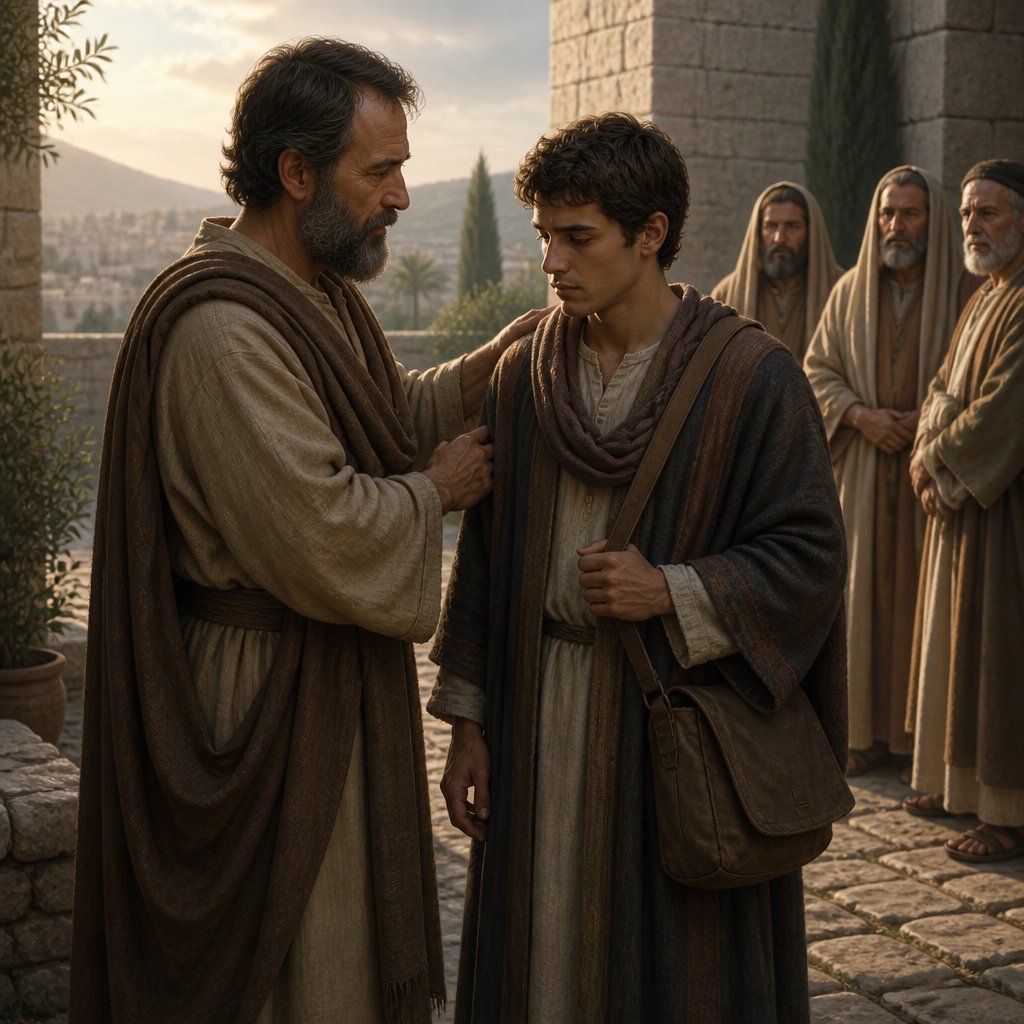
The Bible verse Acts 16:3 in the King James Version reads, "Him would Paul have to go forth with him; and took and circumcised him because of the Jews which were in those quarters: for they knew all that his father was a Greek." This verse is part of the New Testament and provides a significant insight into the early Christian church, the mission work of Paul, and the cultural and religious dynamics of the time.
To understand the meaning and context of Acts 16:3, it is important to have a broader understanding of the book of Acts and the specific events leading up to this verse. The book of Acts, written by the author Luke, is a historical account of the early Christian church and the spread of the gospel. Acts 16 specifically details the missionary journeys of Paul and his companions, including Silas and later, Timothy.
In Acts 16:1-2, we learn that Paul comes to Derbe and then to Lystra, where he meets a disciple named Timothy. Timothy was well spoken of by the brothers at Lystra and Iconium, and Paul wanted to take him along on his missionary journey. However, before they set out, Paul circumcises Timothy because of the Jews in the area.
The verse highlights the cultural and religious sensitivity of Paul in his mission work. Circumcision was a central aspect of the Jewish tradition and faith, and by circumcising Timothy, Paul sought to avoid unnecessary conflict or offense to the Jews they would encounter in their travels. This action reflects Paul's approach of becoming all things to all people in order to win them to Christ (1 Corinthians 9:19-23).
This passage also sheds light on the internal dynamics of the early Christian community. The issue of circumcision was a significant point of contention in the early church, particularly as Gentiles (non-Jewish believers) began to be included in the Christian faith. The Jerusalem Council, as recorded in Acts 15, had addressed the question of whether Gentile believers needed to be circumcised and follow Jewish law in order to be saved. The decision reached at the council was that Gentile believers did not need to be circumcised, but they were encouraged to abstain from food sacrificed to idols, from blood, from the meat of strangled animals, and from sexual immorality (Acts 15:19-21).
Given this context, Paul's decision to circumcise Timothy is intriguing. It can be interpreted as an act of accommodation and cultural sensitivity, rather than a theological statement about the necessity of circumcision for salvation. Paul's primary concern was the effective proclamation of the gospel and the unity of the diverse communities of believers. His actions were strategic and tactical, reflecting his commitment to removing unnecessary stumbling blocks to the acceptance of the gospel.
Acts 16:3 also speaks to the theme of cultural adaptation in Christian mission. Paul was willing to set aside his personal convictions or preferences for the sake of the mission and the well-being of others. This principle is consistent with Paul's teachings elsewhere, such as in Romans 14, where he exhorts believers to prioritize love and the building up of one another over personal liberties.
The historical and cultural details in Acts 16:3 showcase the complexities of early Christian mission work and the challenges of navigating diverse cultural and religious contexts. The verse underscores the importance of cultural sensitivity and strategic decision-making in the spread of the gospel, as well as the commitment to fostering unity and understanding within the body of Christ.
In conclusion, Acts 16:3 provides a glimpse into the practical wisdom, sensitivity, and strategic thinking of the apostle Paul in his mission work. It illuminates the cultural and religious dynamics of the early Christian church and speaks to the broader themes of cultural adaptation, unity, and the proclamation of the gospel. As modern-day Christians, we can learn from Paul's example and strive to embody similar wisdom, sensitivity, and strategic thinking in our own efforts to fulfill the Great Commission and bring the message of Christ to the world.
Have questions about Acts 16:3?
Dive deeper into this scripture with Bible Chat — an AI-powered tool for exploring God's Word through conversation. Ask questions, get context, and grow in your understanding of the Bible.
Get Our Apps


Acts 16:3 Artwork

Acts 16:3 - "Him would Paul have to go forth with him; and took and circumcised him because of the Jews which were in those quarters: for they knew all that his father was a Greek."
"Him would Paul have to go forth with him; and took and circumcised him because of the Jews which were in those quarters: for they knew all that his father was a Greek." - Acts 16:3

Acts 3:16

Acts 3:16

Acts 3:16

Acts 3:16

Acts 3:16 - "And his name through faith in his name hath made this man strong, whom ye see and know: yea, the faith which is by him hath given him this perfect soundness in the presence of you all."

Acts 16 v18

Acts 16 v26

Acts 16:17

Acts 2:16 - "But this is that which was spoken by the prophet Joel;"

Acts 16:8 - "And they passing by Mysia came down to Troas."

Acts 3:6-7

Acts 3:6-7

Acts 3:6-7

Acts 3:6-7

Acts 3:6-7

acts 3 11

Acts 2;2-3

Acts 18:16 - "And he drave them from the judgment seat."

Acts 2:3

Acts 3:3 - "Who seeing Peter and John about to go into the temple asked an alms."

Acts 10:16 - "This was done thrice: and the vessel was received up again into heaven."

Acts 16:2 - "Which was well reported of by the brethren that were at Lystra and Iconium."

Acts 16:5 - "And so were the churches established in the faith, and increased in number daily."

Acts 16:16 - "¶ And it came to pass, as we went to prayer, a certain damsel possessed with a spirit of divination met us, which brought her masters much gain by soothsaying:"

Acts 2:2-3

Acts 2:2-3

"But this is that which was spoken by the prophet Joel;" - Acts 2:16

Acts 14:16 - "Who in times past suffered all nations to walk in their own ways."