What does Acts 18:7 mean?
“And he departed thence, and entered into a certain man’s house, named Justus, one that worshipped God, whose house joined hard to the synagogue.” — Acts 18:7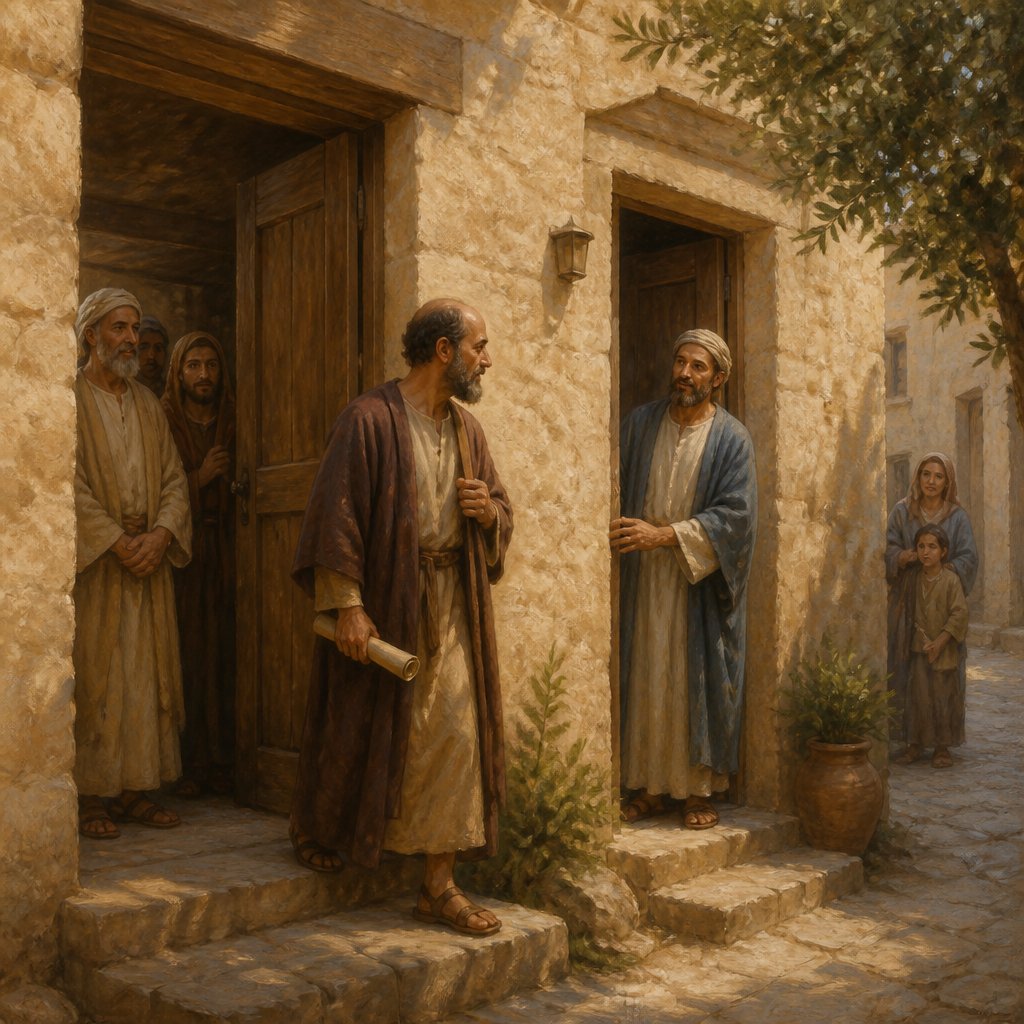
The Bible verse Acts 18:7 in the King James Version (KJV) reads, “And he departed thence, and entered into a certain man’s house, named Justus, one that worshipped God, whose house joined hard to the synagogue.” This verse is part of the book of Acts, which is the fifth book of the New Testament. Acts was written by Luke, who was a companion of the apostle Paul, and it is a historical account of the early Christian church and the spread of the gospel.
In this particular verse, we see the apostle Paul departing from the synagogue and entering the house of a man named Justus, who is described as a worshipper of God. The fact that Justus is a worshipper of God is significant, as it indicates that he was likely a Gentile who believed in the God of Israel, but had not converted to Judaism. This would have been a common occurrence in the first century, as many Gentiles were drawn to the monotheistic faith of the Jews but were not willing or able to fully convert to Judaism.
The context of this verse is important in understanding its significance. At this point in the book of Acts, Paul is on his second missionary journey, preaching the gospel and establishing churches throughout the Roman Empire. In the preceding verses, we see that Paul had been preaching in the synagogue in Corinth, but when the Jews opposed and blasphemed, he shook his raiment and said unto them, “Your blood be upon your own heads; I am clean: from henceforth I will go unto the Gentiles.” (Acts 18:6, KJV) This is the point at which Paul departs from the synagogue and enters the house of Justus.
One of the themes present in this verse is the rejection of the gospel by the Jews and the turning to the Gentiles. Throughout the book of Acts, we see this pattern repeated as the Jewish religious leaders reject the message of Jesus as the Messiah, and the apostles turn to the Gentiles, who are more receptive to the gospel. This reflects the fulfillment of Jesus’ words in Acts 1:8, where he tells His disciples that they will be His witnesses “both in Jerusalem, and in all Judaea, and in Samaria, and unto the uttermost part of the earth.”
The symbolism in this verse is also worth exploring. The fact that Justus’ house is mentioned as being next to the synagogue is not a coincidence. It symbolizes the proximity and connection between the Jewish and Gentile believers. It also signifies the transition from the old covenant to the new covenant, and the inclusion of the Gentiles into the body of Christ. Just as Justus’ house joined hard to the synagogue, so too do the Gentile believers join hard to the Jewish believers, forming one body in Christ.
In conclusion, Acts 18:7 in the King James Version is a verse that is rich in themes, context, and symbolism. It is a significant moment in the spreading of the gospel, as Paul turns from the rejection of the Jews to the acceptance of the Gentiles. It also symbolizes the unity and connection between Jewish and Gentile believers in the body of Christ. This verse serves as a reminder of the inclusivity of the gospel message and the fulfillment of God’s plan to reconcile all people to Himself through the work of Jesus Christ.
Get our apps


Artwork for Acts 18:7

Acts 18:7 - "¶ And he departed thence, and entered into a certain man's house, named Justus, one that worshipped God, whose house joined hard to the synagogue."
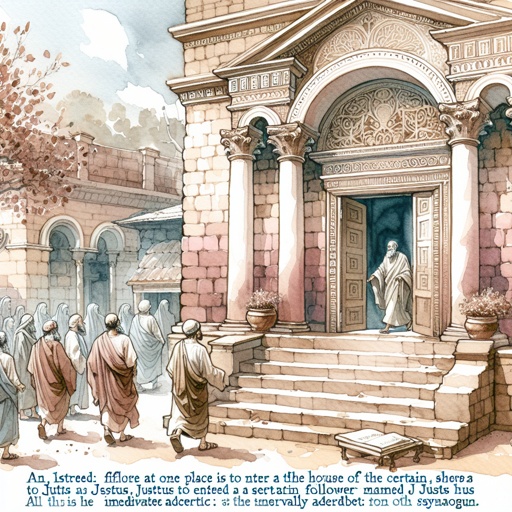
Acts 18:7 And he departed from there and entered the house of a certain man named Justus, one who worshiped God, whose house was next door to the synagogue.
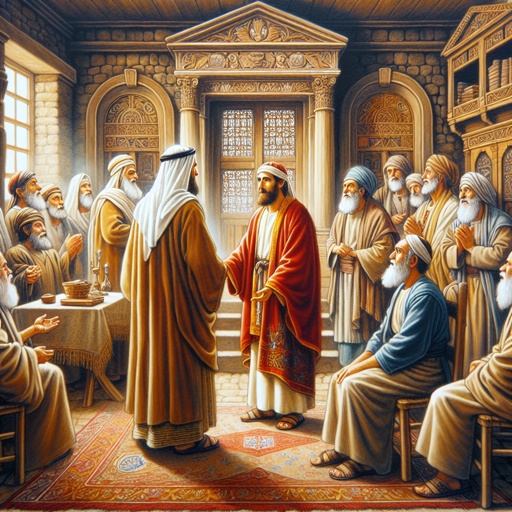
Acts 18:7 And he departed from there and entered the house of a certain man named Justus, one who worshiped God, whose house was next door to the synagogue.
"¶ And he departed thence, and entered into a certain man's house, named Justus, one that worshipped God, whose house joined hard to the synagogue." - Acts 18:7

Acts 7:18 - "Till another king arose, which knew not Joseph."
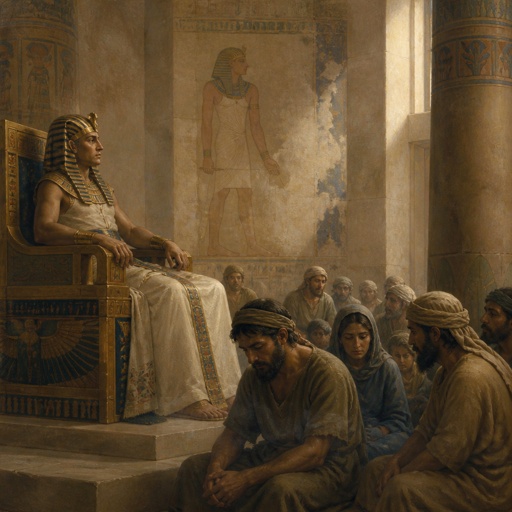
"Till another king arose, which knew not Joseph." - Acts 7:18

Acts 18:12

Acts 18:12

Acts 3:6-7

Acts 3:6-7

Acts 3:6-7

Acts 3:6-7

Acts 3:6-7

Acts 18:16 - "And he drave them from the judgment seat."

Acts 19:18 - "And many that believed came, and confessed, and shewed their deeds."

Acts 14:7 - "And there they preached the gospel."
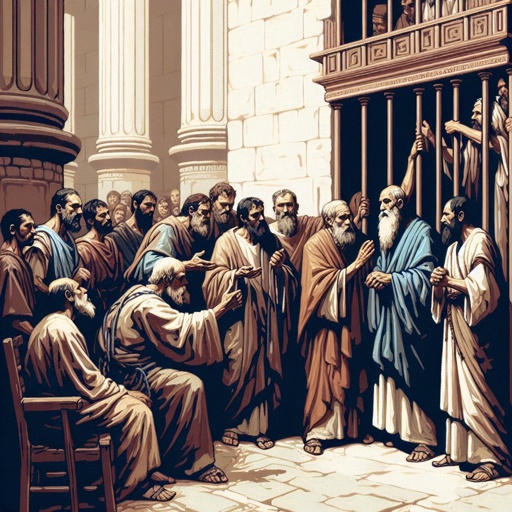
Acts 5:18 - "And laid their hands on the apostles, and put them in the common prison."

Acts 18:1 - "After these things Paul departed from Athens, and came to Corinth;"

Acts 18:13 - "Saying, This fellow persuadeth men to worship God contrary to the law."

acts 20:7-12

Acts 18:4 - "And he reasoned in the synagogue every sabbath, and persuaded the Jews and the Greeks."

Acts 13:18 - "And about the time of forty years suffered he their manners in the wilderness."

Acts 7:47 - "But Solomon built him an house."

2 Kings 14:18 - "And the rest of the acts of Amaziah, are they not written in the book of the chronicles of the kings of Judah?"

Acts 15:18 - "Known unto God are all his works from the beginning of the world."

Acts 18:28 - "For he mightily convinced the Jews, and that publickly, shewing by the scriptures that Jesus was Christ."

Acts 10:18 - "And called, and asked whether Simon, which was surnamed Peter, were lodged there."

Acts 14:18 - "And with these sayings scarce restrained they the people, that they had not done sacrifice unto them."

Acts 27:18 - "And we being exceedingly tossed with a tempest, the next day they lightened the ship;"

Acts 18:20 - "When they desired him to tarry longer time with them, he consented not;"