What does Acts 26:7 mean?
"Unto which promise our twelve tribes, instantly serving God day and night, hope to come. For which hope’s sake, king Agrippa, I am accused of the Jews." - Acts 26:7
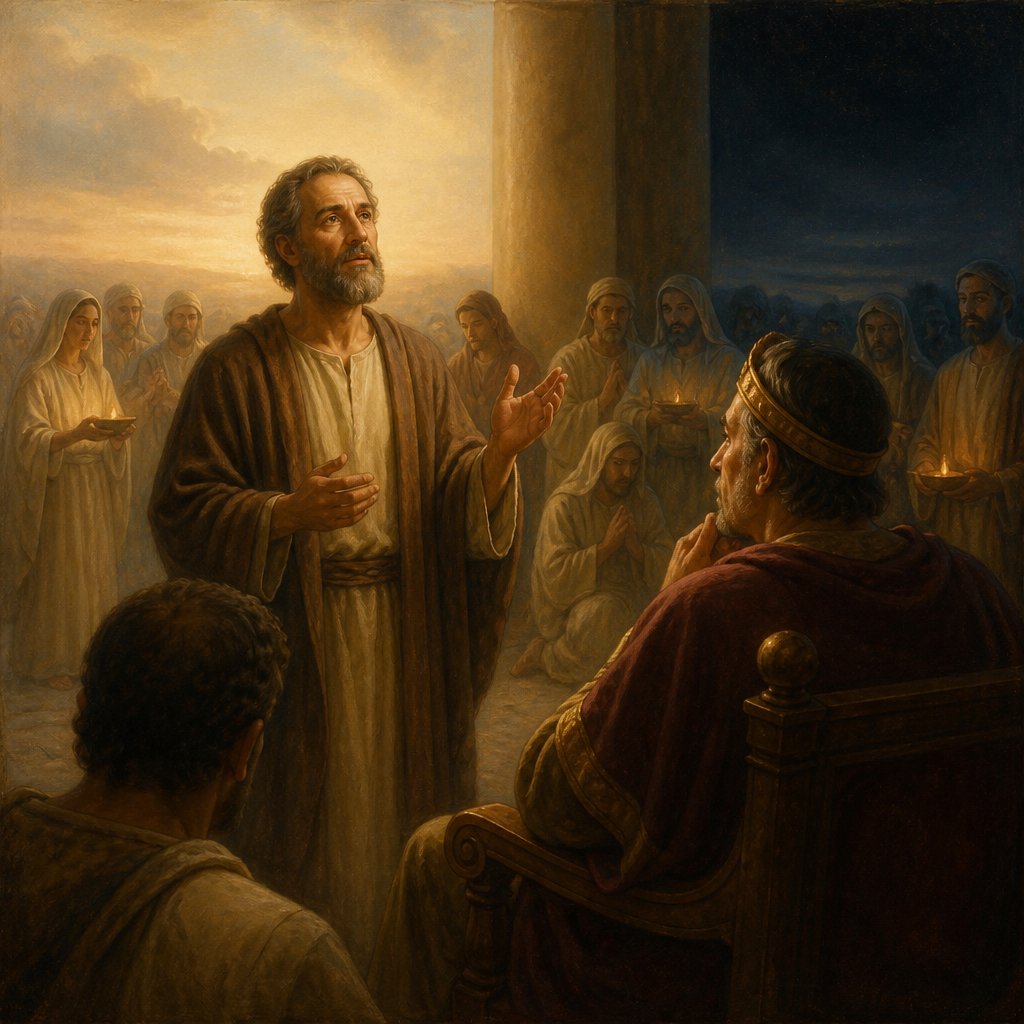
The Bible verse Acts 26:7 from the King James Version states, "Unto which promise our twelve tribes, instantly serving God day and night, hope to come. For which hope's sake, king Agrippa, I am accused of the Jews." This verse is part of a speech given by the apostle Paul as he defends himself before King Agrippa. In this speech, Paul recounts his conversion to Christianity and his subsequent ministry.
To truly understand the meaning and significance of Acts 26:7, it is important to provide some context. The book of Acts is primarily a historical account of the early Christian church and the spread of the Gospel after the death and resurrection of Jesus Christ. Acts 26 specifically records Paul's defense of his ministry before King Agrippa, one of the rulers of the Roman province of Judea.
In Acts 26:7, Paul refers to a promise made by God to the twelve tribes of Israel. This promise likely refers to the covenant that God made with the Israelites, as outlined in the Old Testament. This covenant promised that God would be their God and they would be His people (Genesis 17:7). It also included promises of future blessings and redemption, as well as the coming of a Messiah to save them from their sins.
Paul emphasizes the devotion of the twelve tribes of Israel to serving God day and night, indicating their faithfulness and dedication to their religious practices. This reflects the religious fervor and commitment of the Jewish people in following the laws and commandments of God, as prescribed in the Old Testament. The mention of "hope to come" suggests the anticipation and longing for the fulfillment of God's promises, including the coming of the Messiah.
Paul's mention of "hope's sake" in Acts 26:7 highlights the central theme of hope that runs throughout the Christian faith. The hope of the coming Messiah, the hope of salvation, and the hope of eternal life are all central to the Christian message. Despite facing persecution and accusations from the Jews, Paul's hope is unwavering, and he is willing to defend his faith and proclaim the Gospel even in the face of adversity.
The reference to King Agrippa in Acts 26:7 is significant as well. King Agrippa was a descendant of Herod the Great and was appointed by the Roman emperor to rule over parts of Judea. By addressing Agrippa directly, Paul is not only defending himself but also boldly sharing the message of Jesus Christ with a powerful political figure. This demonstrates Paul's commitment to spreading the Gospel to both Jews and Gentiles, regardless of the opposition he faces.
In terms of symbolism, Acts 26:7 symbolizes the unwavering faith and hope of the early Christians, despite the challenges and hardships they faced. It also symbolizes the fulfillment of God's promises through the coming of Jesus Christ and the establishment of the Christian church. The dedication of the twelve tribes to serving God day and night symbolizes the importance of worship, prayer, and devotion in the Christian life.
Overall, Acts 26:7 serves as a powerful reminder of the hope and steadfastness found in the Christian faith, as well as the importance of boldly proclaiming the Gospel, even in the face of opposition. It encourages believers to remain faithful and committed to serving God, trusting in His promises, and sharing the message of salvation with others.
Have questions about Acts 26:7?
Dive deeper into this scripture with Bible Chat — an AI-powered tool for exploring God's Word through conversation. Ask questions, get context, and grow in your understanding of the Bible.
Get Our Apps


Acts 26:7 Artwork
Acts 26:7 - "Unto which promise our twelve tribes, instantly serving God day and night, hope to come. For which hope's sake, king Agrippa, I am accused of the Jews."
"Unto which promise our twelve tribes, instantly serving God day and night, hope to come. For which hope's sake, king Agrippa, I am accused of the Jews." - Acts 26:7
Acts 7:26 - "And the next day he shewed himself unto them as they strove, and would have set them at one again, saying, Sirs, ye are brethren; why do ye wrong one to another?"

Acts 27:26 - "Howbeit we must be cast upon a certain island."

Acts 26:26 - "For the king knoweth of these things, before whom also I speak freely: for I am persuaded that none of these things are hidden from him; for this thing was not done in a corner."

Acts 3:6-7

Acts 3:6-7

Acts 26:19 - "Whereupon, O king Agrippa, I was not disobedient unto the heavenly vision:"

Acts 26:27 - "King Agrippa, believest thou the prophets? I know that thou believest."

Acts 3:6-7

Acts 3:6-7

Acts 3:6-7

Acts 15:26 - "Men that have hazarded their lives for the name of our Lord Jesus Christ."

Acts 23:26 - "Claudius Lysias unto the most excellent governor Felix sendeth greeting."
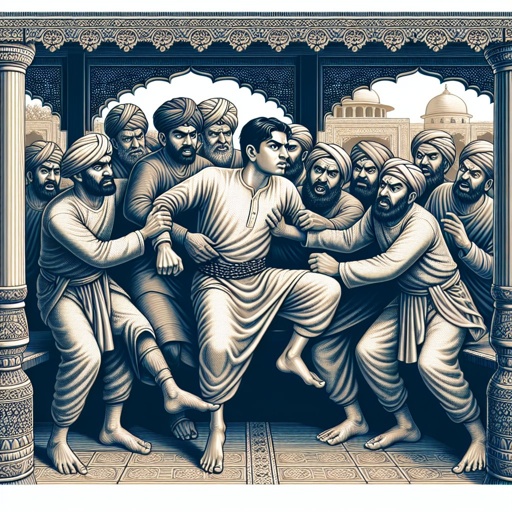
Acts 26:21 - "For these causes the Jews caught me in the temple, and went about to kill me."

Acts 26:28 - "Then Agrippa said unto Paul, Almost thou persuadest me to be a Christian."

Acts 26:12 - "Whereupon as I went to Damascus with authority and commission from the chief priests,"

Acts 26:8 - "Why should it be thought a thing incredible with you, that God should raise the dead?"

Proverbs 7:26

Acts 1:26 - "And they gave forth their lots; and the lot fell upon Matthias; and he was numbered with the eleven apostles."

Acts 14:7 - "And there they preached the gospel."

Acts 26:6 - "And now I stand and am judged for the hope of the promise made of God unto our fathers:"

Acts 26:30 - "And when he had thus spoken, the king rose up, and the governor, and Bernice, and they that sat with them:"

Acts 10:26 - "But Peter took him up, saying, Stand up; I myself also am a man."

2 Chronicles 35:26 - "Now the rest of the acts of Josiah, and his goodness, according to that which was written in the law of the LORD,"

Acts 26:17 - "Delivering thee from the people, and from the Gentiles, unto whom now I send thee,"

acts 20:7-12

2 Chronicles 25:26 - "Now the rest of the acts of Amaziah, first and last, behold, are they not written in the book of the kings of Judah and Israel?"

Acts 4:26 - "The kings of the earth stood up, and the rulers were gathered together against the Lord, and against his Christ."

Acts 26:25 - "But he said, I am not mad, most noble Festus; but speak forth the words of truth and soberness."