What does Acts 6:13 mean?
"And set up false witnesses, which said, This man ceaseth not to speak blasphemous words against this holy place, and the law:" - Acts 6:13
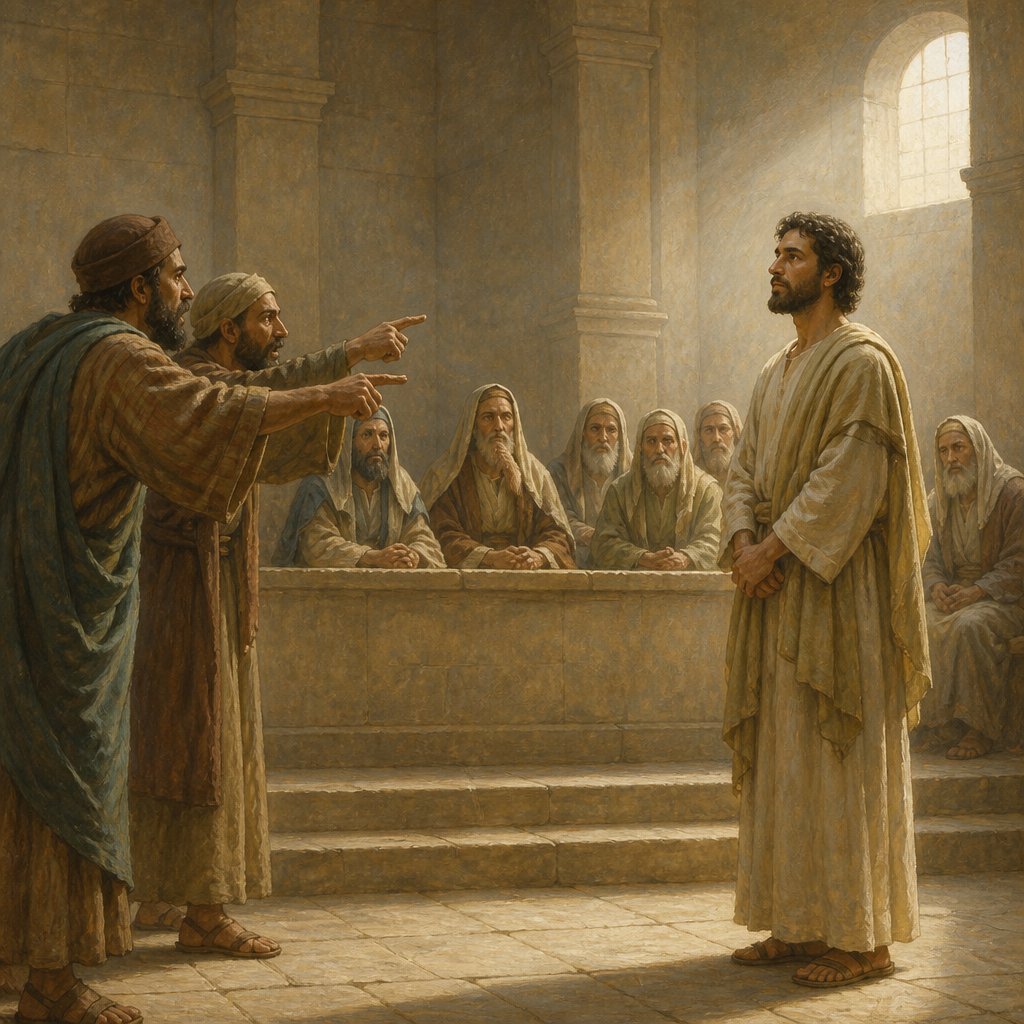
The Bible verse Acts 6:13 in the King James Version (KJV) states, "And set up false witnesses, which said, This man ceaseth not to speak blasphemous words against this holy place, and the law."
This verse is a part of the larger narrative in the book of Acts, which documents the early days of the Christian church and the spread of the gospel message following the ascension of Jesus. In this specific passage, the focus is on the controversy surrounding the early Christian community in Jerusalem.
The context of Acts 6:13 is important to understand its full meaning. In the preceding verses, we learn about the appointment of seven men to oversee the distribution of food to widows within the community. These men are chosen for their good reputation, wisdom, and the Holy Spirit. One of these men was Stephen, who is described as "full of faith and of the Holy Ghost" (Acts 6:5). Stephen is also noted for performing great wonders and signs among the people.
In Acts 6:8-15, we read about how Stephen is brought before the Sanhedrin, the Jewish religious council, to defend himself against the accusations of blasphemy. The false witnesses mentioned in Acts 6:13 accuse Stephen of speaking against the holy place (likely referring to the temple) and the law of Moses. These false witnesses were likely instigated by those who opposed the Christian message and saw Stephen as a threat to their religious traditions.
The themes present in Acts 6:13 include persecution, false accusation, and the clash between religious traditions and the new Christian faith. The passage also highlights the courage and steadfastness of early believers like Stephen, who were willing to face opposition and persecution for the sake of the gospel.
Symbolically, this verse illustrates the broader conflict between the old and the new. The Jewish leaders, represented by the Sanhedrin and its false witnesses, are threatened by the teachings of Stephen and the early Christians. The accusation of blasphemy against the holy place and the law reflects the tension between traditional Jewish practices and the message of Jesus, which called for a new way of understanding and experiencing God.
Acts 6:13 serves as a reminder to believers that following Jesus may lead to conflict and opposition. In the face of false accusations and persecution, the example of Stephen encourages Christians to stand firm in their faith and remain faithful to the truth of the gospel, even in the midst of adversity.
In conclusion, Acts 6:13 in the King James Version encapsulates the early Christian experience of persecution and opposition for their beliefs. The verse resonates with themes of steadfastness, false accusation, and the clash between traditional religious practices and the message of Jesus. It serves as a poignant reminder for believers to remain faithful to the truth, even in the face of adversity.
Have questions about Acts 6:13?
Dive deeper into this scripture with Bible Chat — an AI-powered tool for exploring God's Word through conversation. Ask questions, get context, and grow in your understanding of the Bible.
Get Our Apps


Acts 6:13 Artwork

Acts 6:13 - "And set up false witnesses, which said, This man ceaseth not to speak blasphemous words against this holy place, and the law:"
"And set up false witnesses, which said, This man ceaseth not to speak blasphemous words against this holy place, and the law:" - Acts 6:13

Acts 13:6 - "And when they had gone through the isle unto Paphos, they found a certain sorcerer, a false prophet, a Jew, whose name was Bar-jesus:"

Acts 13:43

Acts 3:6-7

Acts 3:6-7

Acts 3:6-7

Acts 3:6-7

Acts 3:6-7

Acts 6:6 - "Whom they set before the apostles: and when they had prayed, they laid their hands on them."

Acts 13:30 - "But God raised him from the dead:"

Acts 21:5-6

Acts 13:49 - "And the word of the Lord was published throughout all the region."

Acts 13:52 - "And the disciples were filled with joy, and with the Holy Ghost."

Mark 6:13 And they cast out many demons, and anointed with oil many who were sick, and healed them.

Acts 13:37 - "But he, whom God raised again, saw no corruption."
"And when they had gone through the isle unto Paphos, they found a certain sorcerer, a false prophet, a Jew, whose name was Bar-jesus:" - Acts 13:6

Acts 2:13 - "Others mocking said, These men are full of new wine."

Acts 13:13 - "Now when Paul and his company loosed from Paphos, they came to Perga in Pamphylia: and John departing from them returned to Jerusalem."

Acts 23:13 - "And they were more than forty which had made this conspiracy."

Acts 18:13 - "Saying, This fellow persuadeth men to worship God contrary to the law."

Acts 15:6 - "¶ And the apostles and elders came together for to consider of this matter."

Acts 24:13 - "Neither can they prove the things whereof they now accuse me."

Acts 13:18 - "And about the time of forty years suffered he their manners in the wilderness."

Ephesians 6:13

Ephesians 6:13

Acts 13:40 - "Beware therefore, lest that come upon you, which is spoken of in the prophets;"

Acts 6:4 - "But we will give ourselves continually to prayer, and to the ministry of the word."

Acts 5:13 - "And of the rest durst no man join himself to them: but the people magnified them."

Acts 13:51 - "But they shook off the dust of their feet against them, and came unto Iconium."