What does Acts 6:14 mean?
"For we have heard him say, that this Jesus of Nazareth shall destroy this place, and shall change the customs which Moses delivered us." - Acts 6:14
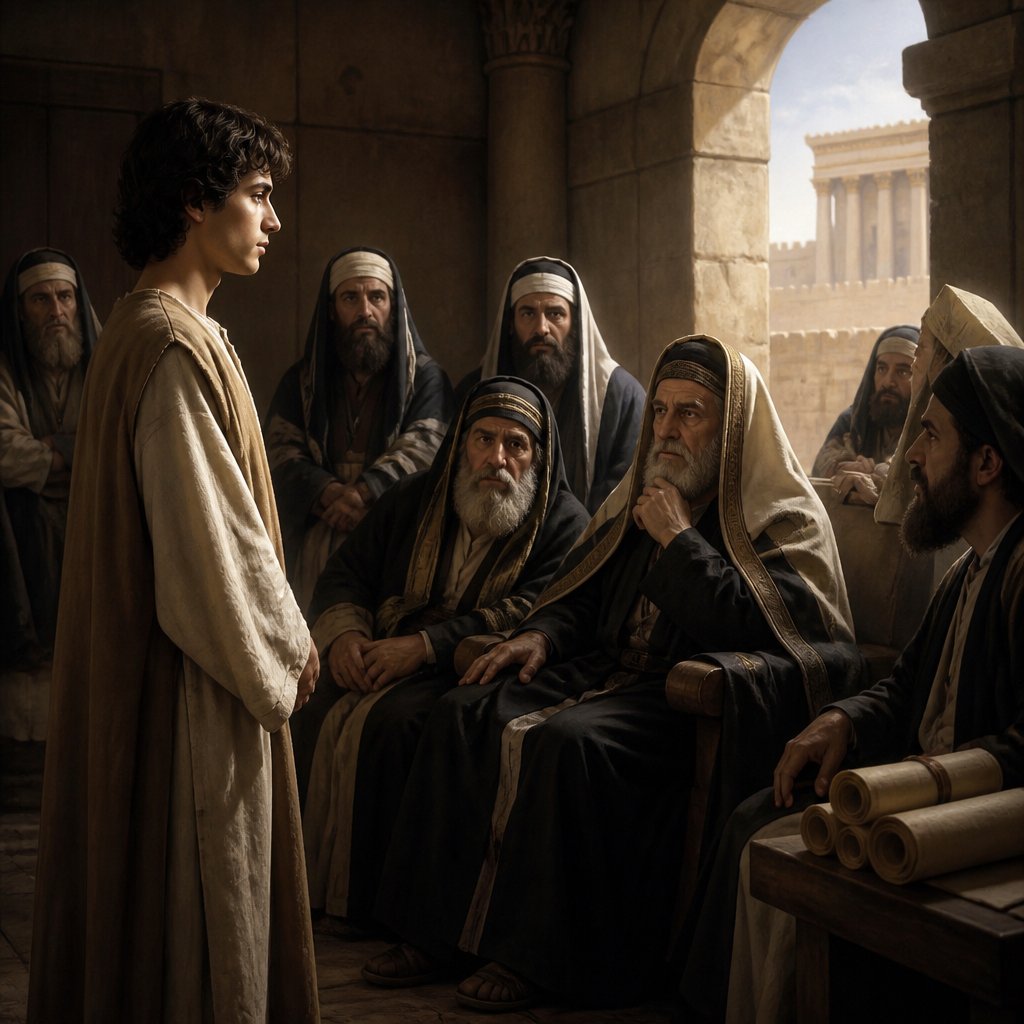
The verse Acts 6:14 from the King James Version (KJV) states, "For we have heard him say, that this Jesus of Nazareth shall destroy this place, and shall change the customs which Moses delivered us." This passage is part of a larger narrative in the book of Acts that describes the early development and expansion of the Christian church.
In context, Acts 6:14 is part of a confrontation between the Jewish religious leaders and the followers of Jesus, who were now preaching about his resurrection and the coming of the Holy Spirit. The verse describes the accusations made against Stephen, one of the early Christian leaders, by certain individuals from the Synagogue of the Freedmen. They claim that Stephen had spoken against the Temple and the customs of Moses.
The verse reveals several important themes and concepts that are central to the biblical narrative and the development of the early Christian church. One of the primary themes is that of religious identity and tradition. The Jewish leaders of the time were deeply concerned with preserving the customs and traditions that had been passed down through generations, especially those attributed to Moses. They viewed any challenge to these traditions as a threat to their religious identity and heritage.
Another important theme in this verse is the idea of prophecy and the fulfillment of scripture. The accusation made against Jesus, that he would "destroy this place," is an allusion to his earlier statement about the destruction of the Temple in Jerusalem. According to the New Testament, Jesus had predicted the destruction of the Temple in Matthew 24:1-2, and this prophecy was later fulfilled in 70 AD when the Romans destroyed the Temple during the Jewish-Roman War. This passage serves as a reminder of Jesus' prophetic authority and the fulfillment of his words.
Furthermore, the verse also highlights the tension between Judaism and Christianity in the early years of the church. The followers of Jesus were seen as a sect within Judaism, and their preaching about the resurrection of Jesus and the coming of the Holy Spirit was viewed as a challenge to traditional Jewish beliefs. This tension ultimately led to the separation of Christianity from Judaism as a distinct religious movement.
Symbolism in this verse can be seen in the mention of Jesus of Nazareth. Throughout the New Testament, the name "Jesus of Nazareth" is used to emphasize Jesus' humble origins and his identification with the common people. By associating Jesus with a small, insignificant town like Nazareth, the biblical authors underscore the paradox of his divine identity within human form. The characterization of Jesus as a threat to the Temple and the customs of Moses also serves as a symbol of the transformative power of his teachings and the new spiritual reality that he ushered in.
In conclusion, Acts 6:14 from the King James Version of the Bible captures the intense religious and cultural conflicts that arose in the early years of the Christian church. This verse addresses themes of religious identity, prophetic fulfillment, and the tension between Judaism and Christianity. It also utilizes powerful symbolism to convey the significance of Jesus' teachings and the impact of his ministry. Overall, this passage serves as a pivotal moment in the narrative of the early church, illustrating the challenges and controversies that accompanied the spread of the Christian faith.
Have questions about Acts 6:14?
Dive deeper into this scripture with Bible Chat — an AI-powered tool for exploring God's Word through conversation. Ask questions, get context, and grow in your understanding of the Bible.
Get Our Apps


Acts 6:14 Artwork

Acts 6:14 - "For we have heard him say, that this Jesus of Nazareth shall destroy this place, and shall change the customs which Moses delivered us."
"For we have heard him say, that this Jesus of Nazareth shall destroy this place, and shall change the customs which Moses delivered us." - Acts 6:14

Acts 14:6 - "They were ware of it, and fled unto Lystra and Derbe, cities of Lycaonia, and unto the region that lieth round about:"
"They were ware of it, and fled unto Lystra and Derbe, cities of Lycaonia, and unto the region that lieth round about:" - Acts 14:6

Acts 14:17

Acts 14:7 - "And there they preached the gospel."

Acts 3:6-7

Acts 3:6-7

Acts 3:6-7

Acts 3:6-7

Acts 3:6-7

Acts 14:28 - "And there they abode long time with the disciples."

Acts 14:14 - "Which when the apostles, Barnabas and Paul, heard of, they rent their clothes, and ran in among the people, crying out,"

Acts 6:6 - "Whom they set before the apostles: and when they had prayed, they laid their hands on them."

"And there they preached the gospel." - Acts 14:7

Acts 21:5-6

Acts 14:24 - "And after they had passed throughout Pisidia, they came to Pamphylia."

Depict the events of Acts 19:14-17

Acts 14:25 - "And when they had preached the word in Perga, they went down into Attalia:"

Acts 27:14 - "But not long after there arose against it a tempestuous wind, called Euroclydon."

Acts 14:4 - "But the multitude of the city was divided: and part held with the Jews, and part with the apostles."

Acts 15:6 - "¶ And the apostles and elders came together for to consider of this matter."

Acts 14:16 - "Who in times past suffered all nations to walk in their own ways."

Acts 14:18 - "And with these sayings scarce restrained they the people, that they had not done sacrifice unto them."

Acts 5:14 - "And believers were the more added to the Lord, multitudes both of men and women.)"

2 Kings 14:18 - "And the rest of the acts of Amaziah, are they not written in the book of the chronicles of the kings of Judah?"

Acts 14:12 - "And they called Barnabas, Jupiter; and Paul, Mercurius, because he was the chief speaker."

Acts 21:14 - "And when he would not be persuaded, we ceased, saying, The will of the Lord be done."

Acts 6:4 - "But we will give ourselves continually to prayer, and to the ministry of the word."

"And there they abode long time with the disciples." - Acts 14:28