What does Deuteronomy 25:12 mean?
“Then thou shalt cut off her hand, thine eye shall not pity her.” — Deuteronomy 25:12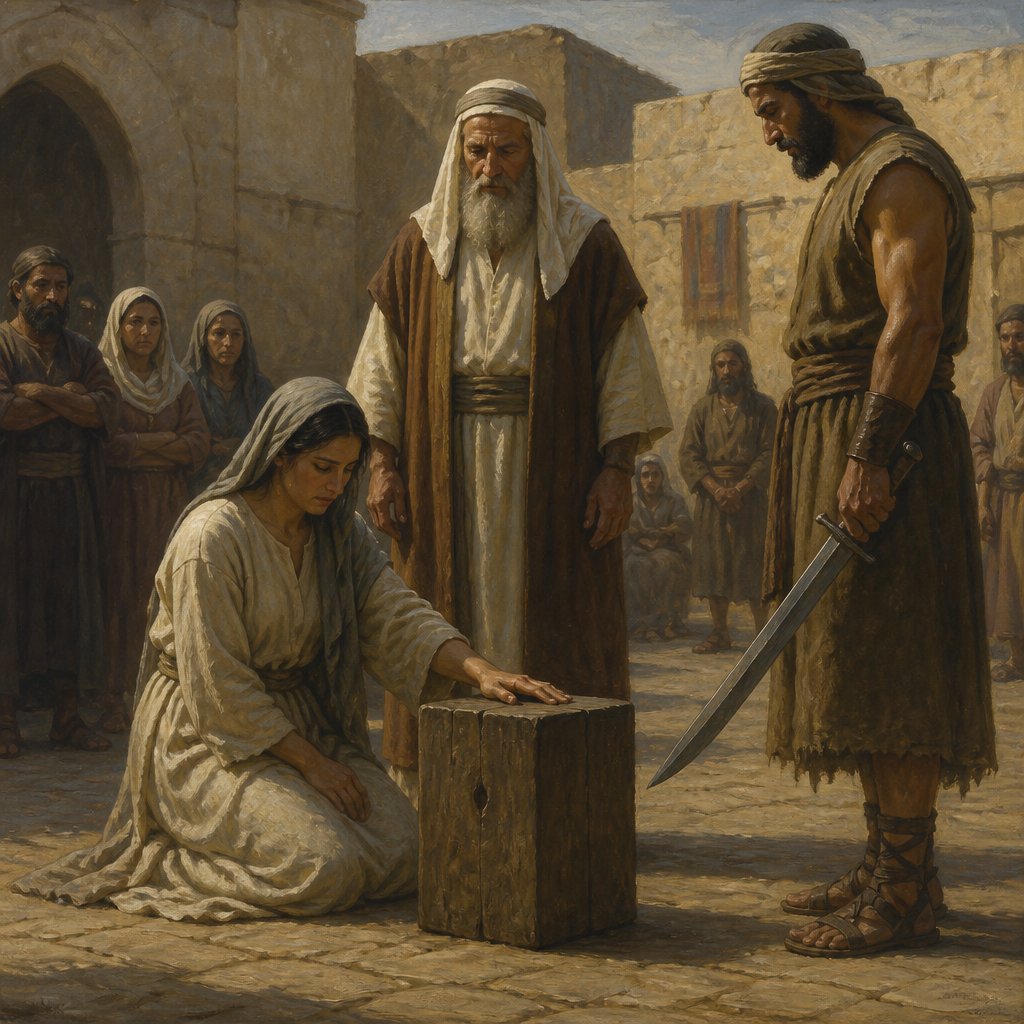
Deuteronomy 25:12 in the King James Version of the Bible reads, “Then thou shalt cut off her hand, thine eye shall not pity her.” This verse is part of the Old Testament book of Deuteronomy, which contains the laws and regulations given by God to the Israelites through Moses. The verse is a part of the broader context of laws regarding fair and just treatment, and it specifically addresses the consequence for a woman who intervenes in a fight between two men by grabbing the genitals of the man with whom her husband is fighting.
This verse, in its historical and cultural context, is a part of a collection of laws given by God to the Israelites as they were preparing to enter the Promised Land. These laws were meant to guide the Israelites in their social, religious, and moral conduct, and to ensure justice and order within their community. The specific law discussed in Deuteronomy 25:12 is a part of a series of laws that deal with various aspects of social justice, including fair treatment of workers, honesty in trade, and proper conduct in personal relationships.
The context of this verse in Deuteronomy 25 is important for understanding its broader significance. The preceding verses (Deuteronomy 25:11-12) discuss a scenario in which two men are fighting, and the wife of one of the men intervenes by seizing the other man’s genitals. In this situation, the law dictates that the woman’s hand be cut off as punishment, with no pity shown towards her.
At first glance, this law may seem harsh and unjust, especially to modern readers. However, it is important to consider the historical and cultural context in which it was given. In ancient Israelite society, such physical altercations and disputes were not uncommon, and the laws given in Deuteronomy were designed to bring order and justice to such situations. The specific act of the woman grabbing the man’s genitals was viewed as a serious offense, and the severe punishment was intended to serve as a deterrent to such behavior.
From a broader thematic perspective, this verse can be viewed as a part of the overall theme of justice and fair treatment within the Mosaic law. Throughout the book of Deuteronomy, God emphasizes the importance of justice, righteousness, and mercy in the treatment of others. This verse, while seemingly extreme, was intended to uphold the principles of justice and discourage inappropriate behavior in a specific and extreme scenario.
Symbolically, this verse can be seen as a representation of the seriousness of personal conduct and the consequences of inappropriate actions. The law regarding the woman’s punishment serves as a reminder of the importance of self-control, respect for others, and the need for fair and just treatment in personal interactions. Additionally, it underscores the severity of disobedience to God’s commands and the need for accountability in all aspects of life.
In conclusion, Deuteronomy 25:12, within its broader context, serves as a reminder of the importance of justice, fairness, and personal responsibility in the Old Testament law. While the specific law may seem extreme to modern readers, its purpose was to maintain order and justice within the ancient Israelite community. Symbolically, it serves as a reminder of the consequences of inappropriate actions and the need for personal accountability. Ultimately, this verse, like all of the Old Testament law, points to the importance of living in accordance with God’s principles of justice, righteousness, and mercy.
Get our apps


Artwork for Deuteronomy 25:12
"Then thou shalt cut off her hand, thine eye shall not pity her." - Deuteronomy 25:12

Deuteronomy 12:25 - "Thou shalt not eat it; that it may go well with thee, and with thy children after thee, when thou shalt do that which is right in the sight of the LORD."

Deuteronomy 25:13 - "¶ Thou shalt not have in thy bag divers weights, a great and a small."

Deuteronomy 25:4 - "¶ Thou shalt not muzzle the ox when he treadeth out the corn."

Deuteronomy 31:25 - "That Moses commanded the Levites, which bare the ark of the covenant of the LORD, saying,"

Deuteronomy 25:14 - "Thou shalt not have in thine house divers measures, a great and a small."

Deuteronomy 33:25 - "Thy shoes shall be iron and brass; and as thy days, so shall thy strength be."

Deuteronomy 25:10 - "And his name shall be called in Israel, The house of him that hath his shoe loosed."

Deuteronomy 25:16 - "For all that do such things, and all that do unrighteously, are an abomination unto the LORD thy God."

Genesis 25:12

John 12:25

Luke 12:25

Luke 12:25

"Thou shalt not eat it; that it may go well with thee, and with thy children after thee, when thou shalt do that which is right in the sight of the LORD." - Deuteronomy 12:25

Deuteronomy 27:25 - "Cursed be he that taketh reward to slay an innocent person. And all the people shall say, Amen."

Luke 12:25-26

Luke 12:25-26

Luke 12:25-26

Luke 12:25-26

Luke 12:25-26

Luke 12:25-26

Luke 12:25-26

Deuteronomy 25:17 - "¶ Remember what Amalek did unto thee by the way, when ye were come forth out of Egypt;"

Deuteronomy 14:12 - "But these are they of which ye shall not eat: the eagle, and the ossifrage, and the ospray,"

Deuteronomy 24:12 - "And if the man be poor, thou shalt not sleep with his pledge:"

Deuteronomy 3:25 - "I pray thee, let me go over, and see the good land that is beyond Jordan, that goodly mountain, and Lebanon."

Deuteronomy 25:1 - "If there be a controversy between men, and they come unto judgment, that the judges may judge them; then they shall justify the righteous, and condemn the wicked."

Deuteronomy 32:25 - "The sword without, and terror within, shall destroy both the young man and the virgin, the suckling also with the man of gray hairs."

Deuteronomy 12:4 - "Ye shall not do so unto the LORD your God."

Deuteronomy 25:8 - "Then the elders of his city shall call him, and speak unto him: and if he stand to it, and say, I like not to take her;"