What does Esther 2:10 mean?
“Esther had not shewed her people nor her kindred: for Mordecai had charged her that she should not shew it.” — Esther 2:10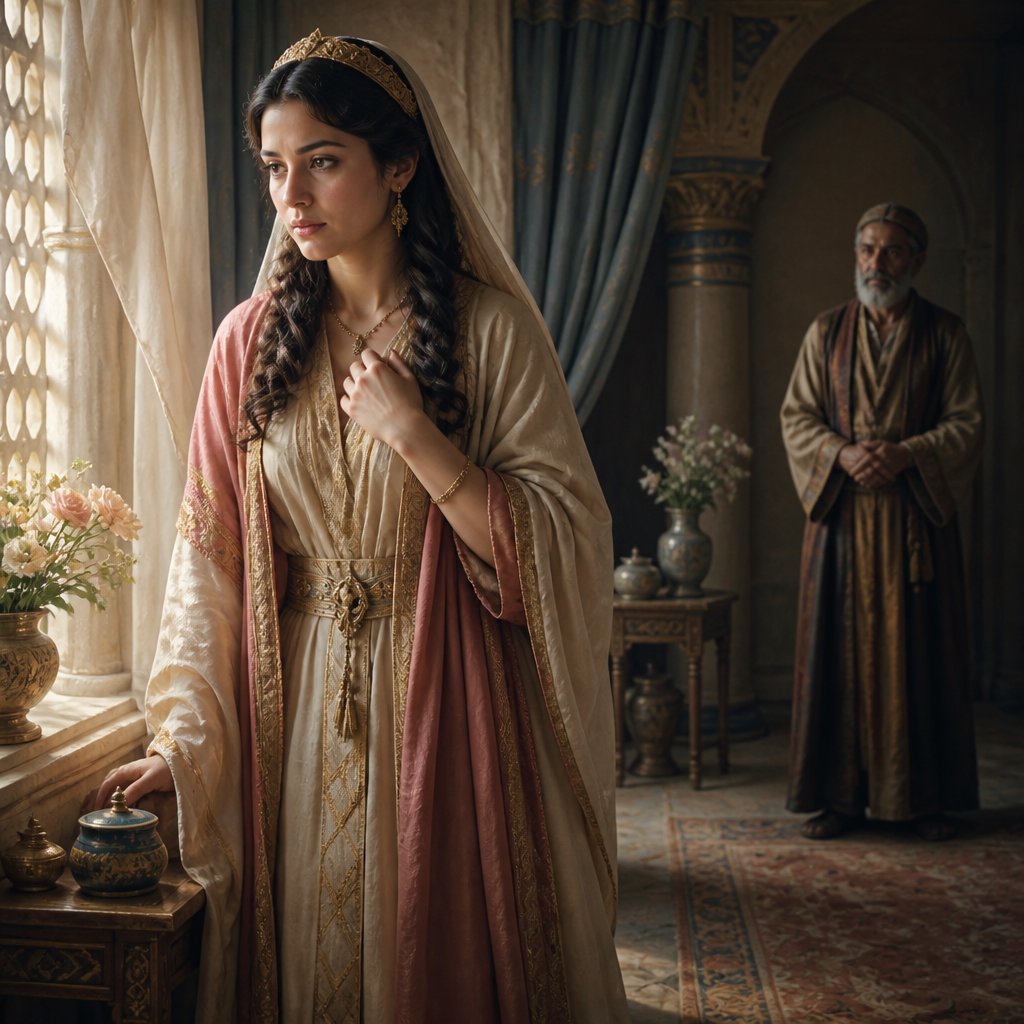
Esther 2:10 in the King James Version reads, "Esther had not showed her people nor her kindred: for Mordecai had charged her that she should not shew it." This verse is part of the biblical story of Esther, which takes place in Persia during the reign of King Ahasuerus. The verse reflects a moment in the story where Esther, a Jewish woman, is chosen to be a part of the king's harem.
The book of Esther is unique in the Bible in that it does not explicitly mention God, yet His presence and sovereignty are evident throughout the narrative. The story of Esther is set against the backdrop of the Jewish people's exile in Persia, and it is a powerful account of God's providence and faithfulness in the midst of difficult circumstances. The themes of courage, obedience, and divine sovereignty are woven throughout the book, and Esther 2:10 is a key moment in the unfolding of these themes.
In this verse, we see Esther obeying the command of Mordecai, who had taken her in after the death of her parents. Mordecai had instructed Esther not to reveal her Jewish heritage, and she follows his guidance. This act of obedience ultimately plays a significant role in the larger narrative of the book, as it positions Esther to be in a position to save her people from destruction.
One of the central themes of Esther 2:10 is obedience. Esther demonstrates her obedience to Mordecai's instructions, even though she is now in the king's palace and could easily have disregarded his advice. This act of obedience reflects Esther's humility and her willingness to submit to authority, which are admirable qualities that are highlighted in the Bible. Additionally, Esther's obedience sets the stage for her to later obey the king's command to intercede for her people, despite the personal risk involved.
The verse also underscores the theme of identity. Esther's decision to conceal her heritage raises questions about the complexities of identity and the challenges of living as a member of a minority group in a dominant culture. This theme is particularly relevant in today's world, as many individuals grapple with questions of identity and belonging.
The context of Esther 2:10 is also significant. The verse occurs within the larger narrative of Esther's rise to the position of queen and sets the stage for the unfolding drama of the plot. By obeying Mordecai's instructions, Esther gains favor with the king and ultimately becomes a key figure in the salvation of her people.
Symbolism also plays a role in Esther 2:10. Esther's decision to conceal her identity foreshadows the tension and conflict that will later arise in the story as her Jewish heritage becomes a central issue. This act of concealment can also be seen as a reflection of the broader theme of hiddenness and revelation, as the true nature of Esther's identity is revealed at a crucial moment in the narrative.
In conclusion, Esther 2:10 is a verse that carries significant thematic and contextual weight within the larger narrative of the book of Esther. It highlights the themes of obedience, identity, and providence, and sets the stage for the unfolding drama of the plot. Through this verse, we see Esther's obedience and the providential hand of God at work, ultimately leading to the preservation of her people. As readers engage with this verse, they are reminded of the timeless truths of God's sovereignty and faithfulness, as well as the importance of obedience and humility in fulfilling our calling.
Get our apps


Artwork for Esther 2:10

Esther 2:10 - "Esther had not shewed her people nor her kindred: for Mordecai had charged her that she should not shew it."
"Esther had not shewed her people nor her kindred: for Mordecai had charged her that she should not shew it." - Esther 2:10

Esther 4:10 - "¶ Again Esther spake unto Hatach, and gave him commandment unto Mordecai;"

Esther 10:2 - "And all the acts of his power and of his might, and the declaration of the greatness of Mordecai, whereunto the king advanced him, are they not written in the book of the chronicles of the kings of Media and Persia?"

Esther 2:22 - "And the thing was known to Mordecai, who told it unto Esther the queen; and Esther certified the king thereof in Mordecai's name."
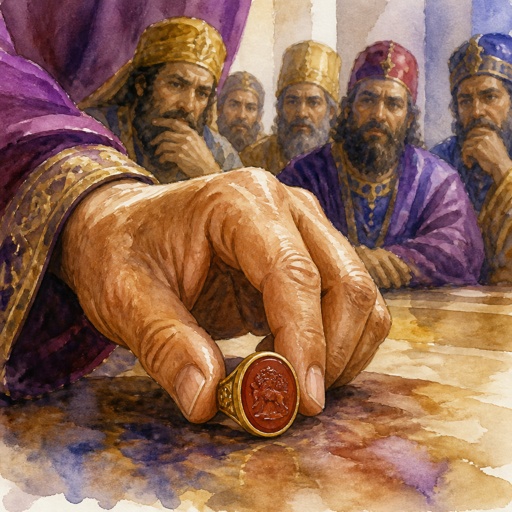
Esther 3:10 focus on ring

Esther 5:2 - "And it was so, when the king saw Esther the queen standing in the court, that she obtained favour in his sight: and the king held out to Esther the golden sceptre that was in his hand. So Esther drew near, and touched the top of the sceptre."
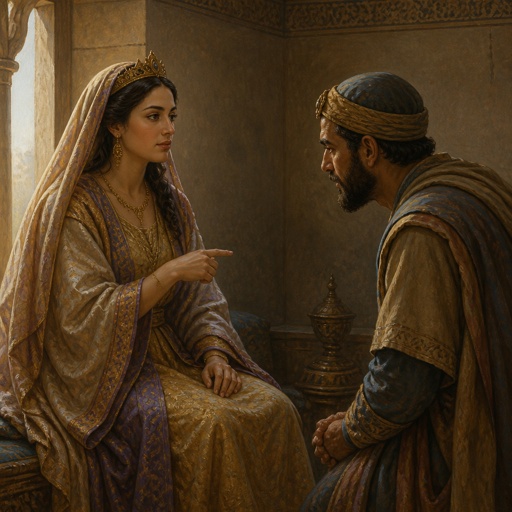
"¶ Again Esther spake unto Hatach, and gave him commandment unto Mordecai;" - Esther 4:10

Esther 7:2 - "And the king said again unto Esther on the second day at the banquet of wine, What is thy petition, queen Esther? and it shall be granted thee: and what is thy request? and it shall be performed, even to the half of the kingdom."

Esther 2:20 - "Esther had not yet shewed her kindred nor her people; as Mordecai had charged her: for Esther did the commandment of Mordecai, like as when she was brought up with him."

Esther 5:2

Esther 10:1 - "And the king Ahasuerus laid a tribute upon the land, and upon the isles of the sea."

Esther 5:2

Esther 5:2

Esther 2:11 - "And Mordecai walked every day before the court of the women's house, to know how Esther did, and what should become of her."

Esther 5:2 - "And it was so, when the king saw Esther the queen standing in the court, that she obtained favour in his sight: and the king held out to Esther the golden sceptre that was in his hand. So Esther drew near, and touched the top of the sceptre."

Esther 9:10 - "The ten sons of Haman the son of Hammedatha, the enemy of the Jews, slew they; but on the spoil laid they not their hand."

"And the thing was known to Mordecai, who told it unto Esther the queen; and Esther certified the king thereof in Mordecai's name." - Esther 2:22

Esther 2:16 - "So Esther was taken unto king Ahasuerus into his house royal in the tenth month, which is the month Tebeth, in the seventh year of his reign."

Esther 7:10 - "So they hanged Haman on the gallows that he had prepared for Mordecai. Then was the king's wrath pacified."

Esther 8:2 - "And the king took off his ring, which he had taken from Haman, and gave it unto Mordecai. And Esther set Mordecai over the house of Haman."
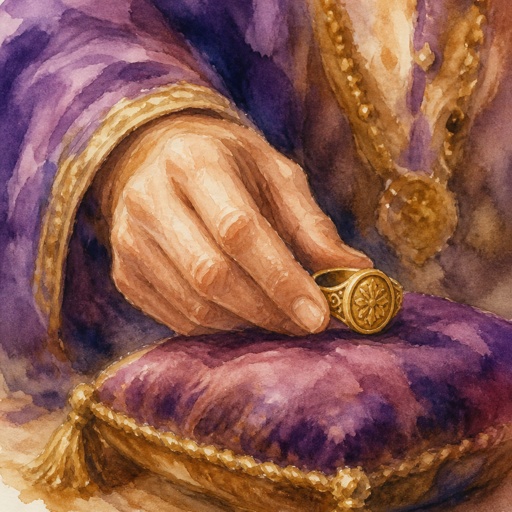
Esther 8:2 focus on the ring

Esther 2:15 - "¶ Now when the turn of Esther, the daughter of Abihail the uncle of Mordecai, who had taken her for his daughter, was come to go in unto the king, she required nothing but what Hegai the king's chamberlain, the keeper of the women, appointed. And Esther obtained favour in the sight of all them that looked upon her."

Esther 2:2 - "Then said the king's servants that ministered unto him, Let there be fair young virgins sought for the king:"

Esther 5:10 - "Nevertheless Haman refrained himself: and when he came home, he sent and called for his friends, and Zeresh his wife."

Esther 3:10 - "And the king took his ring from his hand, and gave it unto Haman the son of Hammedatha the Agagite, the Jews' enemy."

Esther 8:10 - "And he wrote in the king Ahasuerus' name, and sealed it with the king's ring, and sent letters by posts on horseback, and riders on mules, camels, and young dromedaries:"

Esther 2:17 - "And the king loved Esther above all the women, and she obtained grace and favour in his sight more than all the virgins; so that he set the royal crown upon her head, and made her queen instead of Vashti."

Esther 2:7 - "And he brought up Hadassah, that is, Esther, his uncle's daughter: for she had neither father nor mother, and the maid was fair and beautiful; whom Mordecai, when her father and mother were dead, took for his own daughter."
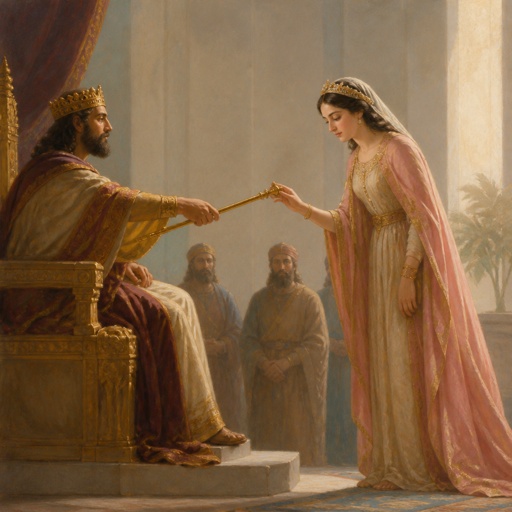
"And it was so, when the king saw Esther the queen standing in the court, that she obtained favour in his sight: and the king held out to Esther the golden sceptre that was in his hand. So Esther drew near, and touched the top of the sceptre." - Esther 5:2