What does Esther 5:2 mean?
“And it was so, when the king saw Esther the queen standing in the court, that she obtained favour in his sight: and the king held out to Esther the golden sceptre that was in his hand. So Esther drew near, and touched the top of the sceptre.” — Esther 5:2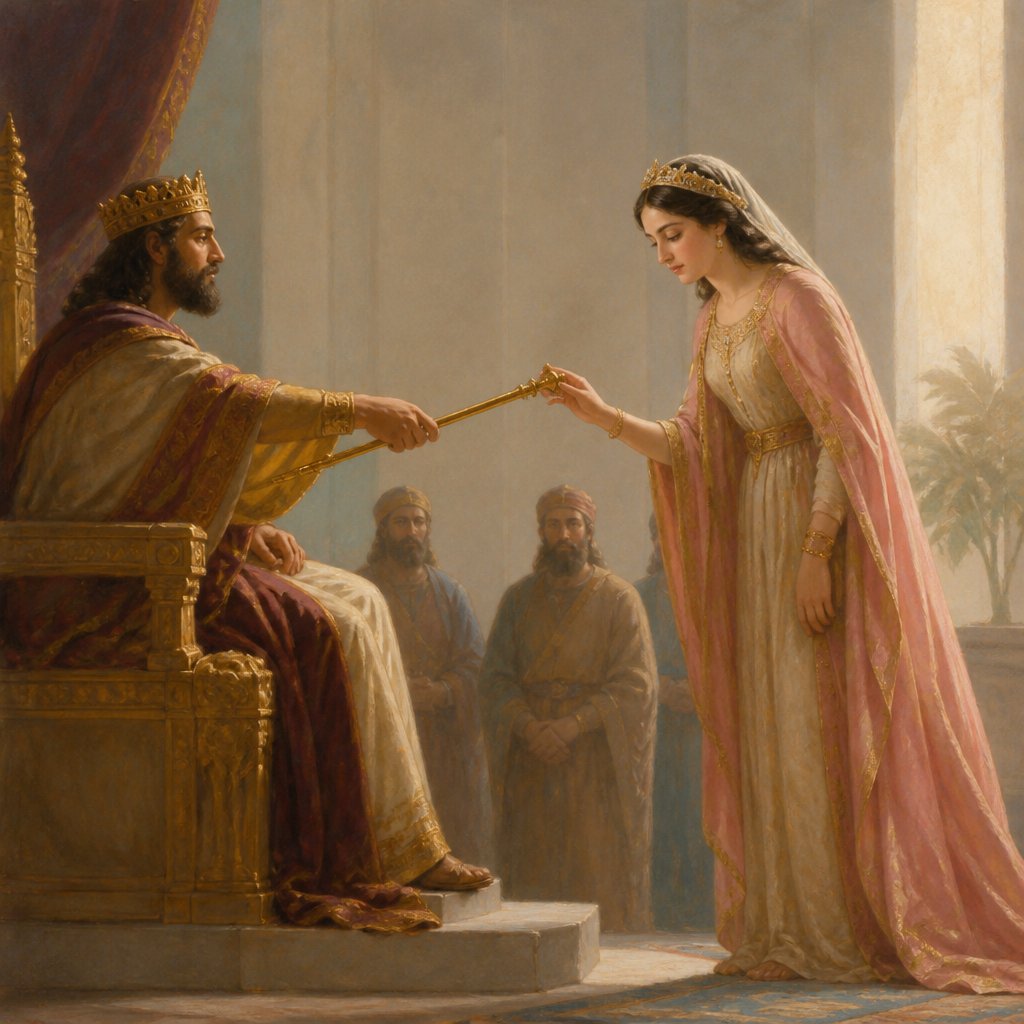
Esther 5:2 (KJV) reads: "And it was so, when the king saw Esther the queen standing in the court, that she obtained favour in his sight: and the king held out to Esther the golden sceptre that was in his hand. So Esther drew near, and touched the top of the sceptre."
The book of Esther is a unique and fascinating book in the Bible. It is one of only two books in the Bible that doesn't mention God by name, yet divine providence is clearly at work in the events described. This verse is a pivotal moment in the story, as it marks the beginning of Esther's courageous and strategic plan to save her people from annihilation.
The context of this verse is crucial to understanding its significance. Esther, a Jewish woman, has become queen of Persia, a position she has been providentially placed in for such a time as this. The Jewish people are facing genocide at the hands of the Persian official Haman, and Esther has decided to risk her life by approaching the king without being summoned—a move that could result in her death. Esther's bravery and selflessness in this moment reveal her character and her devotion to her people.
The theme of favor and providence is central to this verse. When the king sees Esther in the court, she "obtained favour in his sight." This favor is not merely a human response, but a divine intervention that opens the door for Esther to approach the king. This theme runs throughout the entire book of Esther, as it becomes clear that God's hand is guiding and protecting His people, even when He seems silent and unseen.
The symbolism in this verse is rich and layered. The golden sceptre that the king holds out to Esther is a powerful symbol of both his authority and his mercy. In ancient Persia, approaching the king without being summoned was a crime punishable by death, unless the king extended his sceptre—a sign of pardon and acceptance. The fact that the king holds out the sceptre to Esther is a symbol of his willingness to hear her, and it also represents a divine intervention that is working in her favor.
Esther's action of drawing near and touching the top of the sceptre is filled with symbolism as well. It shows her humility and respect for the king's authority, as well as her courage in approaching him. Her physical touch of the sceptre symbolizes her acceptance of the king's pardon and her boldness in taking the next step to present her request.
This verse also speaks to the themes of courage and faith. Esther's decision to approach the king without being summoned requires immense courage, as it could result in her death. However, she trusts in God's providence and knows that she has been placed in her position for a purpose. Her faith in God's sovereignty gives her the strength to take this risk, knowing that she is acting for the greater good of her people.
In conclusion, Esther 5:2 is a verse filled with profound meaning and significance. It captures the pivotal moment in the book of Esther when the queen, through courage, grace, and divine favor, takes the first step towards saving her people. It is a powerful reminder of God's providence, favor, and faithfulness, and it serves as an example of bravery and selflessness for all who read it.
Get our apps


Artwork for Esther 5:2

Esther 5:2

Esther 5:2

Esther 5:2

Esther 5:2 - "And it was so, when the king saw Esther the queen standing in the court, that she obtained favour in his sight: and the king held out to Esther the golden sceptre that was in his hand. So Esther drew near, and touched the top of the sceptre."

Esther 5:2 - "And it was so, when the king saw Esther the queen standing in the court, that she obtained favour in his sight: and the king held out to Esther the golden sceptre that was in his hand. So Esther drew near, and touched the top of the sceptre."
"And it was so, when the king saw Esther the queen standing in the court, that she obtained favour in his sight: and the king held out to Esther the golden sceptre that was in his hand. So Esther drew near, and touched the top of the sceptre." - Esther 5:2

Esther 5:5 - "Then the king said, Cause Haman to make haste, that he may do as Esther hath said. So the king and Haman came to the banquet that Esther had prepared."

Esther 5:7 - "Then answered Esther, and said, My petition and my request is;"

Esther 2:5 - "¶ Now in Shushan the palace there was a certain Jew, whose name was Mordecai, the son of Jair, the son of Shimei, the son of Kish, a Benjamite;"

Esther 2:22 - "And the thing was known to Mordecai, who told it unto Esther the queen; and Esther certified the king thereof in Mordecai's name."

Esther 5:4 - "And Esther answered, If it seem good unto the king, let the king and Haman come this day unto the banquet that I have prepared for him."
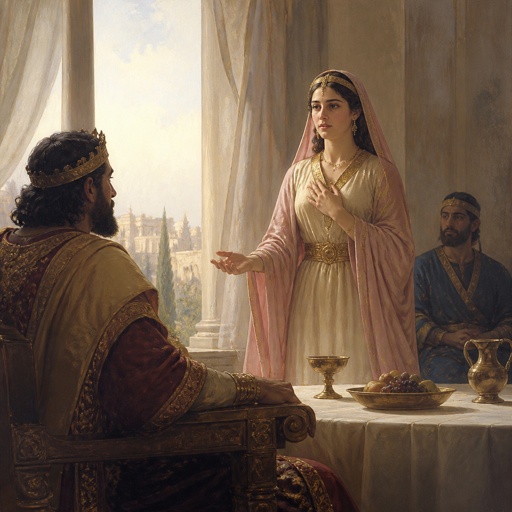
"Then answered Esther, and said, My petition and my request is;" - Esther 5:7

Esther 5:3 - "Then said the king unto her, What wilt thou, queen Esther? and what is thy request? it shall be even given thee to the half of the kingdom."

Esther 7:5 - "¶ Then the king Ahasuerus answered and said unto Esther the queen, Who is he, and where is he, that durst presume in his heart to do so?"
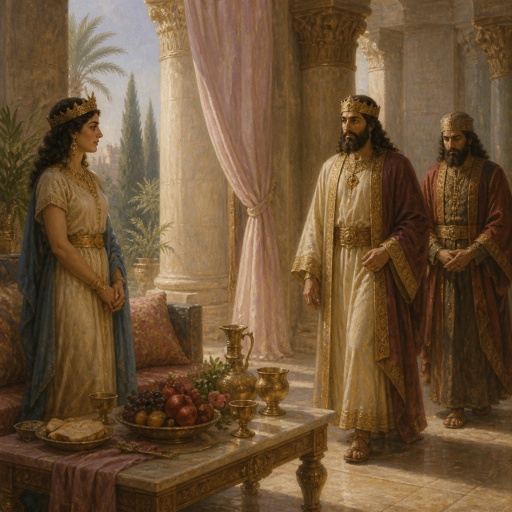
"Then the king said, Cause Haman to make haste, that he may do as Esther hath said. So the king and Haman came to the banquet that Esther had prepared." - Esther 5:5

Esther 4:5 - "Then called Esther for Hatach, one of the king's chamberlains, whom he had appointed to attend upon her, and gave him a commandment to Mordecai, to know what it was, and why it was."

Esther 5:6 - "¶ And the king said unto Esther at the banquet of wine, What is thy petition? and it shall be granted thee: and what is thy request? even to the half of the kingdom it shall be performed."

Esther 7:2 - "And the king said again unto Esther on the second day at the banquet of wine, What is thy petition, queen Esther? and it shall be granted thee: and what is thy request? and it shall be performed, even to the half of the kingdom."

Esther 2:20 - "Esther had not yet shewed her kindred nor her people; as Mordecai had charged her: for Esther did the commandment of Mordecai, like as when she was brought up with him."

Esther 2:11 - "And Mordecai walked every day before the court of the women's house, to know how Esther did, and what should become of her."

Esther 2:10 - "Esther had not shewed her people nor her kindred: for Mordecai had charged her that she should not shew it."

Esther 5:12 - "Haman said moreover, Yea, Esther the queen did let no man come in with the king unto the banquet that she had prepared but myself; and to morrow am I invited unto her also with the king."

"And the thing was known to Mordecai, who told it unto Esther the queen; and Esther certified the king thereof in Mordecai's name." - Esther 2:22

Esther 2:16 - "So Esther was taken unto king Ahasuerus into his house royal in the tenth month, which is the month Tebeth, in the seventh year of his reign."

Esther 8:2 - "And the king took off his ring, which he had taken from Haman, and gave it unto Mordecai. And Esther set Mordecai over the house of Haman."

Esther 3:5 - "And when Haman saw that Mordecai bowed not, nor did him reverence, then was Haman full of wrath."

Esther 5:1 - "Now it came to pass on the third day, that Esther put on her royal apparel, and stood in the inner court of the king's house, over against the king's house: and the king sat upon his royal throne in the royal house, over against the gate of the house."
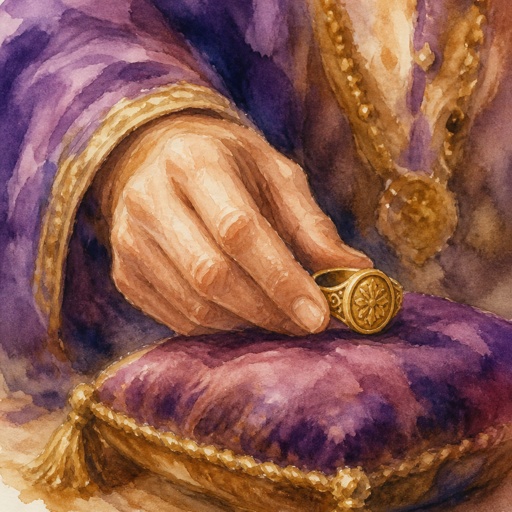
Esther 8:2 focus on the ring

Esther 2:15 - "¶ Now when the turn of Esther, the daughter of Abihail the uncle of Mordecai, who had taken her for his daughter, was come to go in unto the king, she required nothing but what Hegai the king's chamberlain, the keeper of the women, appointed. And Esther obtained favour in the sight of all them that looked upon her."

Esther 6:5 - "And the king's servants said unto him, Behold, Haman standeth in the court. And the king said, Let him come in."