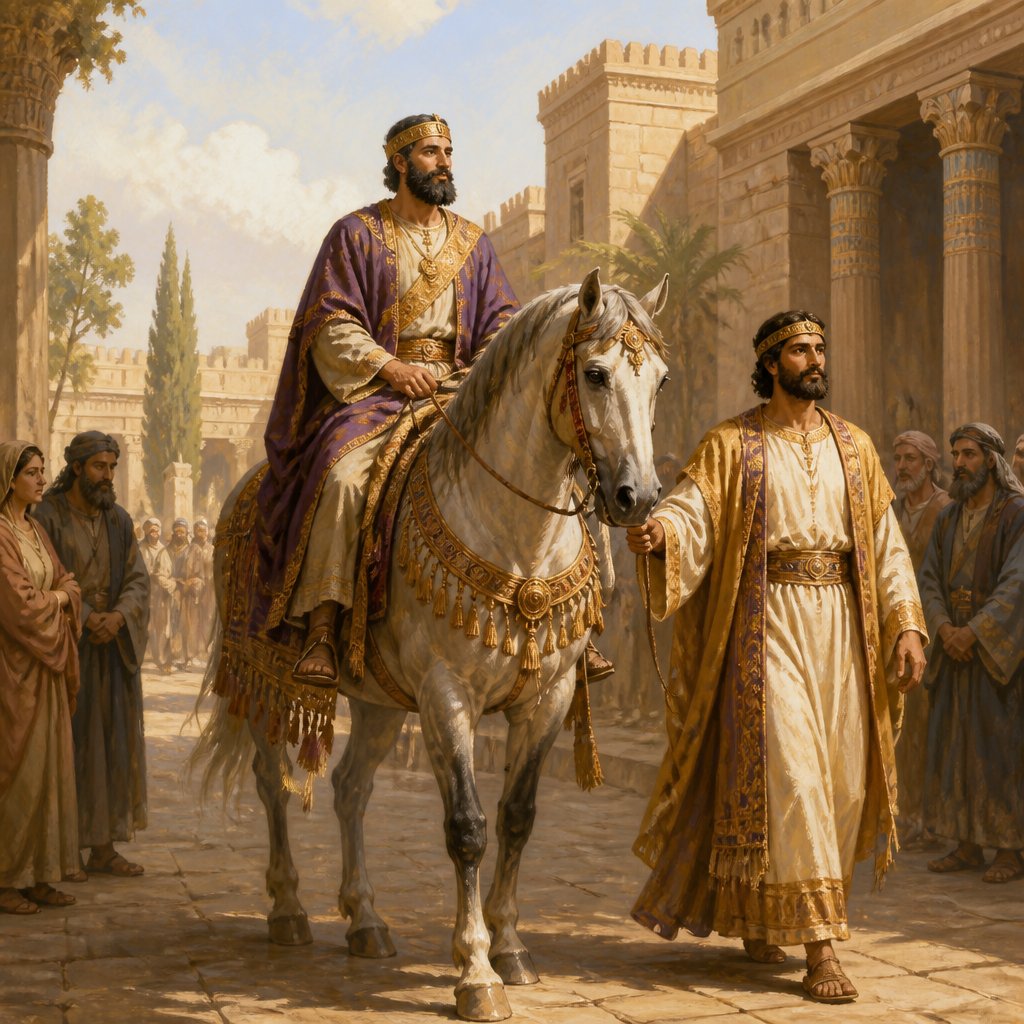
The Bible verse Esther 6:9 from the King James Version (KJV) states: "And let this apparel and horse be delivered to the hand of one of the king's most noble princes, that they may array the man withal whom the king delighteth to honour, and bring him on horseback through the street of the city, and proclaim before him, Thus shall it be done to the man whom the king delighteth to honour."
This verse comes from the Book of Esther in the Old Testament. The book of Esther is a story about a young Jewish woman who becomes the queen of Persia, and how she uses her position to save her people from an evil plot to destroy them. The verse itself is part of a passage in which King Ahasuerus is trying to find a way to honor Mordecai, Esther's cousin, who had recently saved the King's life. The verse depicts an elaborate ceremony in which the King's nobles are instructed to dress Mordecai in royal apparel, put him on the King's horse, and parade him through the streets proclaiming the King's delight in him.
One theme that can be drawn from this verse is the theme of divine providence. Throughout the book of Esther, we see how seemingly ordinary events and decisions lead to extraordinary outcomes. In this particular verse, the fact that Mordecai is being honored by the King is not a random occurrence, but rather a direct result of his previous actions and the careful orchestration of events by God. This theme of divine providence reminds us that God is always at work in the world, even when we may not see it or understand it at the time.
Another theme that can be drawn from this verse is the theme of honor and recognition. The ceremony described in the verse is a public declaration of the King's esteem for Mordecai. It is a way of publicly acknowledging Mordecai's bravery and loyalty, and it is a way of elevating him to a position of honor and respect. This theme reminds us of the importance of recognizing and honoring those who have demonstrated virtue, loyalty, and bravery. It also serves as a caution against the dangers of pride and self-centeredness, as the verse portrays a humble and loyal man being honored by the King.
The context of this verse is important in understanding its significance. The Book of Esther takes place during a time when the Jewish people were living in exile in Persia. They were a minority in a foreign land, and they faced persecution and discrimination. The story of Esther and Mordecai is a story of courage and faith in the face of adversity. The verse itself marks a turning point in the story, as it is the moment when Mordecai, who had previously been overlooked and mistreated, is finally given the honor and recognition he deserves.
In terms of symbolism, the royal apparel and horse mentioned in the verse can be seen as symbols of power, authority, and privilege. They represent the outward trappings of wealth and status, and they serve to elevate Mordecai to a position of honor and respect in the eyes of the people. The parade through the streets can be seen as a symbol of public proclamation and celebration, as the King's delight in Mordecai is declared for all to see.
In conclusion, the Bible verse Esther 6:9 from the KJV is a rich and multi-layered passage that speaks to themes of divine providence, honor and recognition, and the perseverance of faith in the face of adversity. Its context within the larger story of Esther and its symbolism of power and privilege make it a powerful and resonant passage that continues to speak to readers today.
Get our apps


Artwork for Esther 6:9

Esther 6:9 - "And let this apparel and horse be delivered to the hand of one of the king's most noble princes, that they may array the man withal whom the king delighteth to honour, and bring him on horseback through the street of the city, and proclaim before him, Thus shall it be done to the man whom the king delighteth to honour."
"And let this apparel and horse be delivered to the hand of one of the king's most noble princes, that they may array the man withal whom the king delighteth to honour, and bring him on horseback through the street of the city, and proclaim before him, Thus shall it be done to the man whom the king delighteth to honour." - Esther 6:9

Esther 9:6 - "And in Shushan the palace the Jews slew and destroyed five hundred men."

Esther 4:9 - "And Hatach came and told Esther the words of Mordecai."

"And in Shushan the palace the Jews slew and destroyed five hundred men." - Esther 9:6

Esther 9:32 - "And the decree of Esther confirmed these matters of Purim; and it was written in the book."

Esther 9:9 - "And Parmashta, and Arisai, and Aridai, and Vajezatha,"

Esther 7:6 - "And Esther said, The adversary and enemy is this wicked Haman. Then Haman was afraid before the king and the queen."

Esther 9:29 - "Then Esther the queen, the daughter of Abihail, and Mordecai the Jew, wrote with all authority, to confirm this second letter of Purim."

Esther 1:6

"And Hatach came and told Esther the words of Mordecai." - Esther 4:9

Esther 9:8 - "And Poratha, and Adalia, and Aridatha,"

Esther 9:7 - "And Parshandatha, and Dalphon, and Aspatha,"

"And the decree of Esther confirmed these matters of Purim; and it was written in the book." - Esther 9:32

Esther 6:14 - "And while they were yet talking with him, came the king's chamberlains, and hasted to bring Haman unto the banquet that Esther had prepared."
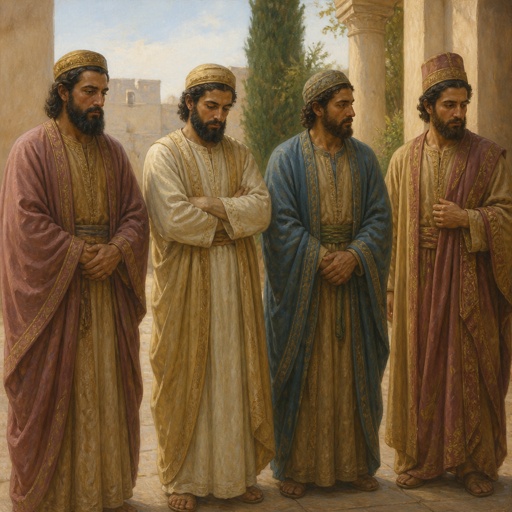
"And Parmashta, and Arisai, and Aridai, and Vajezatha," - Esther 9:9

Esther 9:31 - "To confirm these days of Purim in their times appointed, according as Mordecai the Jew and Esther the queen had enjoined them, and as they had decreed for themselves and for their seed, the matters of the fastings and their cry."

Esther 9:13 - "Then said Esther, If it please the king, let it be granted to the Jews which are in Shushan to do to morrow also according unto this day's decree, and let Haman's ten sons be hanged upon the gallows."

Esther 5:6 - "¶ And the king said unto Esther at the banquet of wine, What is thy petition? and it shall be granted thee: and what is thy request? even to the half of the kingdom it shall be performed."
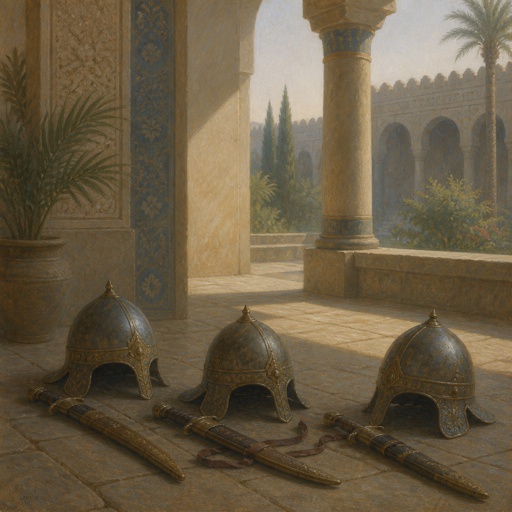
"And Parshandatha, and Dalphon, and Aspatha," - Esther 9:7
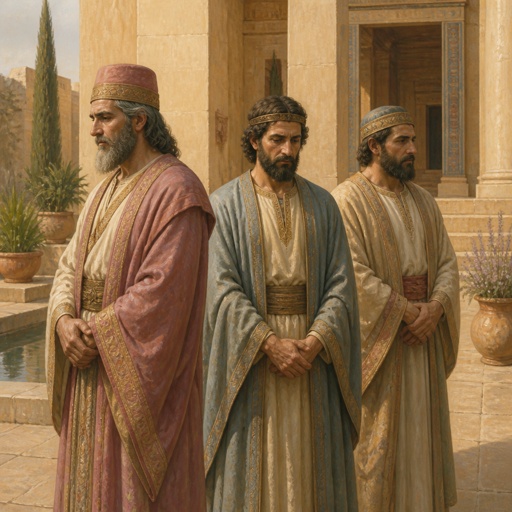
"And Poratha, and Adalia, and Aridatha," - Esther 9:8

Esther 6:7 - "And Haman answered the king, For the man whom the king delighteth to honour,"

"And Esther said, The adversary and enemy is this wicked Haman. Then Haman was afraid before the king and the queen." - Esther 7:6

Esther 9:25 - "But when Esther came before the king, he commanded by letters that his wicked device, which he devised against the Jews, should return upon his own head, and that he and his sons should be hanged on the gallows."

Esther 9:10 - "The ten sons of Haman the son of Hammedatha, the enemy of the Jews, slew they; but on the spoil laid they not their hand."

Esther 9:11 - "On that day the number of those that were slain in Shushan the palace was brought before the king."

Esther 9:23 - "And the Jews undertook to do as they had begun, and as Mordecai had written unto them;"
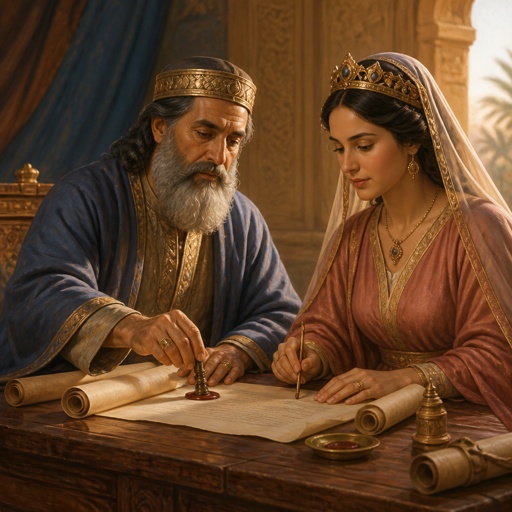
"Then Esther the queen, the daughter of Abihail, and Mordecai the Jew, wrote with all authority, to confirm this second letter of Purim." - Esther 9:29

Esther 9:17 - "On the thirteenth day of the month Adar; and on the fourteenth day of the same rested they, and made it a day of feasting and gladness."

Esther 1:9 - "Also Vashti the queen made a feast for the women in the royal house which belonged to king Ahasuerus."