What does Ezra 10:24 mean?
“Of the singers also; Eliashib: and of the porters; Shallum, and Telem, and Uri.” — Ezra 10:24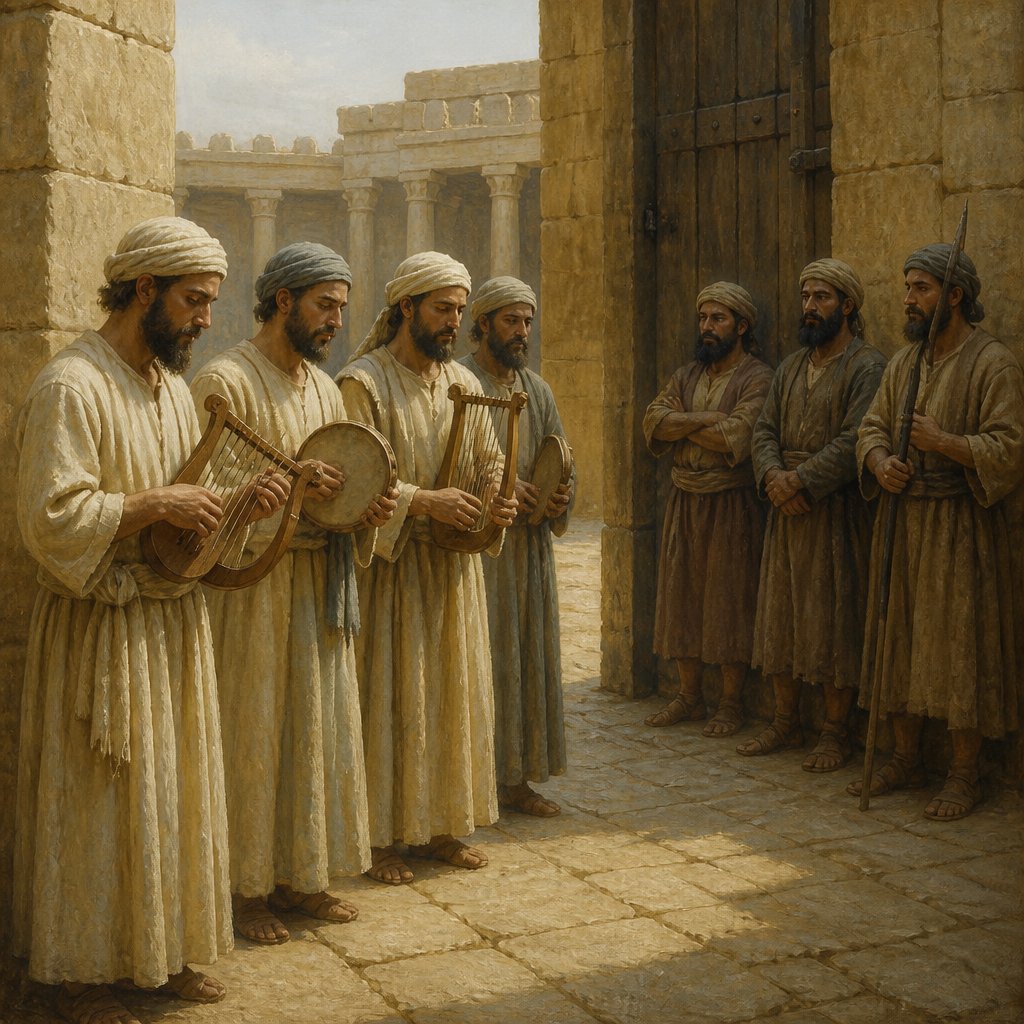
Ezra 10:24 in the King James Version of the Bible reads: "Of the singers also; Eliashib: and of the porters; Shallum, and Telem, and Uri."
This verse comes from the book of Ezra in the Old Testament, which is a historical narrative of the Israelites' return from exile in Babylon and the rebuilding of the temple in Jerusalem. The book of Ezra is focused on the theme of restoration and reconciliation, as it details the Israelites' efforts to rebuild their community and faith after years of captivity.
In this specific verse, Ezra is recording the names of those who had taken foreign wives and were in violation of God's law. The verse lists "the singers" Eliashib, and "the porters" Shallum, Telem, and Uri as among those who had committed this offense. This is part of a larger narrative in Ezra where the people are called to repentance and to separate themselves from foreign influences in order to remain in covenant with God.
The theme of separation and purification is central to the book of Ezra, as the Israelites strive to reestablish their identity as the people of God. This verse in particular highlights the accountability of various members of the community, including those in positions of leadership and service in the temple. The inclusion of the singers and porters in this list emphasizes that no one is exempt from the call to repentance and separation from foreign influences.
The context of this verse is also important to consider. At this point in the book of Ezra, the returned exiles have just been confronted with their sin of marrying foreign women, and they are beginning the process of confessing and repenting of this sin. The list of names in Ezra 10:24 serves as a record of those who had transgressed and were now taking steps to make things right with God.
Symbolically, this verse serves as a reminder that everyone, regardless of their role or status within the community, is accountable to God's law. The inclusion of the singers and porters suggests that even those who lead in worship and those who serve in the temple are not exempt from the consequences of disobedience. This reinforces the idea that holiness and purity are required for all members of the community, not just a select few.
Overall, Ezra 10:24 serves as a sobering reminder of the ongoing need for repentance and renewal within the community of faith. It highlights the importance of accountability and the call to separate from influences that are contrary to God's law. In the larger context of the book of Ezra, this verse contributes to the theme of restoration and reconciliation, as the Israelites seek to rebuild their relationship with God and reestablish their identity as His chosen people.
Get our apps


Artwork for Ezra 10:24

Ezra 10:24 - "Of the singers also; Eliashib: and of the porters; Shallum, and Telem, and Uri."
"Of the singers also; Eliashib: and of the porters; Shallum, and Telem, and Uri." - Ezra 10:24

Ezra 10:10-12

Ezra 2:24 - "The children of Azmaveth, forty and two."

Ezra 10:10 - "And Ezra the priest stood up, and said unto them, Ye have transgressed, and have taken strange wives, to increase the trespass of Israel."

Ezra 10:3

Ezra 3:10

Ezra 10:3

Ezra 10:5 - "Then arose Ezra, and made the chief priests, the Levites, and all Israel, to swear that they should do according to this word. And they sware."

Ezra 7:10 - "For Ezra had prepared his heart to seek the law of the LORD, and to do it, and to teach in Israel statutes and judgments."

Ezra 10:38 - "And Bani, and Binnui, Shimei,"

Ezra 10:37 - "Mattaniah, Mattenai, and Jaasau,"

Ezra 10:40 - "Machnadebai, Shashai, Sharai,"

Ezra 10:32 - "Benjamin, Malluch, and Shemariah."

Ezra 10:36 - "Vaniah, Meremoth, Eliashib,"

Ezra 10:35 - "Benaiah, Bedeiah, Chelluh,"

Ezra 10:42 - "Shallum, Amariah, and Joseph."

Ezra 10:41 - "Azareel, and Shelemiah, Shemariah,"

Ezra 10:39 - "And Shelemiah, and Nathan, and Adaiah,"
"The children of Azmaveth, forty and two." - Ezra 2:24

Ezra 10:20 - "And of the sons of Immer; Hanani, and Zebadiah."

Ezra 8:24 - "¶ Then I separated twelve of the chief of the priests, Sherebiah, Hashabiah, and ten of their brethren with them,"

Ezra 10:34 - "Of the sons of Bani; Maadai, Amram, and Uel,"

Ezra 2:10 - "The children of Bani, six hundred forty and two."

Ezra 10:21 - "And of the sons of Harim; Maaseiah, and Elijah, and Shemaiah, and Jehiel, and Uzziah."

Ezra 10:28 - "Of the sons also of Bebai; Jehohanan, Hananiah, Zabbai, and Athlai."

Ezra 10:31 - "And of the sons of Harim; Eliezer, Ishijah, Malchiah, Shemaiah, Shimeon,"

"Azareel, and Shelemiah, Shemariah," - Ezra 10:41

"And Bani, and Binnui, Shimei," - Ezra 10:38

"And Shelemiah, and Nathan, and Adaiah," - Ezra 10:39