What does Genesis 34:17 mean?
“But if ye will not hearken unto us, to be circumcised; then will we take our daughter, and we will be gone.” — Genesis 34:17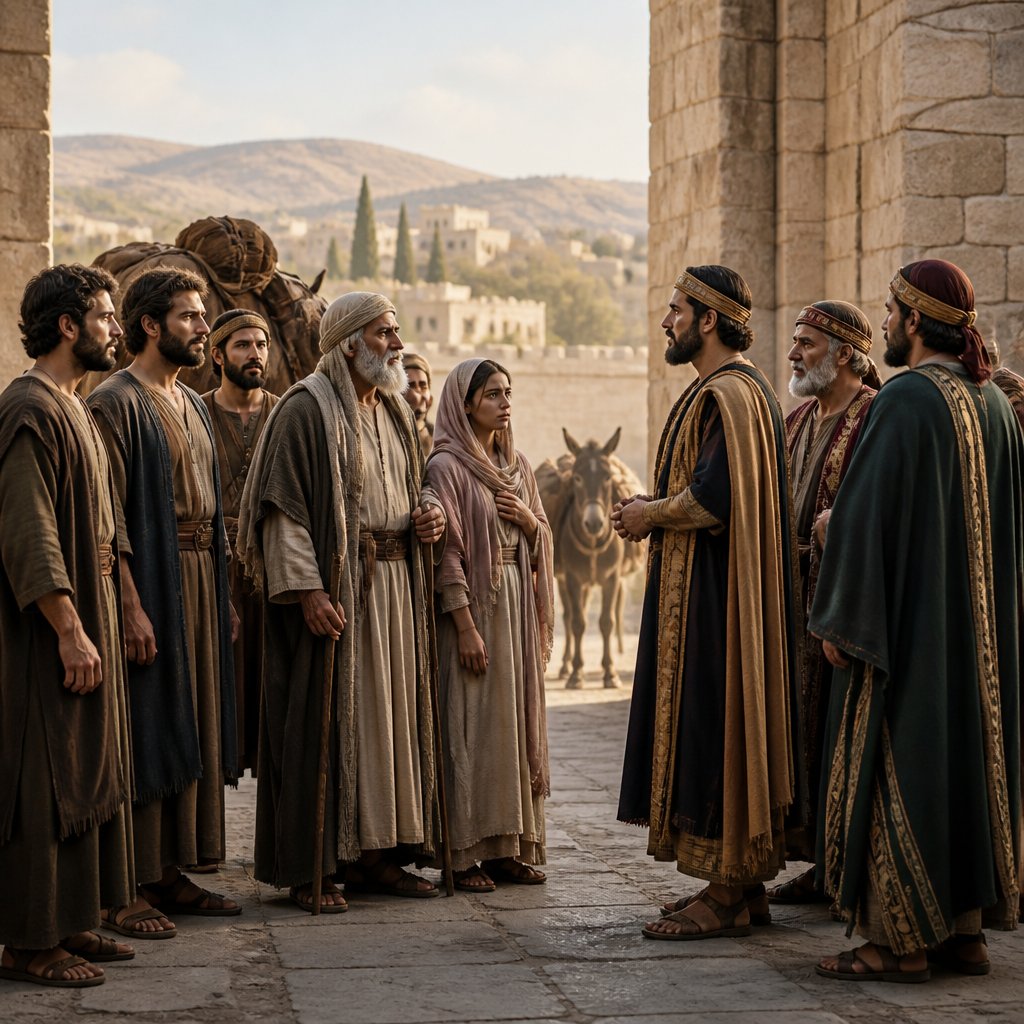
In Genesis 34:17 in the King James Version (KJV), we read the following words: "But if ye will not hearken unto us, to be circumcised; then will we take our daughter, and we will be gone." This verse comes from the story of Dinah in the book of Genesis, and it is a crucial moment in the narrative that reveals many deep themes and symbolism.
The context of this verse is that Dinah, the daughter of Jacob, goes out to see the daughters of the land, and she is seen by Shechem, the son of Hamor the Hivite, who takes her and lies with her. This act causes great anger and distress among Dinah's brothers, who feel that their sister has been humiliated and defiled. They are deeply grieved by this, and seek to take action to avenge their sister's honor.
The theme of honor and revenge is central to this verse and the surrounding narrative. In the ancient culture in which this story is set, honor was of utmost importance, and any act of defilement or disrespect towards a family member was taken very seriously. This theme of honor and justice is deeply rooted in ancient Near Eastern cultures, and it is seen throughout the Bible as a whole.
Another important theme in this verse is the concept of identity and belonging. The demand for the men of the city to be circumcised in order to allow Dinah's brothers to give her to Shechem in marriage reflects the idea of belonging to a particular community and adhering to its customs. Circumcision was a significant sign of belonging in the ancient Near East, and the demand for the men to undergo this procedure in order to marry into Jacob's family reflects the importance of identity and belonging in the biblical world.
Furthermore, the symbolism in this verse is rich and multifaceted. Circumcision, as mentioned earlier, was a significant symbol in ancient Near Eastern cultures, representing belonging, identity, and obedience to the divine will. In the context of the Bible as a whole, circumcision also carries deeply symbolic significance as a sign of the covenant between God and his people. In this verse, the demand for circumcision can be seen as a way for Jacob's family to assert their own identity and to set themselves apart from the people of the land.
Additionally, the act of taking Dinah and leaving, if their conditions are not met, reflects the importance of family and kinship in the biblical narrative. Family is a central theme throughout the Bible, and the protection of family honor and the seeking of justice for family members are recurring motifs in biblical stories.
In conclusion, Genesis 34:17 is a verse filled with deep themes and rich symbolism. It reflects the importance of honor, justice, belonging, and family in the ancient world, and it also carries deeper symbolic meaning in the context of the biblical narrative as a whole. This verse is a crucial moment in the story of Dinah, and it reveals much about the values and beliefs of the biblical world.
Get our apps


Artwork for Genesis 34:17

Genesis 34:17 - "But if ye will not hearken unto us, to be circumcised; then will we take our daughter, and we will be gone."
"But if ye will not hearken unto us, to be circumcised; then will we take our daughter, and we will be gone." - Genesis 34:17

Genesis 21-34

Genesis 19-34

Genesis 24-34

1 Samuel 17:34-35

Exodus 34:17 - "Thou shalt make thee no molten gods."

Genesis 21:34 - "And Abraham sojourned in the Philistines' land many days."

Genesis 24:34 - "And he said, I am Abraham's servant."

Genesis 34:18 - "And their words pleased Hamor, and Shechem Hamor's son."

Genesis 17-17

Genesis 34:31 - "And they said, Should he deal with our sister as with an harlot?"

Genesis 36:34 - "And Jobab died, and Husham of the land of Temani reigned in his stead."

Genesis 34:28 - "They took their sheep, and their oxen, and their asses, and that which was in the city, and that which was in the field,"

Psalms 34:17 - "The righteous cry, and the LORD heareth, and delivereth them out of all their troubles."

Genesis 30:34 - "And Laban said, Behold, I would it might be according to thy word."

Genesis 34:6 - "¶ And Hamor the father of Shechem went out unto Jacob to commune with him."

Genesis 34:15 - "But in this will we consent unto you: If ye will be as we be, that every male of you be circumcised;"

Genesis 34:27 - "The sons of Jacob came upon the slain, and spoiled the city, because they had defiled their sister."

Genesis 34:4 - "And Shechem spake unto his father Hamor, saying, Get me this damsel to wife."

Job 34:17 - "Shall even he that hateth right govern? and wilt thou condemn him that is most just?"

Genesis 34:29 - "And all their wealth, and all their little ones, and their wives took they captive, and spoiled even all that was in the house."

Genesis 34:20 - "¶ And Hamor and Shechem his son came unto the gate of their city, and communed with the men of their city, saying,"

Genesis 17-15

Genesis 17-23

Genesis 18-17

Genesis 17-27

Genesis 17-21

Genesis 17:2

Genesis 17:6