What does Genesis 41:36 mean?
“And that food shall be for store to the land against the seven years of famine, which shall be in the land of Egypt; that the land perish not through the famine.” — Genesis 41:36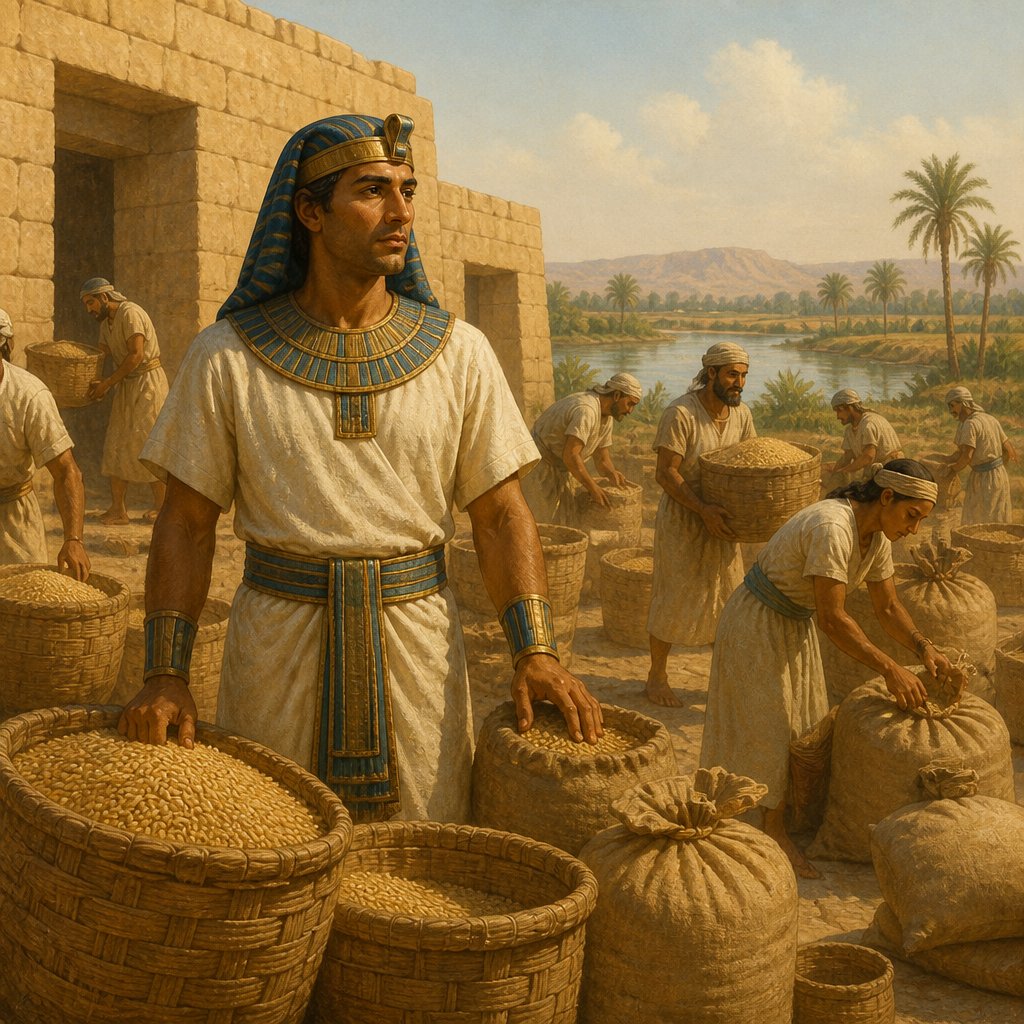
Genesis 41:36 in the King James Version (KJV) of the Bible states, "And that food shall be for store to the land against the seven years of famine, which shall be in the land of Egypt; that the land perish not through the famine." This verse is part of the account of Joseph interpreting Pharaoh's dream, which ultimately leads to Joseph being put in charge of Egypt's food supply during a time of famine.
To fully understand the meaning and commentary of this verse, it is important to provide some context. In the preceding verses, Pharaoh has had two troubling dreams and has called upon his wise men and magicians to interpret them, but they are unable to do so. It is then that the chief butler remembers Joseph, who had accurately interpreted dreams while in prison. Joseph is brought before Pharaoh, who recounts his dreams to Joseph.
Joseph interprets Pharaoh's dreams as being a warning from God of an impending seven-year famine, following seven years of abundance. Joseph advised Pharaoh to appoint a wise and discerning man to oversee the collection and storage of a portion of the abundance during the seven years of plenty, to be distributed during the seven years of famine. Impressed by Joseph's wisdom, Pharaoh appoints him as the overseer of this important task.
In the context of the verse itself, it serves as a declaration of the plan that Joseph has proposed to Pharaoh. The food that is collected during the years of abundance will be stored in preparation for the impending famine. This verse underscores the significance of the plan to ensure that the land of Egypt does not perish or suffer from the famine. It highlights the importance of prudent and strategic planning in times of plenty to prepare for times of scarcity.
The verse also alludes to the theme of providence and foresight. The interpretation of Pharaoh's dream and Joseph's subsequent plan to store food underline the theme of God's foresight and provision. In his interpretation, Joseph attributes the dreams to God and asserts that it is God who has revealed the future events to Pharaoh. This underscores the belief in God's sovereignty and his ability to provide wisdom and guidance in times of uncertainty.
Moreover, the verse reflects the theme of stewardship and responsibility. Joseph's plan to store food and manage the resources of Egypt during the time of plenty demonstrates a sense of stewardship and responsibility towards the land and its people. It underscores the importance of wise and responsible management of resources, especially in the face of future uncertainty.
Symbolically, the food stored during the years of plenty can be seen as a representation of God's provision and sustenance. It symbolizes the tangible means through which God provides for His people during times of need. Furthermore, Joseph's role as the overseer of this plan can be seen as a symbol of leadership, wisdom, and foresight. His appointment to this position of authority highlights the theme of God's chosen instruments and their role in fulfilling His plans and purposes.
In conclusion, Genesis 41:36 in the King James Version of the Bible conveys a profound message about the importance of foresight, responsibility, and stewardship in times of abundance to prepare for times of scarcity. It underscores the theme of God's providence and the symbolism of food as a representation of His provision. This verse serves as a reminder of the role of wisdom and godly leadership in preparing for the challenges and uncertainties of the future.
Get our apps


Artwork for Genesis 41:36

Genesis 41:36 - "And that food shall be for store to the land against the seven years of famine, which shall be in the land of Egypt; that the land perish not through the famine."
"And that food shall be for store to the land against the seven years of famine, which shall be in the land of Egypt; that the land perish not through the famine." - Genesis 41:36

Genesis 36:41 - "Duke Aholibamah, duke Elah, duke Pinon,"
"Duke Aholibamah, duke Elah, duke Pinon," - Genesis 36:41

Genesis 41:41 and make pharaoh black

Genesis 24-41

Genesis 41:41-42 focus on signet ring

Genesis 36:36 - "And Hadad died, and Samlah of Masrekah reigned in his stead."

Genesis 41:41 - "And Pharaoh said unto Joseph, See, I have set thee over all the land of Egypt."

Genesis 24:36

Genesis 19-36

Genesis 41:47 - "And in the seven plenteous years the earth brought forth by handfuls."

Genesis 36:28 - "The children of Dishan are these; Uz, and Aran."

"And Hadad died, and Samlah of Masrekah reigned in his stead." - Genesis 36:36

Genesis 36:27 - "The children of Ezer are these; Bilhan, and Zaavan, and Akan."

Genesis 36:3 - "And Bashemath Ishmael's daughter, sister of Nebajoth."

Genesis 36:19 - "These are the sons of Esau, who is Edom, and these are their dukes."

Genesis 36:1 - "Now these are the generations of Esau, who is Edom."

Genesis 41:53 - "¶ And the seven years of plenteousness, that was in the land of Egypt, were ended."

Genesis 36:26 - "And these are the children of Dishon; Hemdan, and Eshban, and Ithran, and Cheran."

Genesis 36:42 - "Duke Kenaz, duke Teman, duke Mibzar,"

Genesis 36:9 - "¶ And these are the generations of Esau the father of the Edomites in mount Seir:"

Genesis 41:37 - "¶ And the thing was good in the eyes of Pharaoh, and in the eyes of all his servants."

Genesis 41:31 - "And the plenty shall not be known in the land by reason of that famine following; for it shall be very grievous."

Genesis 41:29 - "Behold, there come seven years of great plenty throughout all the land of Egypt:"

Genesis 36:8 - "Thus dwelt Esau in mount Seir: Esau is Edom."

Genesis 19:36 - "Thus were both the daughters of Lot with child by their father."

Genesis 36:25 - "And the children of Anah were these; Dishon, and Aholibamah the daughter of Anah."

Genesis 36:4 - "And Adah bare to Esau Eliphaz; and Bashemath bare Reuel;"

Genesis 41:6 - "And, behold, seven thin ears and blasted with the east wind sprung up after them."