What does Isaiah 40:8 mean?
“The grass withereth, the flower fadeth: but the word of our God shall stand for ever.” — Isaiah 40:8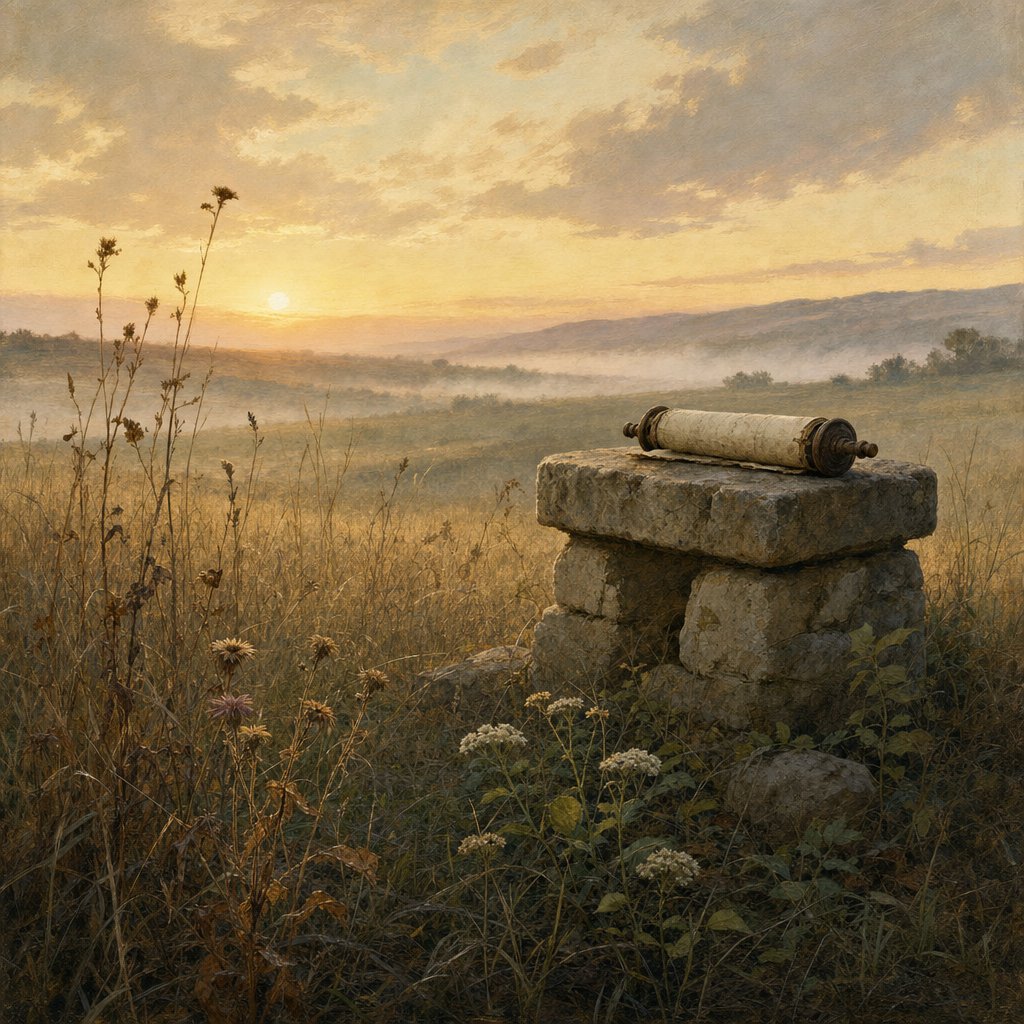
Isaiah 40:8 in the King James Version reads, “The grass withereth, the flower fadeth: but the word of our God shall stand for ever.” The verse sets a deliberate contrast between what is naturally impressive yet fragile and what is divinely spoken and therefore unbreakable. Its meaning rests on that contrast. Human life, human strength, human beauty, and human achievements are like “grass” and “the flower”: real, visible, and for a time pleasant, yet exposed to inevitable decline. By placing “grass” and “flower” alongside “the word of our God,” the verse teaches that everything in the created and human sphere is subject to change, decay, and disappearance, while God’s word is not subject to those limits. What God says does not erode with time, does not lose force through circumstance, and does not fail through weakness. It “shall stand for ever,” meaning it remains firm, effective, and true when everything else proves temporary.
The immediate context of Isaiah 40 frames this as comfort and reassurance to a people who have reason to feel shaken. Isaiah 40 opens with, “Comfort ye, comfort ye my people, saith your God.” The chapter speaks to the reality that nations rise and fall and that human power can feel overwhelming, yet it insists that God’s purposes are steadier than empires. Within that setting, Isaiah 40:8 functions like an anchor. If the people’s present condition is unstable, and if human promises are unreliable, then the question becomes what can actually be trusted. The answer is not found in changing circumstances but in what God has spoken. In this chapter the “word” is not presented as a vague religious sentiment; it is the sure declaration of God that brings comfort, announces good tidings, and guarantees that what God intends will not be overturned by time, opposition, or weakness in man.
The imagery is symbolic and carefully chosen. “Grass” and “the flower” represent what is common and what is admired. Grass covers the ground in abundance, and flowers capture attention with their color and form; together they suggest both the ordinary span of life and its moments of splendor. Yet both are short-lived. The withering and fading are not accidents but the normal course of nature. The verse uses that natural process as a picture of the human condition: vigor diminishes, beauty passes, and even the most celebrated things cannot hold their place. In contrast, “the word of our God” is not described as merely lasting longer; it is described as standing, as if it were a structure that cannot be toppled. The verb “stand” suggests stability, permanence, and the ability to endure scrutiny and pressure. It conveys that God’s word is not only enduring in memory but enduring in authority and accomplishment.
Within the broader themes of Isaiah 40, this permanence is connected to God’s identity as Creator and Sovereign. The chapter speaks of God’s greatness over the nations, the smallness of man before Him, and His power to give strength to the faint. Against that backdrop, Isaiah 40:8 highlights that human beings are not meant to build ultimate hope on themselves or on the world’s systems. Human plans, reputations, and assurances wither like grass; God’s declarations do not. The verse therefore carries both humility and comfort: humility, because it levels human pride by reminding us that our best is transient; comfort, because it directs faith toward what cannot fade.
The significance of the verse also lies in how it frames revelation. “The word of our God” implies a personal covenant relationship: He is not merely “God” in the abstract but “our God,” the One who binds Himself to His people and speaks to them. The permanence of that word means that God’s promises are not seasonal. What He has said remains the reliable foundation for faith, obedience, and hope across generations. It also means that God’s judgments and standards are not negotiable with time; they do not dissolve as cultures shift. The verse thus calls the reader to weigh life’s passing realities against the enduring reality of God’s speech and to treat that speech as the final measure of what is true.
Taken together, Isaiah 40:8 is a compact statement about transience and permanence, weakness and certainty, man and God. It teaches that the visible world, including the finest parts of human life, is marked by fading, but that God has spoken in a way that cannot be undone. In the flow of Isaiah 40’s message of comfort, it means that when everything else changes, the surest ground is what God has said, because “the word of our God shall stand for ever.”
Get our apps


Artwork for Isaiah 40:8

Isaiah 40:8 - "The grass withereth, the flower fadeth: but the word of our God shall stand for ever."

"The grass withereth, the flower fadeth: but the word of our God shall stand for ever." - Isaiah 40:8
"The grass withereth, the flower fadeth: but the word of our God shall stand for ever." - Isaiah 40:8

"The grass withereth, the flower fadeth: but the word of our God shall stand for ever." - Isaiah 40:8

"The grass withereth, the flower fadeth: but the word of our God shall stand for ever." - Isaiah 40:8

"The grass withereth, the flower fadeth: but the word of our God shall stand for ever." - Isaiah 40:8

Isaiah 40:26

Isaiah 40:10

Isaiah 40:4

isaiah 40:26

Isaiah 40:10

Isaiah 40:10

Isaiah 40: 22

Isaiah 40: 22

Isaiah 40:23 - "That bringeth the princes to nothing; he maketh the judges of the earth as vanity."

Isaiah 40:16 - "And Lebanon is not sufficient to burn, nor the beasts thereof sufficient for a burnt offering."

Isaiah 40:1 - "Comfort ye, comfort ye my people, saith your God."

Isaiah 40:29 - "He giveth power to the faint; and to them that have no might he increaseth strength."

Isaiah 40:25 - "To whom then will ye liken me, or shall I be equal? saith the Holy One."

Isaiah 40:30 - "Even the youths shall faint and be weary, and the young men shall utterly fall:"

Isaiah 40:18 - "¶ To whom then will ye liken God? or what likeness will ye compare unto him?"

Isaiah 40:17 - "All nations before him are as nothing; and they are counted to him less than nothing, and vanity."

Isaiah 40:19 - "The workman melteth a graven image, and the goldsmith spreadeth it over with gold, and casteth silver chains."

Isaiah 40:7 - "The grass withereth, the flower fadeth: because the spirit of the LORD bloweth upon it: surely the people is grass."

Isaiah 40:5 - "And the glory of the LORD shall be revealed, and all flesh shall see it together: for the mouth of the LORD hath spoken it."

Ezekiel 40:8 - "He measured also the porch of the gate within, one reed."

Isaiah 40:3 - "¶ The voice of him that crieth in the wilderness, Prepare ye the way of the LORD, make straight in the desert a highway for our God."

Isaiah 40:15 - "Behold, the nations are as a drop of a bucket, and are counted as the small dust of the balance: behold, he taketh up the isles as a very little thing."

Isaiah 40:13 - "Who hath directed the Spirit of the LORD, or being his counsellor hath taught him?" respectful, symbolic bible verse art

Isaiah 40:22 - "It is he that sitteth upon the circle of the earth, and the inhabitants thereof are as grasshoppers; that stretcheth out the heavens as a curtain, and spreadeth them out as a tent to dwell in:"