What does John 10:32 mean?
“Jesus answered them, Many good works have I shewed you from my Father; for which of those works do ye stone me?” — John 10:32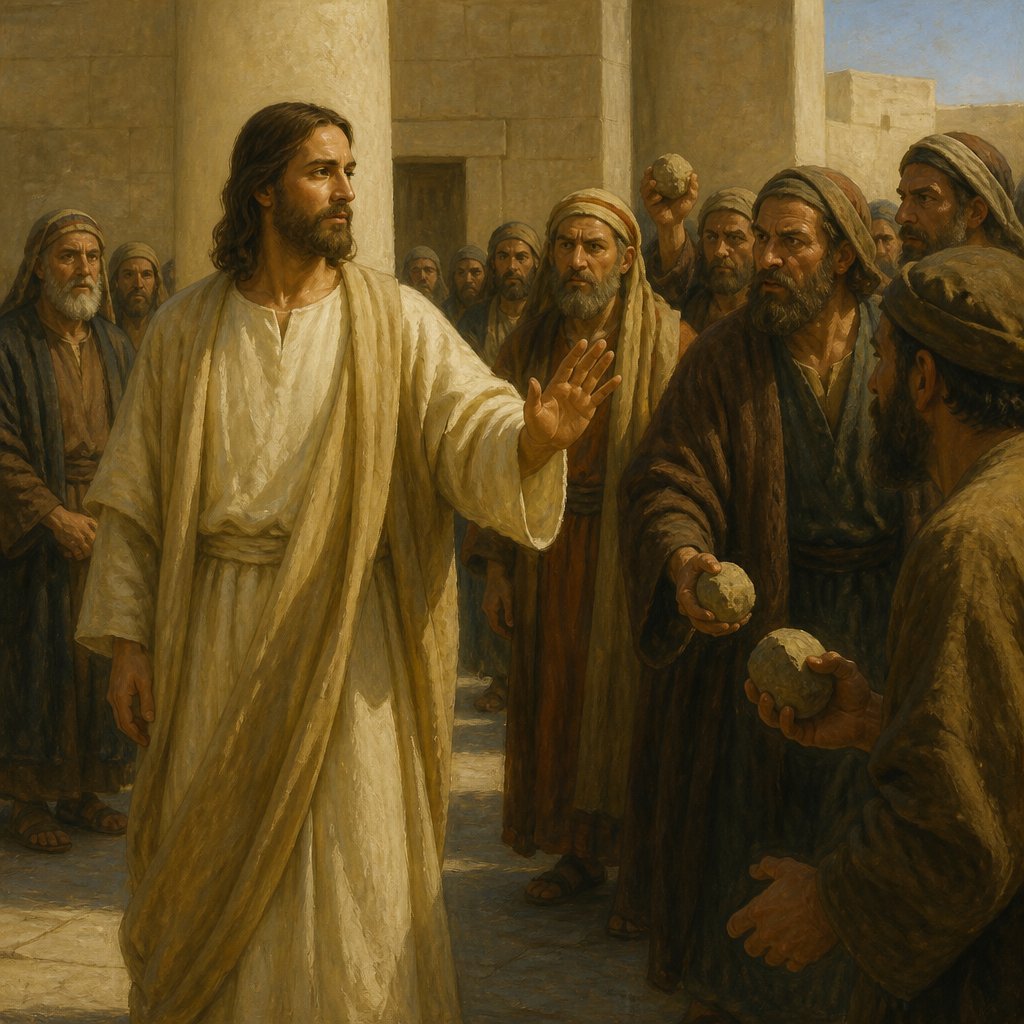
John 10:32 (KJV) reads, "Jesus answered them, Many good works have I shewed you from my Father; for which of those works do ye stone me?"
This verse is part of a larger passage in which Jesus is speaking to the Jews in the temple. He has just finished explaining to them that he and the Father are one, and the Jews have picked up stones to stone him for blasphemy. Jesus responds to their anger and confusion by asking them about the good works he has done in his Father's name, and why they would want to stone him for those works.
Several important themes emerge from this verse, including the divinity of Jesus, the rejection of Jesus by the Jewish leaders, and the concept of good works as evidence of Jesus' identity as the Son of God.
First, this verse underscores the divinity of Jesus. By claiming to have performed good works from his Father, Jesus is affirming his identity as the Son of God. Throughout the gospel of John, Jesus repeatedly emphasizes his divine nature and his close relationship with God the Father. In this instance, he is pointing to the good works he has carried out as evidence of his divine authority and the legitimacy of his claim to be the Son of God. This theme is central to the gospel of John, as the author seeks to demonstrate that Jesus is not just a great teacher or prophet, but is the very embodiment of God on earth.
Second, this verse highlights the rejection of Jesus by the Jewish leaders. The fact that the Jews are picking up stones to stone Jesus demonstrates their refusal to accept his claims about himself and their hostility towards his teachings. Throughout the gospels, we see the tension between Jesus and the religious authorities of his time, who often oppose his message and seek to discredit him. In this particular instance, the Jews are so incensed by Jesus' words that they are on the brink of committing an act of violence against him. This rejection sets the stage for the ultimate conflict between Jesus and the Jewish leaders, which culminates in his crucifixion.
Finally, this verse touches on the theme of good works as evidence of Jesus' identity. Jesus points to the good works he has performed as a demonstration of his divine authority. Throughout his ministry, Jesus performed numerous miracles, healed the sick, and preached the good news of the Kingdom of God. These acts of compassion and mercy were evidence of his divine mission and were meant to reveal the character of God to the world. By appealing to these good works, Jesus challenges the Jews to reconsider their attitude towards him and to recognize the reality of his divine mission.
The context of this verse is also important for understanding its significance. In the larger passage of John 10, Jesus is using the metaphor of the shepherd and his sheep to describe his relationship with his followers. He portrays himself as the good shepherd who cares for and protects his sheep, contrasting himself with the hired hand who does not have the same level of commitment. This imagery emphasizes Jesus' role as the leader and protector of his followers, as well as his willingness to sacrifice himself for their sake.
Symbolism is also present in this verse, as the "good works" Jesus mentions can be seen as a representation of the divine power and love that he embodies. The act of picking up stones to stone him symbolizes the rejection and opposition that Jesus faced from his own people. This event foreshadows the ultimate rejection of Jesus by the religious authorities, leading to his crucifixion.
In conclusion, John 10:32 is a pivotal verse that encapsulates several key themes in the gospel of John. It emphasizes the divinity of Jesus, the rejection of Jesus by the Jewish leaders, and the significance of Jesus' good works as evidence of his identity as the Son of God. This verse serves as a powerful reminder of the ongoing conflict between Jesus and the religious establishment of his time, and the importance of recognizing and responding to the evidence of Jesus' divine mission.
Get our apps


Artwork for John 10:32

John 10:32 - "Jesus answered them, Many good works have I shewed you from my Father; for which of those works do ye stone me?"
"Jesus answered them, Many good works have I shewed you from my Father; for which of those works do ye stone me?" - John 10:32

John 1:32 - "And John bare record, saying, I saw the Spirit descending from heaven like a dove, and it abode upon him."

John 10:10

John 10:10

John 10:10

John 10:10

John 10:10

John 10:10

John 10:10

Ezra 10:32 - "Benjamin, Malluch, and Shemariah."

John 8:32 - "And ye shall know the truth, and the truth shall make you free."

John 4:32 - "But he said unto them, I have meat to eat that ye know not of."

John 9:32 - "Since the world began was it not heard that any man opened the eyes of one that was born blind."

John 12:32 - "And I, if I be lifted up from the earth, will draw all men unto me."

John 3:32 - "And what he hath seen and heard, that he testifieth; and no man receiveth his testimony."

John 5:32 - "¶ There is another that beareth witness of me; and I know that the witness which he witnesseth of me is true."

Mark 11:32 - "But if we shall say, Of men; they feared the people: for all men counted John, that he was a prophet indeed."

John 13:32 - "If God be glorified in him, God shall also glorify him in himself, and shall straightway glorify him."

John 18:32 - "That the saying of Jesus might be fulfilled, which he spake, signifying what death he should die."

"Benjamin, Malluch, and Shemariah." - Ezra 10:32

John 7:32 - "¶ The Pharisees heard that the people murmured such things concerning him; and the Pharisees and the chief priests sent officers to take him."

John 19:32 - "Then came the soldiers, and brake the legs of the first, and of the other which was crucified with him." respectful, symbolic bible verse art

Numbers 32:10 - "And the LORD'S anger was kindled the same time, and he sware, saying,"

Proverbs 10:32 - "The lips of the righteous know what is acceptable: but the mouth of the wicked speaketh frowardness."

John 10:41 - "And many resorted unto him, and said, John did no miracle: but all things that John spake of this man were true."

John 10:30
John 9:10

John 10:30

John 10:9