What does John 18:16 mean?
“But Peter stood at the door without. Then went out that other disciple, which was known unto the high priest, and spake unto her that kept the door, and brought in Peter.” — John 18:16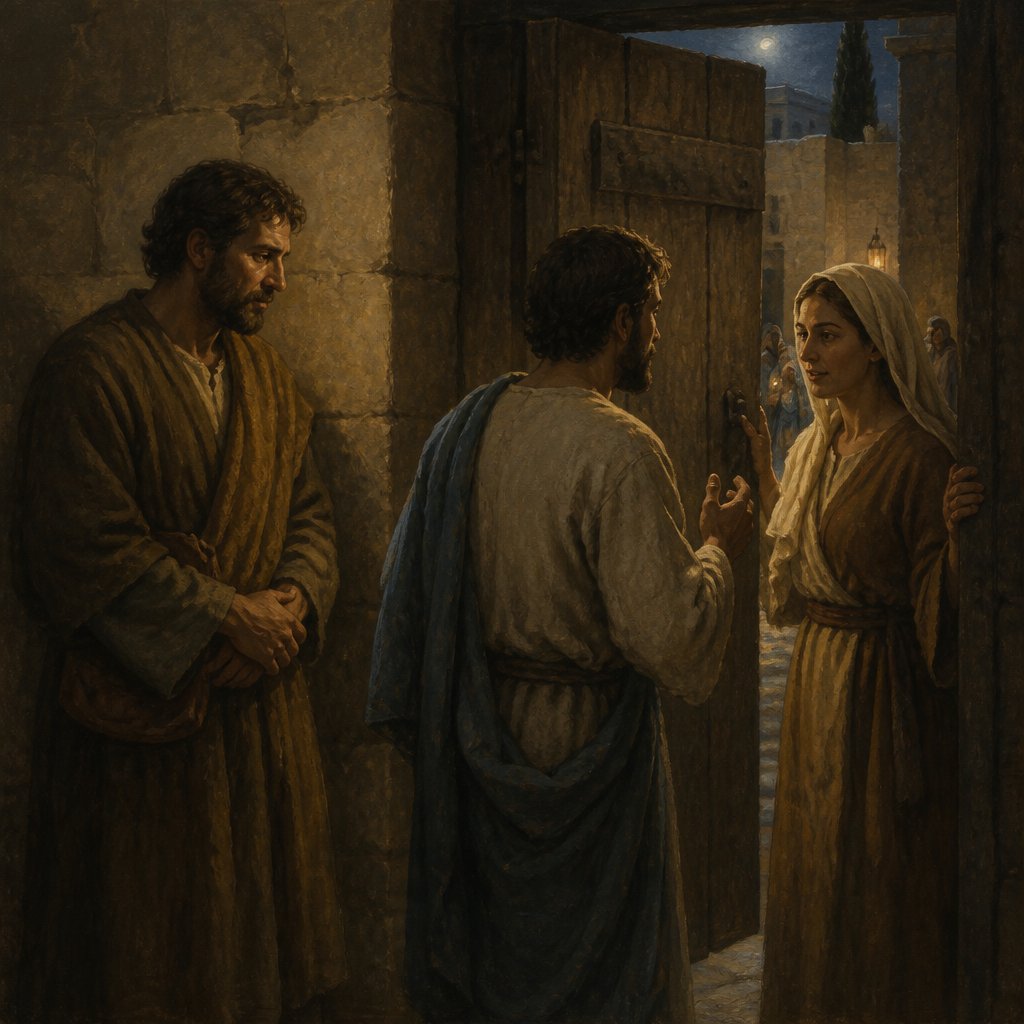
John 18:16 from the King James Version (KJV) reads, "But Peter stood at the door without. Then went out that other disciple, which was known unto the high priest, and spake unto her that kept the door, and brought in Peter."
This verse takes place in the Garden of Gethsemane, following Jesus' arrest. Peter had followed Jesus and the soldiers who had come to arrest him, trying to stay close to his beloved leader. However, when they arrived at the high priest's house, Peter was afraid and stood at the door, hesitating to enter. The other disciple, often thought to be John, was known to the high priest and was able to gain entry to the courtyard. He then spoke to the servant girl who kept the door and allowed Peter to enter.
This moment in the story of Jesus' arrest and trial holds great significance and symbolism. It reflects Peter's struggle with fear and his denial of Jesus, as well as the contrasting faithfulness and bravery of the other disciple. It also highlights the themes of loyalty, courage, and the human tendency to waver in the face of adversity.
Throughout the Gospels, Peter is portrayed as impulsive and passionate, often acting before thinking and speaking without considering the consequences. In this instance, his fear led him to hesitate and stay outside the door, showing a rare moment of cowardice for the outspoken disciple. This sets the stage for the events that follow, as Peter is later questioned three times about his relationship with Jesus and ultimately denies him, fulfilling Jesus' prophecy that Peter would deny him three times before the rooster crowed (John 13:38).
On the other hand, the other disciple displays bravery and resourcefulness by speaking to the servant girl and facilitating Peter's entry into the courtyard. This action showcases the loyalty and devotion of this disciple, who remains unnamed but is often believed to be John himself. Throughout the Gospels, John is depicted as the beloved disciple, and his actions in this moment further emphasize his closeness and connection to Jesus.
The contrast between Peter's fear and the other disciple's bravery invites the reader to examine their own responses to challenging situations. It encourages reflection on moments when we may have wavered in our faith or allowed fear to dictate our actions, as well as times when we have shown courage and loyalty in standing up for our beliefs.
In a broader context, this verse also speaks to the overall theme of human frailty and the need for divine strength. It serves as a reminder that even the most devoted followers of Christ are susceptible to moments of weakness and doubt. However, it also offers hope by showcasing how God's grace and mercy can ultimately redeem and restore those who have stumbled.
Symbolically, the door represents a threshold or barrier that Peter must cross in order to confront his fears and face the reality of Jesus' arrest and impending trial. By standing at the door, Peter is symbolically standing at the threshold of his own faith and commitment, unsure of whether he has the strength to continue. In contrast, the other disciple's actions symbolize the role of a faithful intercessor, facilitating Peter's journey through the door and into the courtyard where he will face his greatest test.
In conclusion, John 18:16 provides a poignant glimpse into the inner turmoil and external pressures faced by Jesus' disciples in the moments leading up to his crucifixion. It offers a meditation on themes of loyalty, courage, and human frailty, and serves as a powerful reminder of the complexities of faith and the need for divine grace. This verse continues to resonate with readers, challenging them to examine their own responses to adversity and inspiring them to seek strength in moments of doubt and fear.
Get our apps


Artwork for John 18:16

John 18:16 - "But Peter stood at the door without. Then went out that other disciple, which was known unto the high priest, and spake unto her that kept the door, and brought in Peter."
"But Peter stood at the door without. Then went out that other disciple, which was known unto the high priest, and spake unto her that kept the door, and brought in Peter." - John 18:16

John 16:18 - "They said therefore, What is this that he saith, A little while? we cannot tell what he saith."
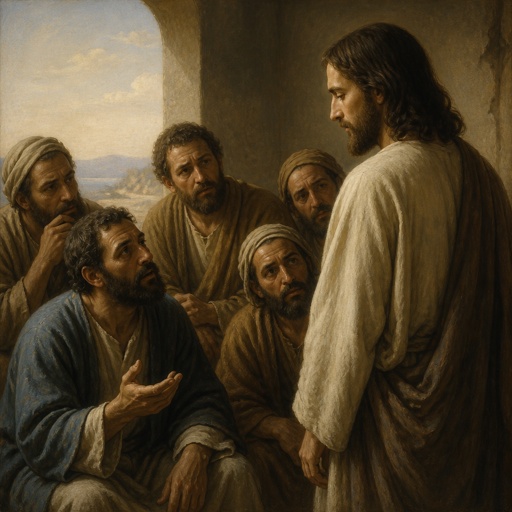
"They said therefore, What is this that he saith, A little while? we cannot tell what he saith." - John 16:18

John 16:33

John 16:33

John 16:33

John 7:17-18

John 7:17-18

John 7:17-18

John 7:17-18

John 18:25

john 18:36

John 16:33

John 16:33

John 16:33

John 3:16
John 3:16

John 4:16

John 3:16

john 3:16

John 3:16

John 3:16

John 4:16

John 4:16

John 4:16

John 14:16

John 3:16

John 3:16

John 3:16